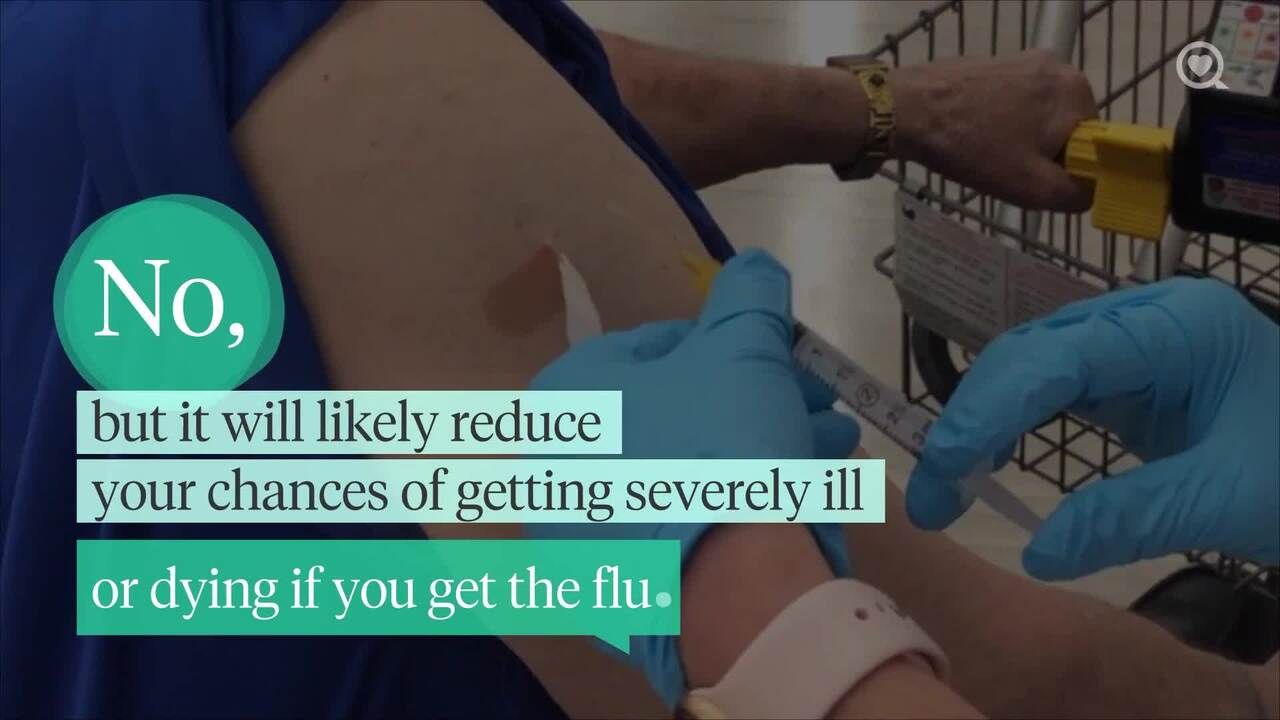


As the days grow shorter and cooler, it’s time to act against a seasonal threat: influenza. Protect yourself and others by getting a flu shot.
For many people, getting the flu may seem like no big deal—especially if they are relatively young and healthy. This is a common misconception. The flu claims thousands of lives each year and should be taken seriously. The best way to help keep this seasonal virus in check—and protect yourself as well as those around you—is to get vaccinated.
Need more convincing? Here’s why you should roll up your sleeve:
Flu (and COVID) are highly contagious
COVID is still circulating. In 2025, the virus peaked twice, surging once in late summer and again in winter. This semi-annual seasonal pattern seems to be repeating in 2026. In late August, the Centers for Disease Control and Prevention (CDC) reported that COVID cases were on the rise in nearly every state as summer travel and back-to-school routines created more opportunities for the virus to spread—just as flu season is about to get underway.
COVID generally spreads even more quickly and easily than the flu. But they are transmitted in similar ways. These viruses can spread through direct contact, contaminated droplets, or through the air in aerosols—particles even smaller than respiratory droplets that may waft and accumulate.
Most people with flu are contagious about one day before they even develop symptoms of the infection. Older kids and adults with the flu are most contagious after three to four days but may still pass the infection to others for about seven days.
By comparison, people with COVID may spread the infection from about two days before symptoms appear until about 10 days afterward. People with COVID may remain contagious for up to 10 days after testing positive even if their symptoms have resolved (or they never developed symptoms). Those with very severe COVID and those who are immunocompromised may remain infectious for up to 20 days or more.
The flu can be deadly
Like COVID, a person’s chance of dying from the flu varies, depending on certain risk factors, like their age, health and whether they are vaccinated. Variables among countries, such as population demographics and the quality of health care, also influence estimates on mortality rates.
In most cases, people with the flu will recover within a couple of weeks. But some people—particularly older people, very young children, and those with underlying health issues—are more likely to develop potentially deadly complications such as pneumonia, inflammation of the heart, brain or muscle, sepsis, or organ failure.
Safe and effective vaccines are available
There are vaccines available to help protect against the flu, as well as COVID and respiratory syncytial virus (RSV), which also tends to spread in the fall and winter months. Older adults only need to receive the RSV vaccine once, but they should get an updated flu shot and COVID booster each year.
In seasons when the vaccine is well-matched to most circulating influenza viruses, getting a flu shot may decrease the risk of needing medical care for the flu by 40 percent to 60 percent.
It’s true: sometimes people who get the flu shot are still infected with the virus. This can happen due to certain factors, including a person’s unique biological characteristics, the flu viruses in circulation (and whether the flu vaccine is a close match to these predominant strains) as well as the type of flu vaccine used.
In September 2026, an mRNA flu vaccine was approved by the U.S. Food and Drug Administration for adults age 50 and older. It is the first flu shot to use mRNA technology. Clinical trials suggest it may be 26.6 percent more effective than traditional flu shots in this age group. The mRNA flu vaccine can also be produced more quickly than traditional vaccines (in just one to two months rather than five to six), which means they could be manufactured closer to the start of flu season. This could allow scientists to more closely match the flu strains in circulation.
Studies show, however, that getting the flu vaccine can still help reduce the severity of the infection and help prevent flu-related complications. So, if you get the shot and still get the flu, it may not be as serious.
Recent research also adds to a growing pile of evidence that these and other widely available vaccines could also help reduce the risk for Alzheimer’s disease or other forms of dementia. An August 2022 study from UTHealth Houston published in the Journal of Alzheimer’s Disease, which included more than 2.3 million adults aged 65 and older, found those who got an annual flu shot were 40 percent less likely than their unvaccinated peers to develop Alzheimer’s disease within four years.
This protective effect may increase over time with consistent vaccination, according to the study’s first author, Avram S. Bukhbinder, MD.
And if that’s not enough motivation to get vaccinated, consider this: being immunized will also protect the more vulnerable people around you, including babies younger than 6 months old, older people, pregnant people, and those with chronic health conditions.
Other ways to protect yourself
Aside from getting vaccinated, there is a lot you can do to avoid exposure and reduce your risk of infection to both the flu, COVID, and other respiratory infections, including:
- Wear a face mask in crowded indoor spaces, particularly those with poor ventilation
- Practice physical distancing or stay at least 6 feet away from others
- Wash your hands well and often with soap and water for at least 20 seconds
- Avoid touching any part of your face, including your eyes, nose, or mouth with unwashed hands
- Avoid contact with people who have suspected or confirmed infections
Sources: Centers for Disease Control and Preventi... + 13
- Centers for Disease Control and Prevention. “COVID Data Tracker.” Accessed Nov 15, 2021.
- Centers for Disease Control and Prevention. “Weekly U.S. Influenza Surveillance Report.” Nov 6, 2021.
- Centers for Disease Control and Prevention. “Weekly National Flu Vaccination Dashboard.” Nov 3, 2021.
- Centers for Disease Control and Prevention. “Interim Guidance on Ending Isolation and Precautions for Adults with COVID-19.” Mar 16, 2021.
- Johns Hopkins. “Coronavirus Resource Center. Mortality Analyses.” Sep 13, 2021.
- Centers for Disease Control and Prevention. “Disease Burden of Influenza.” Jun 11, 2021.
- Centers for Disease Control and Prevention. “Vaccine Effectiveness: How Well Do Flu Vaccines Work?” Aug 26, 2021.
- Centers for Disease Control and Prevention. “COVID-19 Vaccine Breakthrough Case Investigation and Reporting.” Sep 10, 2021.
- Anthony S. Fauci, MD, H. Clifford Lane, MD, and Robert R. Redfield, MD “Covid-19 — Navigating the Uncharted.” New England Journal of Medicine. Feb 2020.
- Centers for Disease Control and Prevention. “Flu Symptoms & Complications.”
- Centers for Disease Control and Prevention. “Key Facts About Influenza (Flu).”
- World Health Organization. “Rolling updates on coronavirus disease (COVID-19).”
- Centers for Disease Control and Prevention. "Similarities and Differences between Flu and COVID-19."
- Centers for Disease Control and Prevention. “COVID-19 Pandemic Planning Scenarios.” Sept 10, 2020.