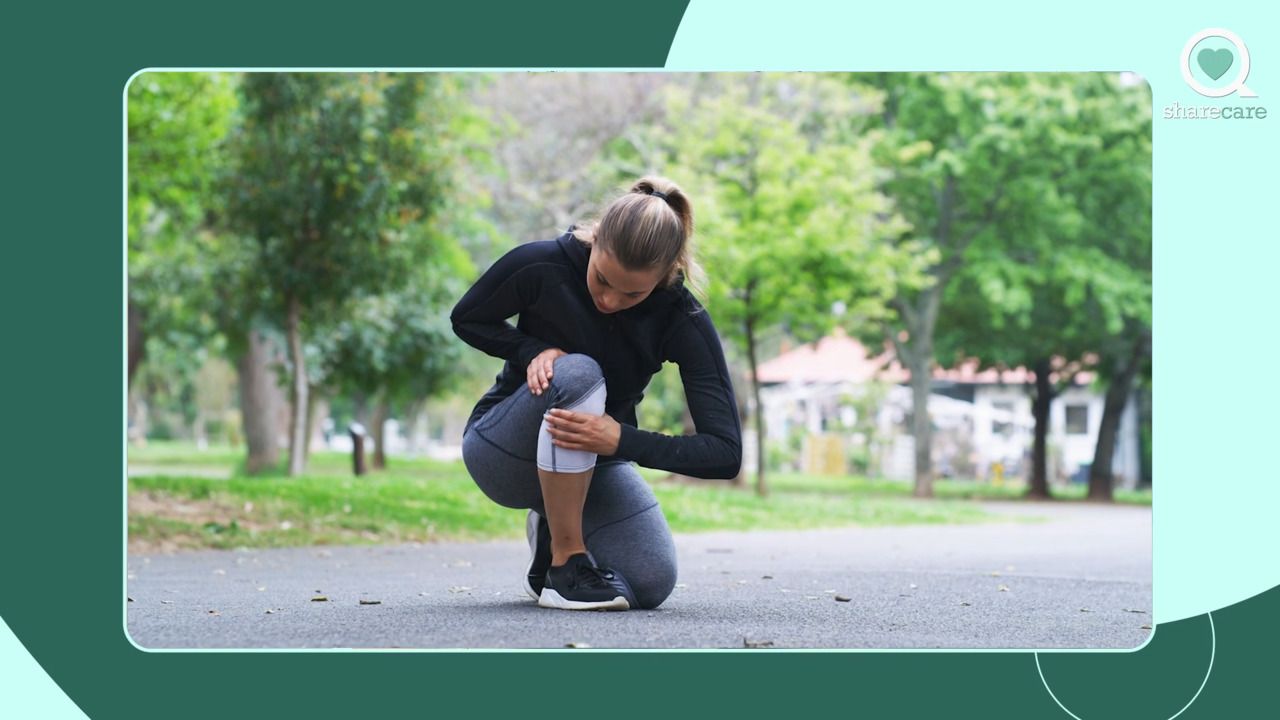


You're squatting down to lift your child or a box full of books when suddenly you hear a pop from your knee followed by a sharp pain. You've done this squat a million times without any problems, but this time you fear the worst: a knee injury.
So, why did it happen today and not yesterday or the day before? And how long will it leave you out of commission?
You're not the only one with knee pain
There are many ways to injure the knee, from fractures to a torn meniscus to the infamous torn ACL (anterior cruciate ligament). And, in fact, knee injuries are very common, with as many as a quarter-million ACL tears in the United States each year, according to some estimates.
Part of the reason for these huge numbers is that the knee is a little bit like a luxury SUV: It's sturdy and gets you where you need to go, but the bells and whistles—like the complex network of bones, cartilage, ligaments, muscles, and tendons in your knee—can simply provide more ways for things to go wrong.
Structure, function, and knee injuries
The reason knee injuries are so common, according to Robert Marx, MD, author of The ACL Solution, is that the knee is a hinge joint and doesn't tolerate rotation well.
"Some of the most common ways knees are injured usually happen when twisting or squatting is involved,” Dr. Marx says. “Working out or doing something too aggressively or suddenly are just a couple examples when knee injuries can happen."
While a situation, like picking up a child, can seem harmless, the resulting knee injury can be serious.
"ACL injuries, meniscus injuries, and arthritis problems are the most common injuries doctors see," Marx says. "Every year, anywhere from 100,000 to 200,000 people undergo reconstructive surgery of the knee, while another 700,000 people have some kind of arthroscopic knee operation due to injury."
Less-obvious knee problems can develop from osteoarthritis of the knee, when your cartilage has gradually worn away, leaving your knee vulnerable. Other joint diseases—like rheumatoid arthritis and lupus—can cause so much inflammation that they can permanently ruin your knees.
Treating a knee injury
If you have mild or moderate pain, some healthcare providers (HCPs) suggest you begin by treating it with the RICE method: rest, ice to reduce pain, gentle compression, and elevation. If you heard a popping noise or felt like your knee gave out, however, see your HCP as soon as possible.
You'll want to call your HCP if you continue to feel severe pain, can't move your knee, begin limping, or notice any swelling.
Depending on how badly your knee was hurt—plus your age, overall health, and activity level—you could need a few days of rest to a few months off the knee before you're back in action. Treatment for knee pain could range from simple home care with acetaminophen (Tylenol) or ibuprofen (Advil) to physical therapy or eventual surgery. It's up to you and your HCP to decide how best to get you back on your knee.
Sources: Boston Medical. Common Knee Injuries. Ac... + 6
- Boston Medical. Common Knee Injuries. Accessed March 19, 2026.
- Campbell CJ, Carson JD, et al. Canadian Academy of Sport and Exercise Medicine position statement: Neuromuscular training programs can decrease anterior cruciate ligament injuries in youth soccer players. Clin J Sport Med. 2014 May;24(3):263-7.
- Evans J, Mabrouk A, Nielson JL. Anterior Cruciate Ligament Knee Injury. 2023 Nov 17. In: StatPearls [Internet]. Treasure Island (FL): StatPearls Publishing; 2026 Jan–.
- Cullen KA, Hall MJ, Golosinskiy A. Ambulatory surgery in the United States, 2006. Natl Health Stat Report. 2009 Jan 28;(11):1-25.
- Cleveland Clinic. ACL Tear & Injury. August 2, 2023.
- Cleveland Clinic. RICE Method for Injury. January 24, 2025.
- Borra V, De Buck E, Vandekerckhove P. RICE or ice: what does the evidence say? The evidence base for first aid treatment of sprains and strains. Cochrane Colloquium Abstracts, Vienna, 2015.