

In the quest to relieve chronic pain, having tiny needles inserted into your skin may not initially sound like a great idea. But the millions of adults in the United States who try acupuncture every year might disagree. This alternative therapy is gaining traction with both patients and healthcare providers (HCPs), and research suggests it may be an effective treatment for chronic headaches and knee osteoarthritis as well as neck and low back pain.
Many physicians use acupuncture to support conventional treatments like medication, physical therapy, and lifestyle changes. “You add the acupuncture into that to see if it’ll help,” says Leon Egozi, MD, a surgeon and functional medical doctor in Aventura, Florida. Dr. Egozi doesn’t perform acupuncture himself, but has recommended it to patients. “I incorporate it into the other stuff I’m doing—exercise, trying to get them to sleep better, and reducing stress.”
Originating in China, acupuncture has been around for about 2,000 years, but we’re only just starting to understand how the treatment may help relieve some chronic pain. Here’s what research has revealed so far—and how the practice might benefit you.
How acupuncture works
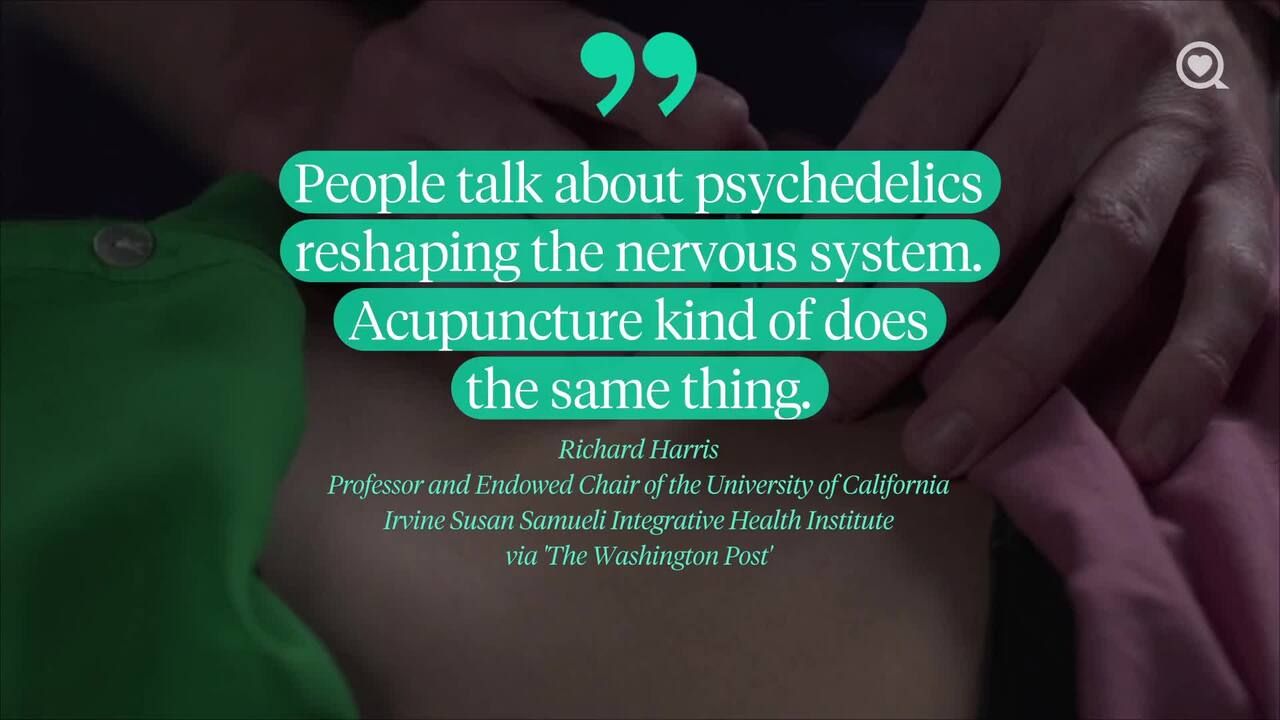
It’s traditionally believed that acupuncture can balance your qi, or life force. Practitioners do this by positioning needles along different channels in your body through which energy is said to flow. Today, some experts believe that this process has physiological effects that help relieve pain. One theory is that acupuncture has been linked to the release of endorphins, the “feel-good” chemicals in your body that promote happiness and ease discomfort. Some research suggests it activates a range of body chemicals that help to dull pain, in addition to endorphins.
Acupuncture treatment is customized for each person and can differ from session to session. Your treatment may depend on your:
- Condition and symptoms
- General lifestyle
- Physical qualities, including your skin, bones, build, and smell
- Emotional state and personality characteristics
- Acupuncturist’s preferred technique(s)
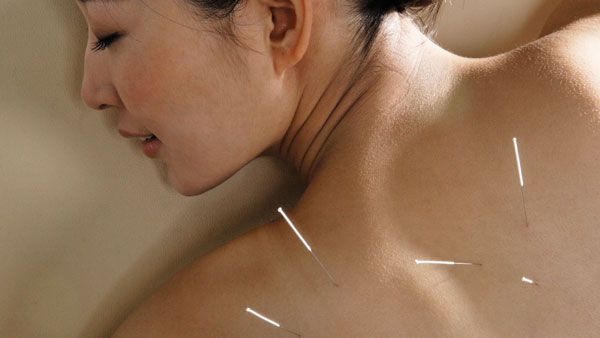
A course of therapy usually involves one or two appointments per week for a few weeks. During a typical session, the acupuncturist will place up to 20 slender, disposable metal needles at different points around the body, leaving them for 10 to 20 minutes. During this time, the needles may be delicately manipulated by hand or with a small electric pulse. You may not feel them going in or coming out, and they may not be located anywhere near the source of your pain. The process frequently takes place in a quiet, peaceful room and is often described as soothing.
Acupuncture is generally considered very safe, with few side effects or complications. “But with any medical treatment, there are always risks,” says Egozi. If acupuncture isn’t done properly or the practitioner uses nonsterile needles, the risks include infection, bleeding, bruising, punctured organs, and nerve damage. Major problems are extremely rare.
Acupuncture and chronic pain
Scores of people have tried acupuncture to deal with a range of medical conditions, from depression to smoking cessation to schizophrenia. And while some may report feeling better as a result, there’s little science supporting many of these applications.
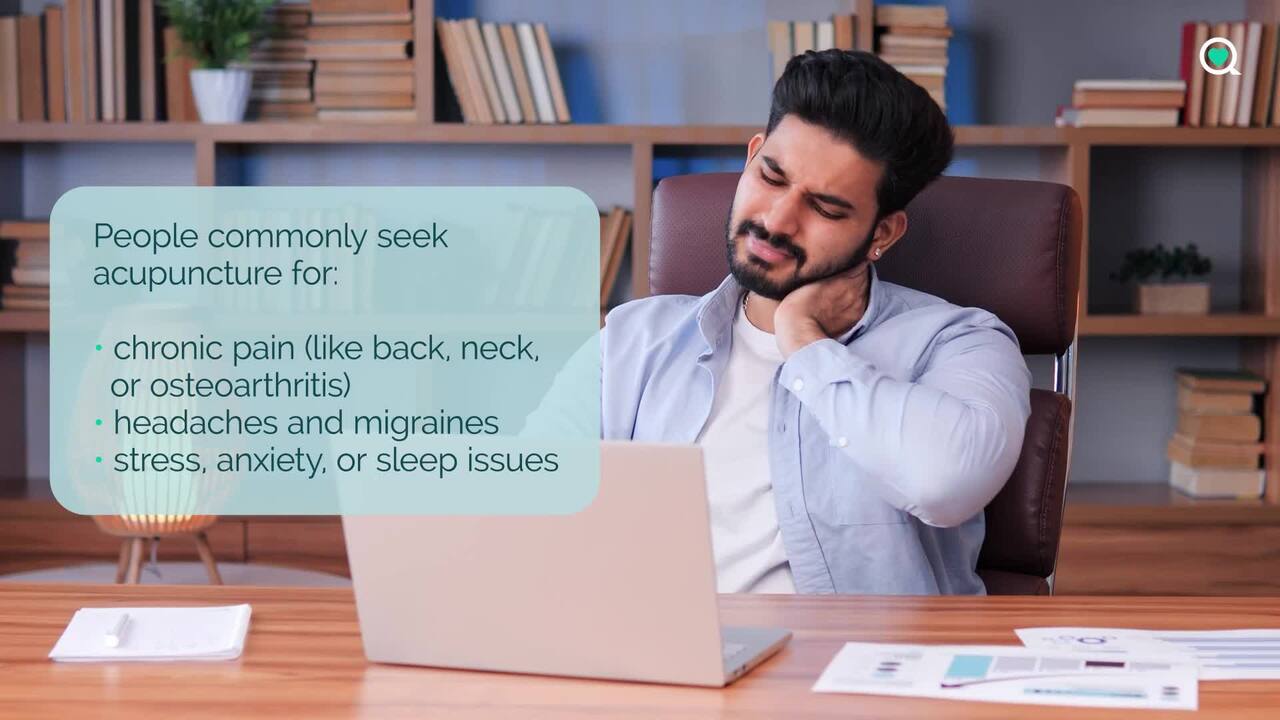
Chronic pain is an exception. Research generally suggests acupuncture may help relieve persistent discomfort in the lower back, neck, and knees. It may also reduce the frequency of tension headaches and prevent migraines. In numerous high-quality studies involving these four types of pain, scientists have largely found receiving acupuncture to be more effective than not receiving it. This holds especially true for low back pain.
In some studies, however, scientists found a small difference between receiving real acupuncture and receiving simulated or sham acupuncture, a placebo treatment that mimics the real thing. This may mean that acupuncture’s success is linked to your expectations going into the procedure, and that the experience of receiving treatment—regardless of the specific technique—is responsible for the benefits. In other words, if you think it will ease your pain, it may be more likely to do so.
That said, many HCPs and select medical organizations find acupuncture to be an acceptable add-on to treatment plans for some kinds of chronic pain. In the midst of the opioid crisis, which has left many physicians hesitant to prescribe certain medications, it’s an increasingly recommended drug-free option for pain relief.
Who should avoid acupuncture?
While it’s safe and well tolerated, acupuncture isn’t for everyone. Patients experiencing sudden and severe pain, for example, should always consult with an HCP. “With acute pain, you need to know what you’re treating first,” says Egozi. “You can’t be putting needles in them without trying to figure out where the pain is coming from.”
Patients with severe neutropenia (a very low count of certain white blood cells) should avoid acupuncture entirely. Those with pacemakers or automatic implantable cardioverter defibrillators (AICDs) should skip electroacupuncture. Patients on blood thinners or people with bleeding disorders should let their acupuncturist know about their condition. People who are pregnant should consult with a doctor before beginning treatment.
Finally, acupuncture simply doesn’t work for certain individuals. If you don’t feel a difference in symptoms within a few weeks, it’s probably time to move on.
A few practical considerations
Always speak with your HCP before beginning acupuncture to address a health condition. They can help you decide if it’s a good option, incorporate it with other new or existing treatments, and recommend a good acupuncturist. Many are associated with medical centers, and some HCPs even perform acupuncture themselves. You can also find a practitioner through a national organization, like the American Academy of Medical Acupuncture (AAMA).
If you end up seeing an acupuncturist, be sure to check their qualifications first. They should have the appropriate state license—if the state they practice in offers one—along with a certification from the National Certification Commission for Acupuncture and Oriental Medicine (NCCAOM) or the American Board of Medical Acupuncture (ABMA). Ask a few basic questions, too, suggests Egozi, including "how many sessions you’ll need, what to expect, how much it’s going to cost.”
In regard to that price tag: Health insurance coverage for acupuncture varies depending on your policy, location, and condition. Many plans will not pay for it, and Medicare will only cover acupuncture for chronic low back pain up to a point. Since treatment can become expensive as time goes on, reach out to your insurance provider prior to starting therapy.
Ultimately, acupuncture may not be right for all chronic pain patients. But as a supplement to conventional treatment, it can be worth considering.
Sources: American Academy of Family Physicians. R... + 10
- American Academy of Family Physicians. Research Finds Acupuncture Effective for Chronic Pain. May 21, 2018.
- National Center for Complementary and Integrative Health. Acupuncture: Effectiveness and Safety. October 2022.
- Cleveland Clinic. Acupuncture. May 17, 2023.
- Mayo Clinic. Acupuncture. April 20, 2024.
- Lee IS, Ryu Y, Chae Y. Oversimplifying the name of the 12 meridian channels. Integr Med Res. 2023 Dec;12(4):101002.
- Lin JG, Kotha P, Chen YH. Understandings of acupuncture application and mechanisms. Am J Transl Res. 2022 Mar 15;14(3):1469-1481.
- Vickers AJ, Cronin AM, et al; Acupuncture Trialists' Collaboration. Acupuncture for chronic pain: individual patient data meta-analysis. Arch Intern Med. 2012 Oct 22;172(19):1444-53.
- Vickers AJ, Linde K. Acupuncture for chronic pain. JAMA. 2014 Mar 5;311(9):955-6.
- National Cancer Institute. Definition of verum acupuncture. Accessed July 7, 2026.
- American Academy of Medical Acupuncture. Find an Acupuncturist. Accessed July 7, 2026.
- Medicare.gov. Acupuncture. Accessed July 7, 2026.