

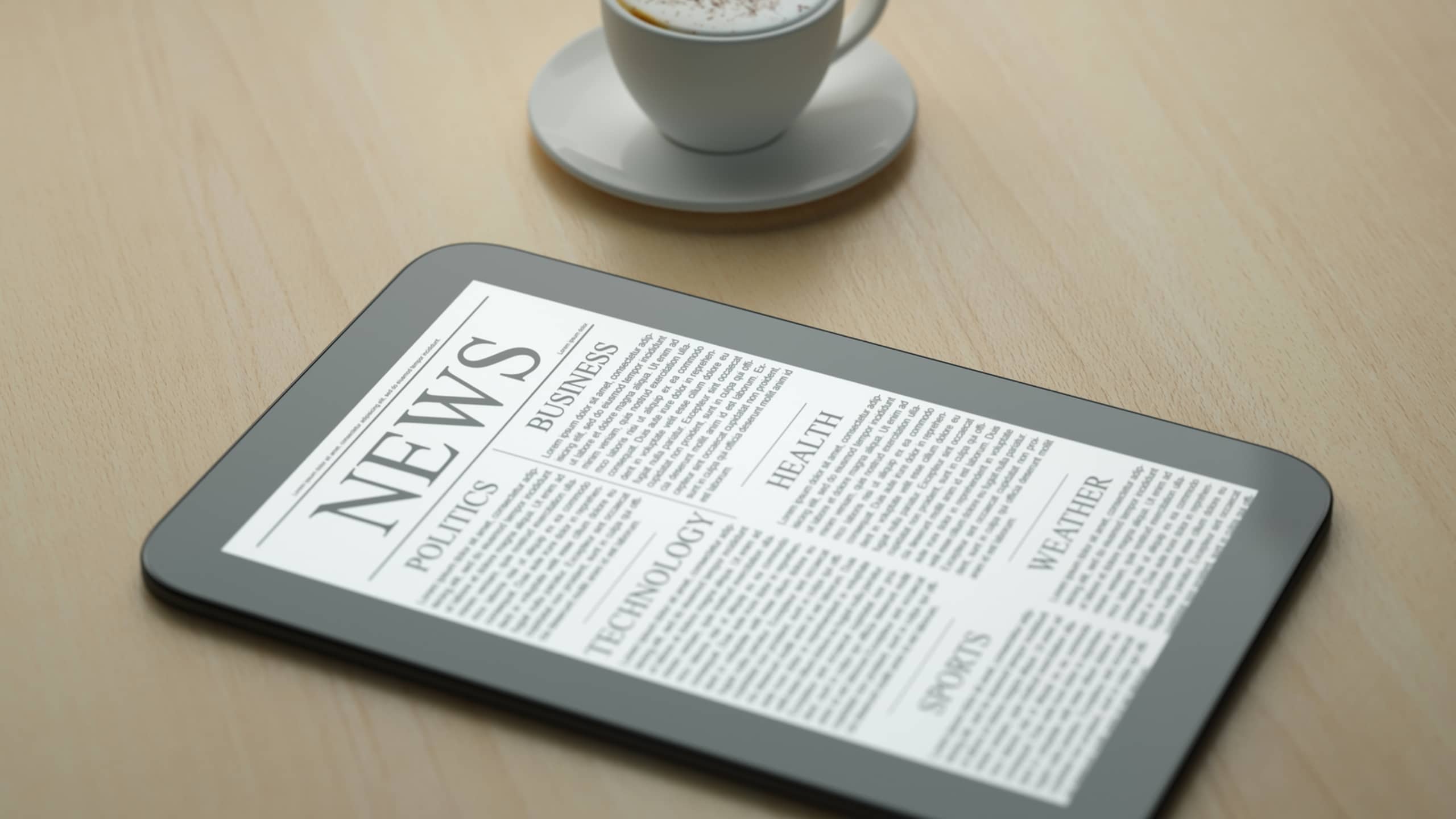
Would you rather curl up with a paperback book or read your novel on a Kindle or iPad? For people with vision loss, the choice is clear, according to new research: Digital readers are best.
E-readers a win for eyes
Researchers studied 100 people with diseases that damage their central vision to find out whether e-readers or traditional books and newspapers were easiest to read. The subjects read 42 words per minute faster when they used an iPad set to an 18-point font, compared to reading a book or newspaper, and 12 words per minute faster on a Kindle at the same font setting. Those with the worst vision saw the greatest improvement in reading speed when using the e-readers.
The digital tablets seem to be easier on the eyes because they allow low-vision patients to adjust text size and lighting, creating a contrast that makes it easier for them to make out letters and words. The iPad was especially easy to read because of its bright back-lit screen, whereas the original Kindle used in the study did not have a back-lit screen.
Central vision loss affects millions of people who have diseases like diabetes and macular degeneration, according to the American Academy of Opthalmology. Many people become unable to read quickly and comfortably. Before tablets and e-readers, the only reading aids available for them were lighted magnifiers, which can be inconvenient.
People often take for granted all the things clear vision enables them to do—like curling up at the end of the day with a book—until they aren’t able to do them anymore. That’s why it’s important when considering your overall health and well-being to not forget about your eyes.
How to protect your eyesight
- Be conscious of your computer time. If you have a job that requires lots of time staring at a computer screen, you could be putting some serious strain on your eyes.
- Pop a daily multivitamin. Studies have shown that women who took extra B6, folic acid and B12 were less likely to develop macular degeneration.
- Quit smoking. People who light up regularly are four times more likely to develop macular degeneration than non-smokers.
- Check your diet. Nutrition plays a key role in eye health.
- Watch your weight. It’s the best way to avoid type 2 diabetes. A five percent weight loss has been shown to delay or prevent the disease.