

When it comes to food portions, Americans are living in a supersized world. Portion sizes in the United States have increased dramatically over the past several decades, so those huge, calorie-laden servings we once couldn't finish no longer seem excessive.
We've become so accustomed to large portions at fast-food joints and favorite restaurants that eating at home has followed suit. Many people now dish up similarly sized meals in their kitchen—and our weight is keeping pace with our expanded appetites.
There is no simple solution. But readjusting your idea of a sensible serving size can help. Here are three portion-control tips for healthier eating.
Retrain your eyes
Whether you are trying to lose weight or simply maintain your current weight, making the right decisions about the amount of food you eat is just as important as choosing the right kinds of food to eat. And here's a bonus: Opting for reasonable portions allows you to eat the foods you enjoy and still potentially drop extra pounds.
The first step is to retrain your eyes to recognize the difference between a healthy serving and a hefty one. Consider these comparisons to get a better sense of what a serving size is and what it looks like:
- 3 ounces lean meat, chicken, or fish = A deck of cards
- 1.5 ounces of cheese = 4 playing dice
- Baked potato = Your fist
- ½ cup of ice cream/frozen yogurt = ½ tennis ball
- 1 pancake = A DVD
- ½ of a 3-inch bagel = A can of tuna
Tableware tip
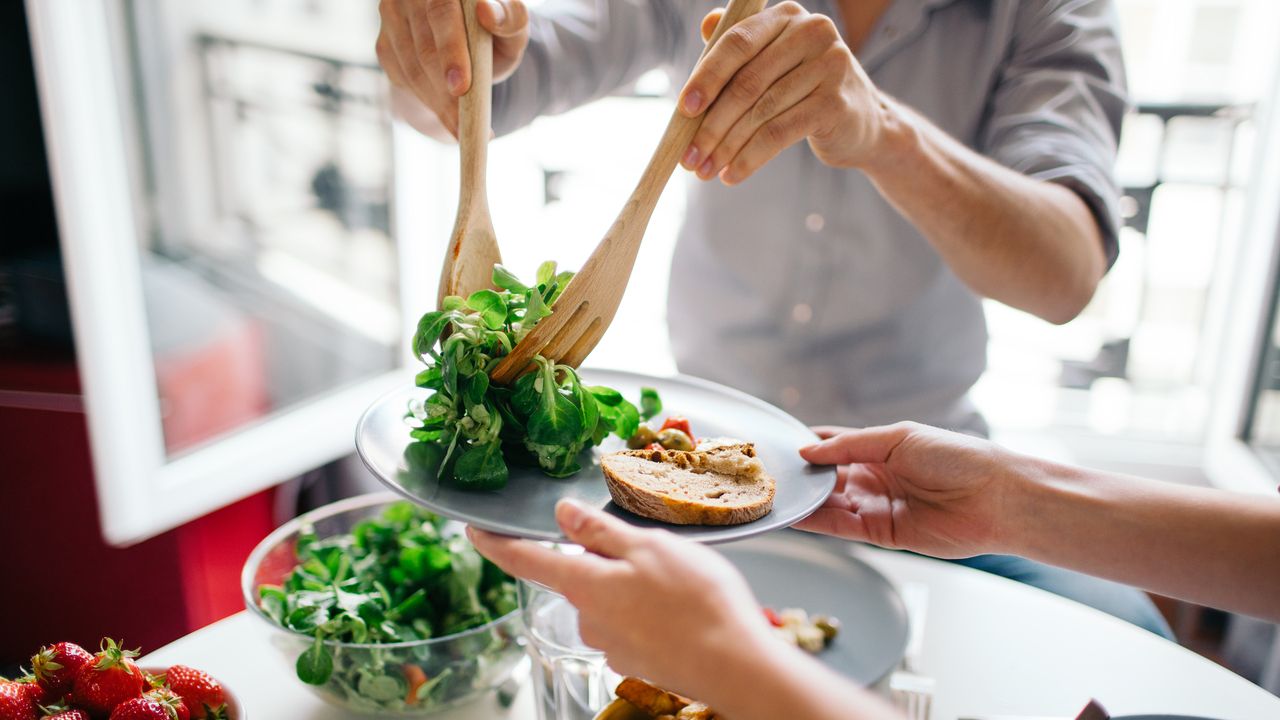
Are your dishes more like platters than plates? Try serving meals on smaller (9-inch) plates instead of large dinner plates. You might satisfy that psychological need for a full plate of food, but you'll be eating more reasonably sized portions.
Don't be fooled by food labels
Comparing nutrition labels before you buy is another good way to make healthier portion picks. But beware—a quick glance at a label might not give you the whole story. Here's why: You may check the calorie listing first. That's fine, but it's also important to check the label for the serving size.
Take, for example, two packages of cookies:
- Cookie A lists 160 calories per serving.
- Cookie B lists 80 calories per serving.
Easy decision, right? Not so fast. Look closer to see what the serving size is for each package. For example, cookie A’s serving size equals three cookies, while a serving of cookie B equals just one cookie.
Check nutrition information on menus
Eating out doesn't mean you have to forgo proper portions. Many popular chain restaurants now provide nutrition information on their menus, so pay attention to the details, and choose wisely.
At other restaurants, where huge portions are the norm and menus don't include nutrition info, the choice may not be so clear. Some easy ways to cut calories when dining out:
- Order a child- or appetizer-size plate.
- Split a starter and main dish with your companion.
- Ask for a to-go bag when your order arrives (rather than at the end of the meal), so you can put aside part of your portion up front.
Putting these steps into practice will help keep you from overeating without realizing it.
So, go ahead and have an ice cream cone or a couple of cookies from time to time. It can be easier to stick to a healthful eating plan if you get to include foods you enjoy.
By becoming mindful of proper portion control for weight loss, you'll be well on your way to healthier eating habits that can help you not only lose weight but also keep it off for good.
Sources: Medline Plus. Portion size. July 24, 202... + 2
- Medline Plus. Portion size. July 24, 2024.
- U.S. Food & Drug Administration. Serving Size on the Nutrition Facts Label. March 5, 2024.
- Mayo Clinic Health System. Going out for lunch? How to stick to healthy habits. March 7, 2018.