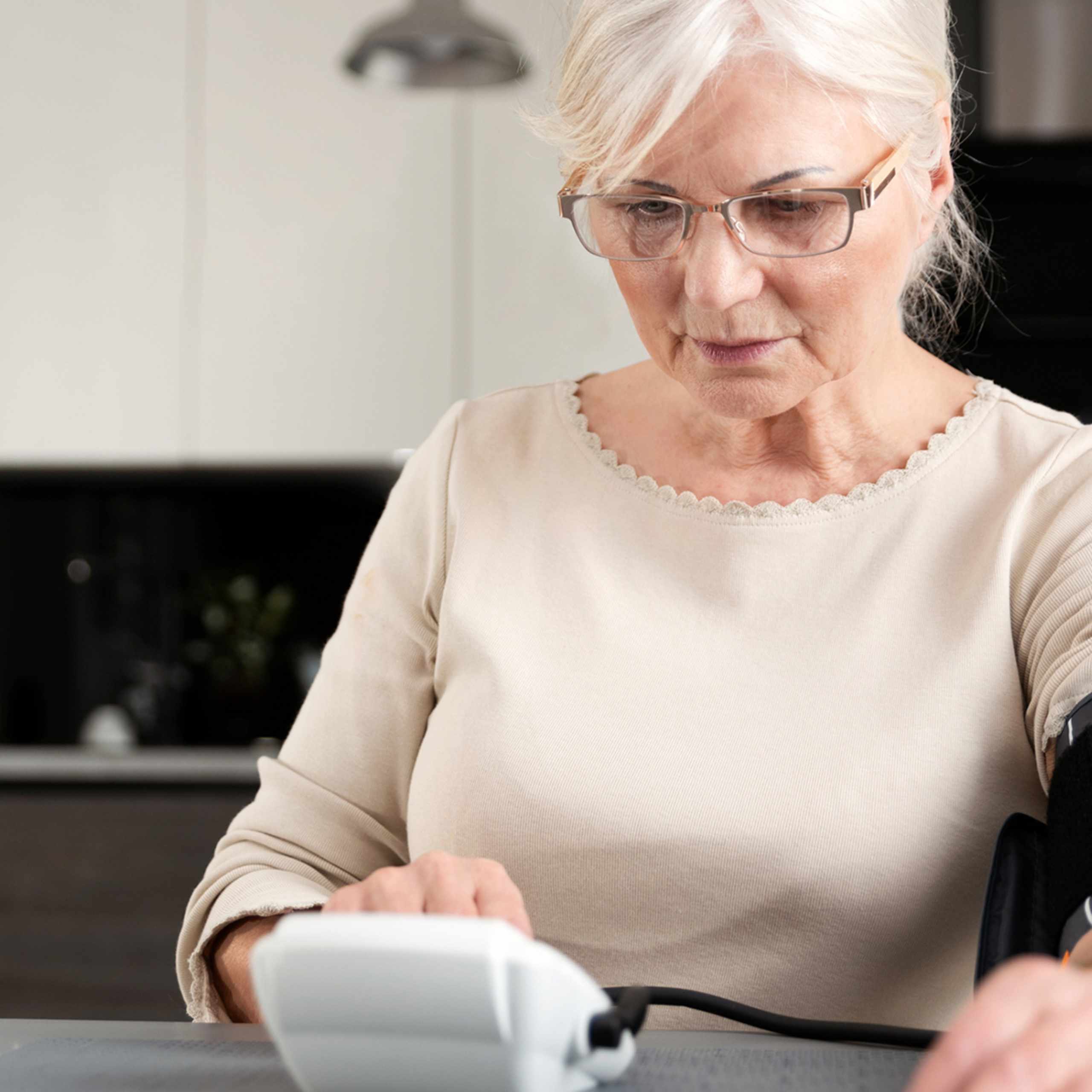


At-home blood pressure monitoring is a good way to help manage your blood pressure. It may also provide a more accurate picture of your blood pressure than occasional measurements taken at the office of a healthcare provider (HCP). Studies show that home measurements, when taken correctly, are better predictors of cardiovascular risk than office measurements.
There are other benefits to taking your own blood pressure, as well. Self-monitoring may also be used to help assess how well medications or lifestyle modifications are working. And there is evidence to suggest that home monitoring may help people reduce their blood pressure.
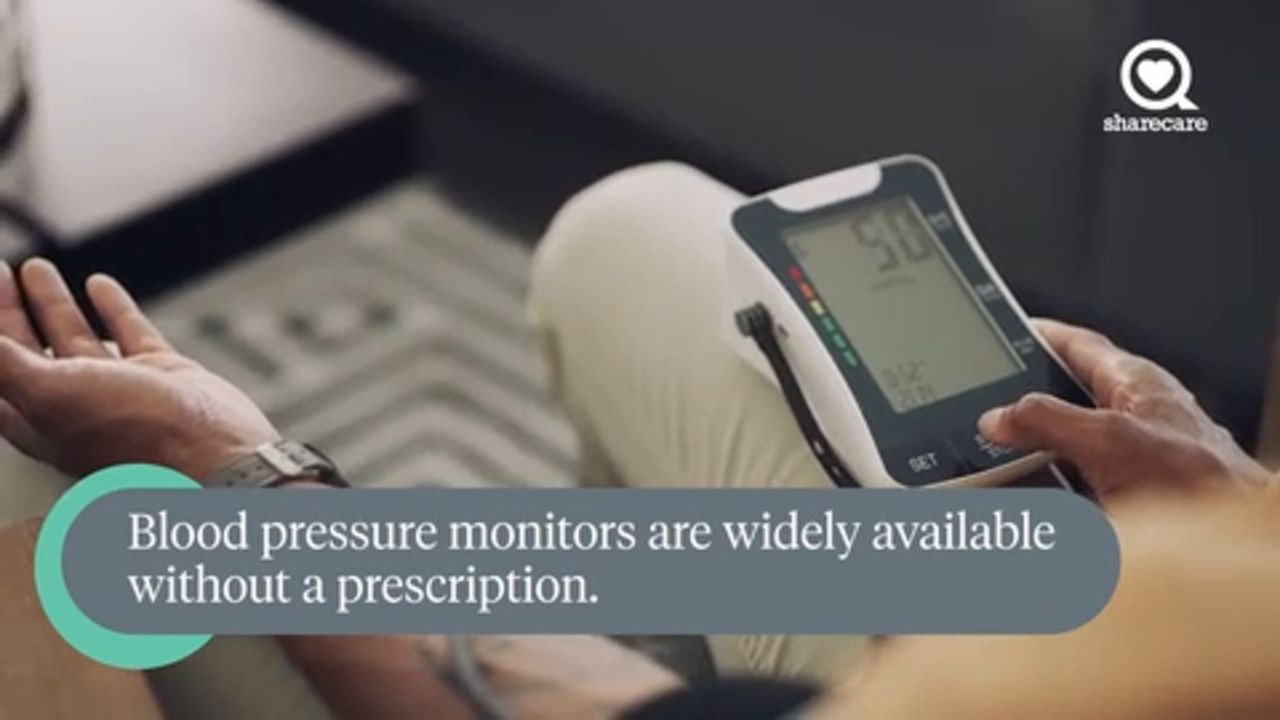
The best way to track your blood pressure yourself is with a home blood pressure monitor. Using the device, you can take multiple readings each day, or as often as you need.
Once you’ve measured, you can log your systolic and diastolic numbers with the blood pressure tracker in Sharecare, available for iOS and Android. Convenient and easy to use, it can help you recognize changes over time—important for detecting conditions like high blood pressure.
Choose the right blood pressure monitoring device
There are so many devices on the market for measuring blood pressure at home that it can be difficult to know which one to choose. Many people use an automatic machine with a digital display, as they find these devices are simple to operate. The cuff inflates and deflates automatically, the numbers are clear and easy to read, and many machines can store and print multiple blood pressure readings. But they do have their downsides. Some are made for use on the left arm only, and they can be expensive.
Here are a few simple guidelines to help you choose the right blood pressure monitoring device:
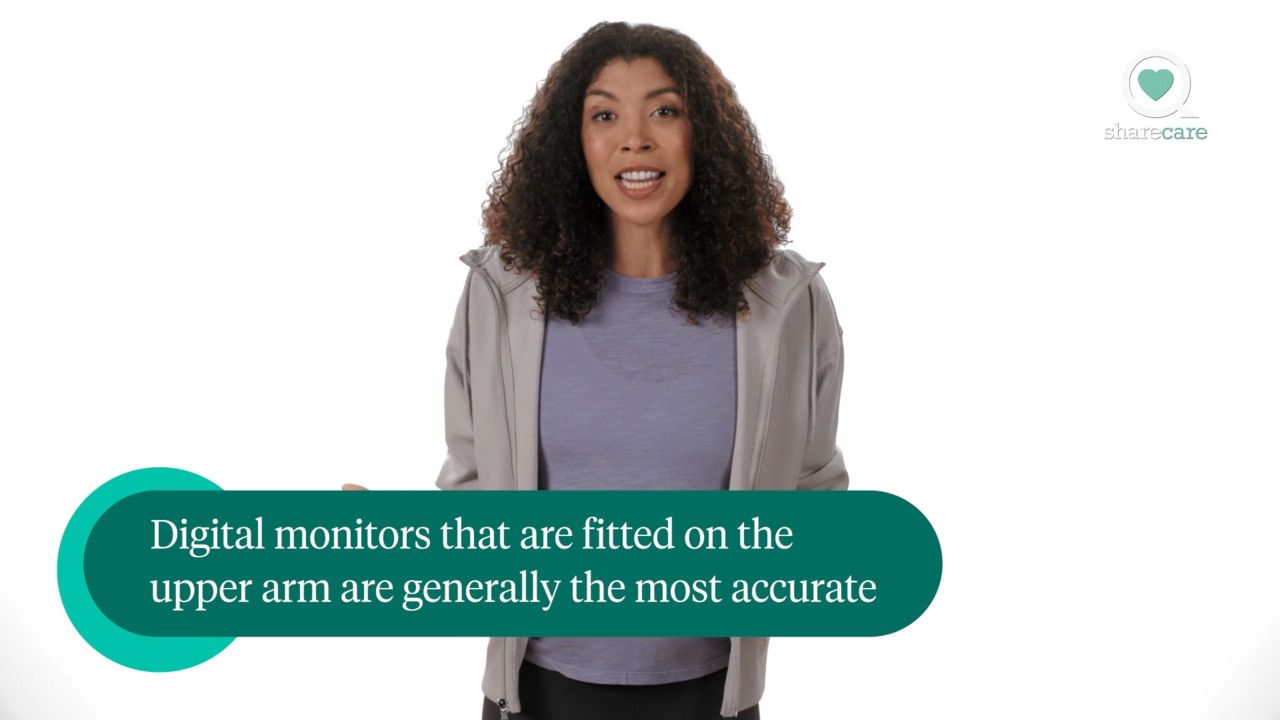
- Choose a device that measures blood pressure from your upper arm. Wrist and finger monitors are not accurate.
- Choose a monitor with a display that's easy for you to read.
- A monitor that can save, download, and print your readings is best for accurate record-keeping.
Before you buy, verify that the monitor you're considering has been independently tested, validated, and approved for home use.
Once you've bought a measuring device, make an appointment with your HCP and take the device with you. That way, if you have any questions about home monitoring or how to read blood pressure numbers, your HCP can provide guidance. Also, some monitors need to be calibrated or checked for accuracy on a regular basis. Your HCP should be able to do this for you.
For more detailed information on choosing and using a home blood pressure monitor, check out information from the American Heart Association.
Keeping an eye on your blood pressure is an easy and effective way to monitor your health and prevent high blood pressure from sneaking up on you.
Sources: Townsend RR, Cohen JB. White Coat Hypert... + 7
- Townsend RR, Cohen JB. White Coat Hypertension & Cardiovascular Outcomes. Curr Hypertens Rep. 2024;26(10):399-407.
- Cleveland Clinic. White Coat Syndrome. Page last reviewed August 3, 2024.
- Cohen JB, Lotito MJ, et al. Cardiovascular Events and Mortality in White Coat Hypertension: A Systematic Review and Meta-analysis. Ann Intern Med. 2019;170(12):853-862.
- Francisco Lopez-Jimenez, M.D. White coat hypertension: When blood pressure rises in a medical setting. Mayo Clinic. Page last updated June 13, 2024.
- Staplin N, de la Sierra A, et al. Relationship between clinic and ambulatory blood pressure and mortality: an observational cohort study in 59 124 patients. Lancet. 2023;401(10393):2041-2050.
- Cleveland Clinic. 24-Hour Ambulatory Blood Pressure Monitoring. Page last reviewed March 6, 2023.
- U.S. Preventive Services Task Force. Hypertension in Adults: Screening. Page last updated April 27, 2021.
- American Heart Association. Home Blood Pressure Monitoring. Page last reviewed May 20, 2024.