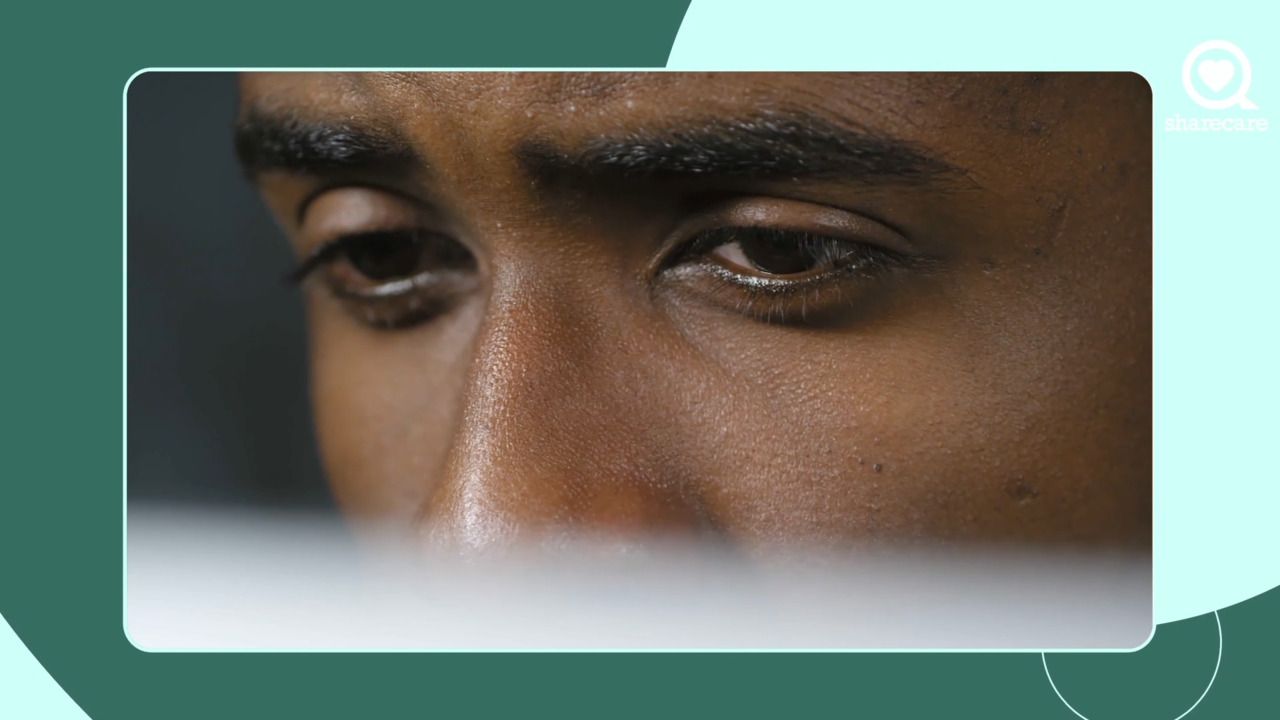
Thyroid eye disease (TED) is an autoimmune disease that causes inflammation and damage to the soft tissues that surround and support the eyes.
This causes the eyes to protrude forward. It also frequently causes eye pain, irritation, dry eyes, watery eyes, swollen eyelids, and other uncomfortable and painful symptoms. TED can also alter the alignment of the eyes and cause double vision.
TED most often occurs in people who have a thyroid disorder called Graves’ disease, also known as Graves’ eye disease.
Grave’s disease is also an autoimmune disorder. When a person has Graves’ disease, the immune system attacks healthy tissue in the thyroid gland. This autoimmune attack results in hyperthyroidism, where the thyroid gland produces excess amounts of thyroid hormone.
Proteins called autoantibodies play a major role in Grave’s disease. Antibodies are proteins that attach to harmful substances like viruses, infectious bacteria, parasites, and chemicals. These act as beacons, drawing in immune cells that destroy those harmful substances.
Autoantibodies work in much the same way, only they attach to healthy tissues. The cells that make up the soft tissues around the eyes share structural similarities with cells found in the thyroid. As a result, the autoantibodies that occur with Graves’ disease can sometimes attach to both.
Keep in mind that this is a simplified explanation of a complex disease process. Also keep in mind that there are still unanswered questions about TED and Graves’ disease, and that the causes of these conditions are not fully understood.
What are the main phases of TED?
TED occurs in several phases, beginning with an active inflammatory phase. Here is a closer look at each phase:
Active phase
Also called the inflammatory phase, this is where the immune system is actively attacking and damaging the tissues around the eyes. It can last anywhere from six months to five years, with many cases lasting less than two years. This phase is known to last longer in people who smoke.
Static or plateau phase
During this phase, the inflammation continues but does not get worse, and the autoimmune activity begins to gradually taper off.
Inactive phase
This is also called the chronic or stable phase. Here, the autoimmune attack subsides. Some symptoms may improve, but changes to the appearance of the eyes and vision may be permanent and require treatment to improve.
While TED will eventually reach an inactive phase, it can also recur. Roughly 5 to 10 percent of people with TED experience a recurrence.
How do healthcare providers determine the phase?
A healthcare provider can determine the phase of TED using a combination of exams and tests. These include a clinical activity score (CAS) that grades the severity based on symptoms, eye protrusion, and the impact on vision. Imaging tests can be used to determine if the tissues around the eyes are enlarged due to active inflammation or scarring. Tests to measure thyroid function are also a part of this process.
How is TED treated during active and inactive phases?
Treatment recommendations will depend on whether TED is in an active or inactive phase, as well as a person’s symptoms, the severity of those symptoms, and any coexisting health conditions.
Treatment during the active phase
During the active phase, treatment for TED focuses on easing symptoms and reducing inflammation. Eye drops, protective lenses, eyeglasses, vision aids, cool compresses, and sleeping with the head elevated can help ease symptoms. Anyone who smokes will be advised to quit. Some people may be advised to take selenium supplements or reduce salt in their diet, but these steps should only be done under the guidance of a healthcare provider.
Medications to reduce inflammation may also be prescribed in moderate-to-severe cases. These include steroid medications as well as newer biologic therapies. Biologic therapies reduce disease activity and inflammation by blocking specific targets in the immune system. Biologic therapies have also been shown to reduce eye bulging and double vision.
Other therapies are under development and may be available in clinical trials.
Treatment during the inactive phase
Therapies to ease symptoms remain an important part of treatment during the inactive phase. Surgery can help improve the appearance and functioning of the eyes once the disease reaches a stable inactive phase.
A healthcare provider will always be your best source of information.
Sources: American Thyroid Association. Thyroid Ey... + 9
- American Thyroid Association. Thyroid Eye Disease. Accessed October 27, 2026.
- Yale Medicine. Thyroid Eye Disease (TED). Accessed October 27, 2026.
- Cleveland Clinic. Thyroid Eye Disease (Graves’ Eye Disease). March 2, 2025.
- National Organization for Rare Disorders. Thyroid Eye Disease. October 15, 2026.
- Shalin S. Shah, Thomas J. Stokkermans, and Bhupendra C. Patel. Thyroid Eye Disease. November 8, 2025.
- Mayo Clinic. Graves' disease. June 14, 2024.
- MedlinePlus. Thyroid Antibody Tests. September 28, 2026.
- Children's Hospital of Philadelphia. Thyroid Eye Disease. Accessed October 27, 2026.
- Cat Nguyen Burkat, K. David Epley, et al. Thyroid Eye Disease. American Academy of Ophthalmology EyeWiki. April 14, 2026.
- Timothy Thompson. 10 on TED. May 17, 2022.