

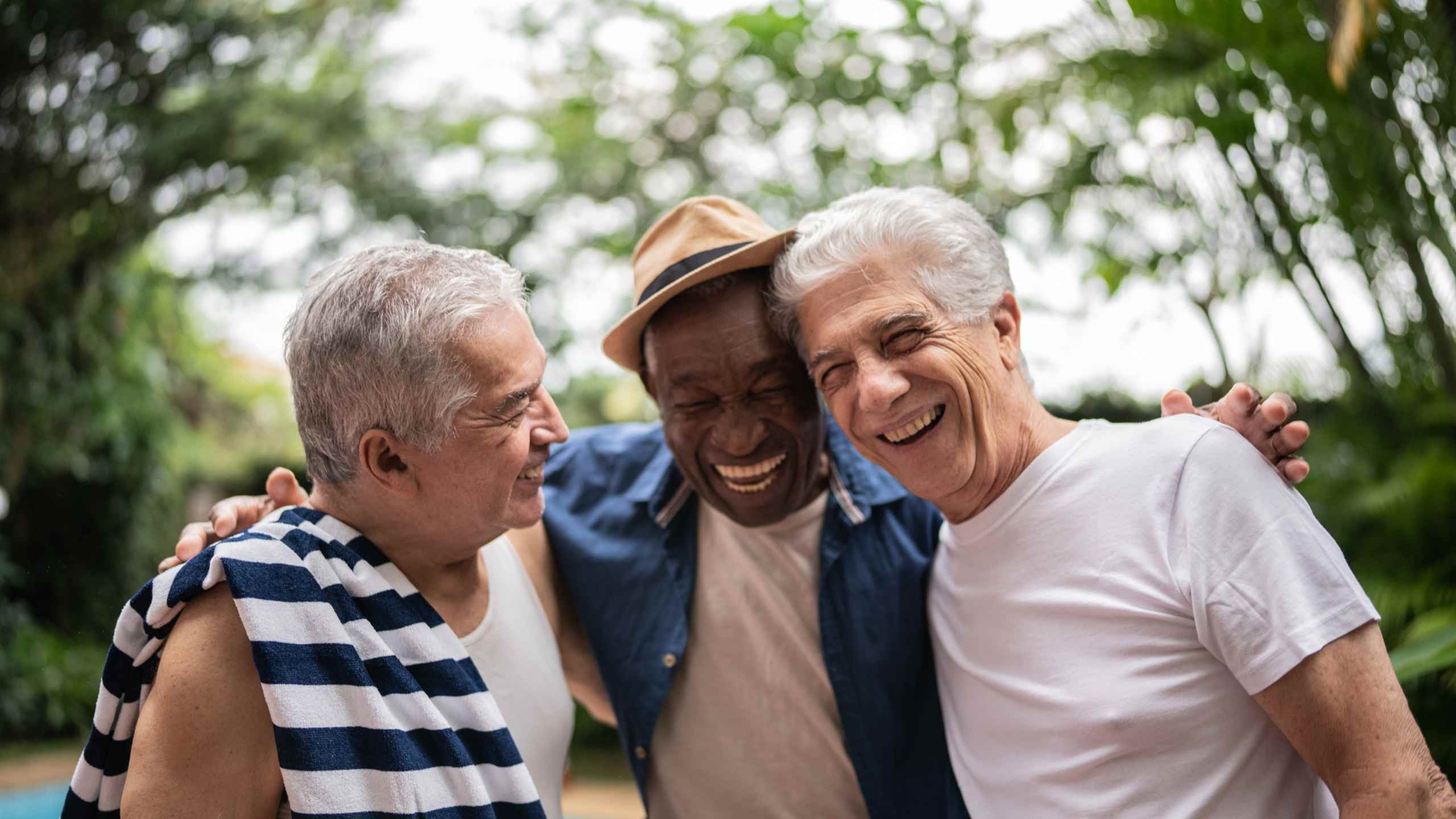
How long you will live—and how healthy you’ll be during your later years—is determined by a complex mixture of genetics, lifestyle factors, and your overall healthfulness. Researchers are beginning to understand that attitude may play an important role, too. One trait, an extroverted personality, may be a distinguishing feature of people who live to a ripe old age.
Extroverts tend to get energy from having people around them. They usually enjoy social activities and working in groups and often make friends easily. We may not all be able to live with or near family in our later years, but as we age, being open to new experiences and relationships may help us live longer, richer lives.
Living large
Many studies support the idea that an outgoing personality may contribute to longer lifespan.
For example, a 2022 study published in PLOS One examining factors contributing to longevity found that many people in the study over the age of 90 considered themselves to be extroverts. The findings support previous research about the social habits of centenarians (people who live to 100).
In one study published in 2013, researchers from the Albert Einstein College of Medicine in New York City examined the personalities of independent-living people aged 95 to 106. The centenarians were not only more outgoing but also had a knack for forming close friendships and for dealing with stress effectively. The findings coincide with other research that has shown that these social traits are associated with greater happiness, vitality, and longevity in older populations.
A 2021 study from Brazil found that people aged 60 years and older who reported leaving their homes daily had a 39 percent reduction in mortality compared with homebodies. Study participants who went to parties had a 17 percent lower mortality rate. On the other hand, other research has linked loneliness and social isolation among older adults to an increased risk of death.
Older people who were extroverted also had significantly lower amounts of beta-amyloid plaques (thought to be a cause of Alzheimer’s disease) than those who weren’t, according to a 2022 study published in Frontiers in Aging Neuroscience. It appears that young people who were extroverted required less brain activity to perform tasks than introverts did. In theory, the extroverts’ brains may be slightly more efficient, which could offer some protection against dementia.
Extroversion is not the only ticket to longevity
If you are hopelessly introverted (and like it that way), not to worry. Research has shown that other qualities like conscientiousness and optimism may increase longevity. So can enjoying laughter, having a sense of purpose, and expressing emotions more easily. Luckily for us as we age, research has shown that people tend to become more agreeable, conscientious, and have greater emotional stability.
When we hit middle age and beyond, it’s common to become more introverted than we may have been in our younger years. But there are ways to work on flexing your extroversion muscles again.
Although research hasn't conclusively determined whether or not our personalities remain stable throughout our lives, certain traits can be changed. Cognitive behavioral therapy, for example, has been shown to help people become more outgoing.
Developing habits for a long life
There are a number of ways to live longer, healthier lives aside from party hopping. The good news is that a majority of health outcomes are related to things we can change or modify, like food and exercise. According to the National Institutes of Health, some of the healthiest things people over 50 can do are:
- Exercise regularly: Try to get at least 150 minutes each week.
- Eat well: Include plenty of fruits, vegetables, whole grains, beans and legumes, plus lean protein, low-fat dairy, and healthy fats.
- Avoid excess weight, especially around the waist.
- Use your brain: Do puzzles and play games, practice an instrument, learn a new language, tend a garden, or take up a new hobby, such as partner dancing.
- If you drink alcohol, do so in moderation: two or fewer drinks a day for men and one or fewer for women
- Avoid smoking and other tobacco products.
- Get regular checkups with your healthcare provider.
The PLOS study from 2022 found that moderation may be an important commonly shared trait for increasing longevity. Among the older individuals in the study, only about one-third drank alcohol and fewer than one-seventh regularly smoked, rates that were significantly lower than those of other people in the same general age group—and habits that had a significant impact on participants’ lifespans.
Living long and being healthy during your later years is attributable to a range of factors. Along with living a healthy lifestyle, spreading those social butterfly wings may just help you enjoy a few more years.
Sources: Cleveland Clinic. Introvert vs. Extrover... + 11
- Cleveland Clinic. Introvert vs. Extrovert: Understanding Personality Types. February 4, 2026.
- Martin P, da Rosa G, et al. Georgia Centenarian Study. Personality and longevity: findings from the Georgia Centenarian Study. Age (Dordr). 2006 Dec;28(4):343-52.
- Masui Y, Gondo Y, et al. Do personality characteristics predict longevity? Findings from the Tokyo Centenarian Study. Age (Dordr). 2006 Dec;28(4):353-61.
- Miao L, Yang S, et al. Research on the prediction of longevity from both individual and family perspectives. PLoS One. 2022 Feb 18;17(2):e0263992.
- Kato K, Zweig R, et al. Personality, self-rated health, and cognition in centenarians: do personality and self-rated health relate to cognitive function in advanced age? Aging (Albany NY). 2013 Mar;5(3):183-91.
- Holt-Lunstad J, Smith TB, et al. Loneliness and social isolation as risk factors for mortality: a meta-analytic review. Perspect Psychol Sci. 2015;10(2):227-237.
- Lennartsson C, Rehnberg J, Dahlberg L. The association between loneliness, social isolation and all-cause mortality in a nationally representative sample of older women and men. Aging Ment Health. 2022;26(9):1821-1828.
- Soares MU, Facchini LA, et al. Social relationships and survival in the older adult cohort. Rev Lat Am Enfermagem. 2021 Jan 8;29:e3395.
- Oh H. Extraversion Is Associated With Lower Brain Beta-Amyloid Deposition in Cognitively Normal Older Adults. Front Aging Neurosci. 2022 Jul 13;14:900581.
- Kato K, Zweig R, et al. Positive attitude towards life and emotional expression as personality phenotypes for centenarians. Aging (Albany NY). 2012 May;4(5):359-67.
- Chopik WJ, Rush J, Cerino ES. Interrelations between daily stress processes and Big Five personality trait changes over 20 years. Psychol Aging. 2026 Mar;41(2):146-160.
- National Institutes of Health. Can You Lengthen Your Life? June 2016.