

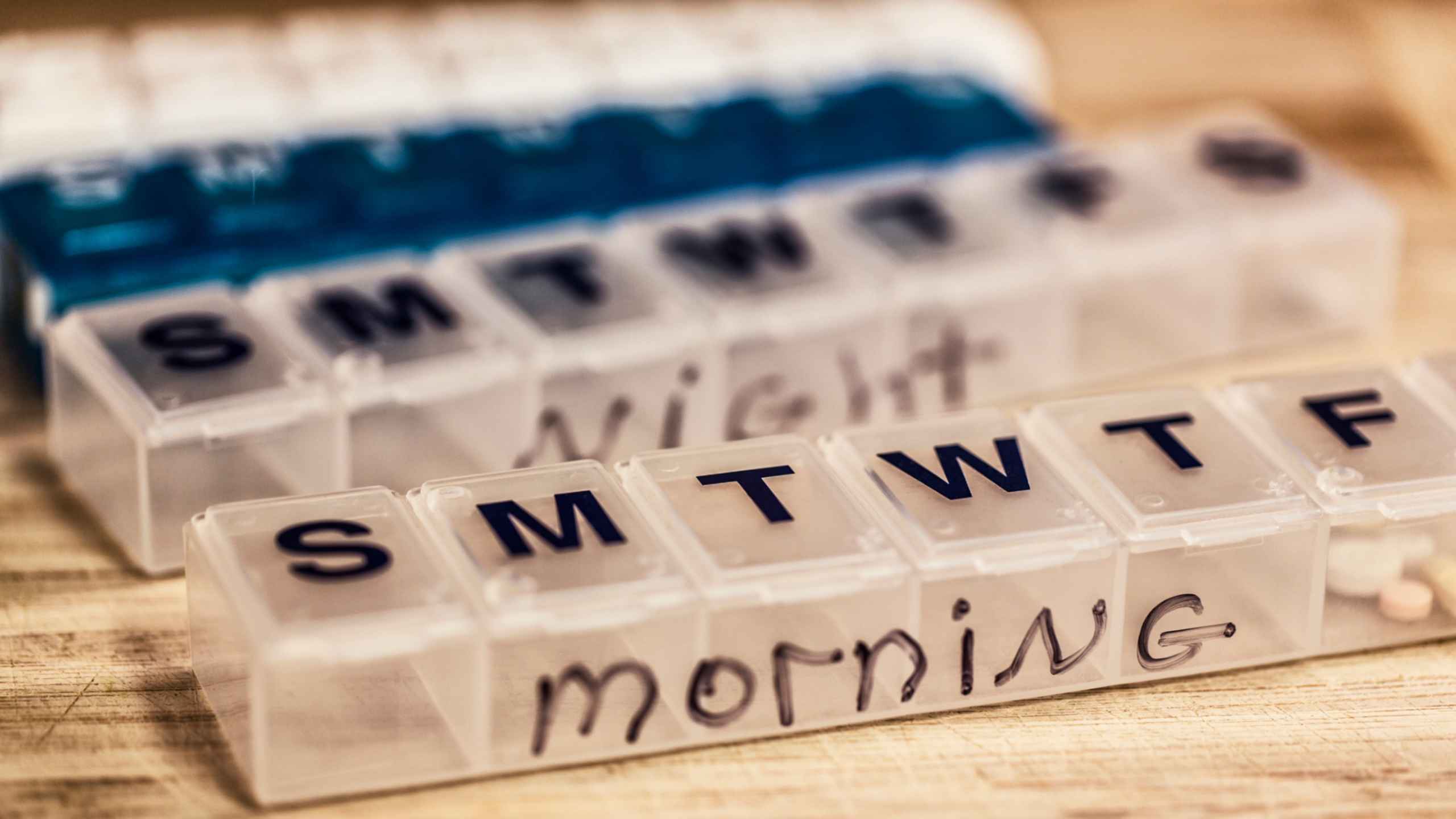
The term “polypharmacy” means taking multiple medications simultaneously. It can mean taking multiple medications taken for the same condition. It can also mean taking multiple medications for multiple conditions.
While polypharmacy is a necessity for many people, it comes with challenges. When several medications are needed, dosing schedules become more difficult to follow correctly. Taking several medications increases the risk of unwanted drug interactions and/or side effects.
Polypharmacy is common in the treatment of narcolepsy, a neurological condition that disrupts the body’s ability to regulate normal sleep-wake cycles. Symptoms of narcolepsy include excessive daytime sleepiness, fragmented nighttime sleep, sleep attacks (episodes of an overwhelming need to sleep), hallucinations, and sleep paralysis. People with narcolepsy type 1 also experience episodes of sudden muscle weakness or muscle paralysis called cataplexy.
The need for polypharmacy in narcolepsy
Treatment for narcolepsy focuses on managing symptoms, including promoting alertness during waking hours and improving sleep.
Treatment plans often include multiple medications. For example, one medication to promote wakefulness, and another to improve the quality of sleep. Sometimes another medication or medications will be needed to manage symptoms like cataplexy, sleep paralysis, and hallucinations.
Additionally, other health conditions are common among people with narcolepsy. These include cardiovascular disease, hypertension, high cholesterol, diabetes, and obesity, as well as psychiatric conditions like depression. Coexisting conditions can require their own medications and can affect what narcolepsy therapies are recommended.
Along with medications, lifestyle modifications are recommended. Common recommendations include consistent sleep schedules, strategic napping during the day, and regular exercise. These are all areas where a healthcare provider can offer guidance.
Strategies for managing multiple medications
In order for any medication to work as intended, you need to take every dose at the correct time. Here are a few strategies that may help:
Have clear instructions for each medication
- Adherence starts with knowing exactly how and when to take each medication. Your healthcare provider will be your best source of information. Your pharmacist is also an excellent resource.
- Instructions should include the days and times the medication needs to be taken, whether it needs to be taken with or without food, and how it needs to be stored.
- Ask what to do if you miss a dose of a medication, and what to do if you accidentally take an extra dose.
- Know how to dispose of expired or discontinued medications properly.
Keep your medications organized
- For oral medications, it’s strongly recommended to use a pill box. This is a container that organizes pills into individual doses labeled with the days of the week and times of day. Set a reminder to refill your pill box at the same time each week.
- Write down your medication schedule in detail. Keep this schedule in a place where it is easy to check. Update it whenever there is a change.
- Have instructions on how to properly store medications. When possible, keep all medications in the same place and keep that space organized.
- Store medications securely and out of reach of children.
Set reminders and use calendars
- Set alarms or reminders on your phone for each medication.
- Have a backup reminder. For example, notes or visual cues can remind you to take medications before leaving the home or going to bed.
- Make taking medications part of your daily routine, such as brushing your teeth. This can be helpful for taking different medications as part of a morning routine and a bedtime routine.
- Add all appointments to a calendar. This includes checkups with all healthcare providers as well as prescription refills.
- If you’re having trouble remembering to take a medication, ask a friend or loved one for help. For example, ask a family member to set their own alarm or reminder.
Plan for the expected and unexpected
- Plan for unplanned interruptions. When you leave the home, have enough doses of medications you may need, plus extra.
- Plan ahead if you are going to be traveling. Pack enough medication, and have copies of your schedule, medical information, and emergency contacts.
- Inform your healthcare provider about travel or anything that could conflict with treatment.
Remember, your healthcare provider is your best source of information. While organization will help you follow a dosing schedule, there are many reasons why following a dosing schedule can be challenging.
Each of your healthcare providers, as well as your pharmacy, should have an up-to-date list of all medications you are taking. This list should include all prescription medications, over-the-counter medications, and supplements (including any herbal products).
If you are having difficulty taking a medication for any reason, tell your healthcare provider.
Sources: Cleveland Clinic. Polypharmacy. December... + 13
- Cleveland Clinic. Polypharmacy. December 1, 2025.
- American Medical Association. 8 reasons patients don't take their medications. February 22, 2023.
- Johns Hopkins Medicine. Polypharmacy in Adults 60 and Older. March 11, 2024.
- Sara Youngblood Gregory. Your guide to narcolepsy treatments and side effects, according to a sleep medicine expert. Mayo Clinic Press. January 23, 2026.
- National Institute of Neurological Disorders and Stroke. Narcolepsy. August 25, 2026.
- Richard J. Schwab. Narcolepsy. Merck Manual Consumer Version. July 2026.
- American Heart Association. Narcolepsy and Heart Health. June 27, 2023.
- National Organization for Rare Disorders. Narcolepsy. June 23, 2017.
- Mayo Clinic. Inotersen (subcutaneous route). July 1, 2026.
- Jessica Merrey. Medication Management and Safety Tips. May 1, 2026.
- MedlinePlus. Taking medicine at home – create a routine. July 15, 2026.
- Stanford Medicine. Remembering to Take Your Medication. Accessed September 24, 2026.
- Mayo Clinic Press. Don’t miss a dose: Expert advice for managing meds. February 29, 2024.
- CDC Travelers' Health. Traveling Abroad with Medicine. August 18, 2022.