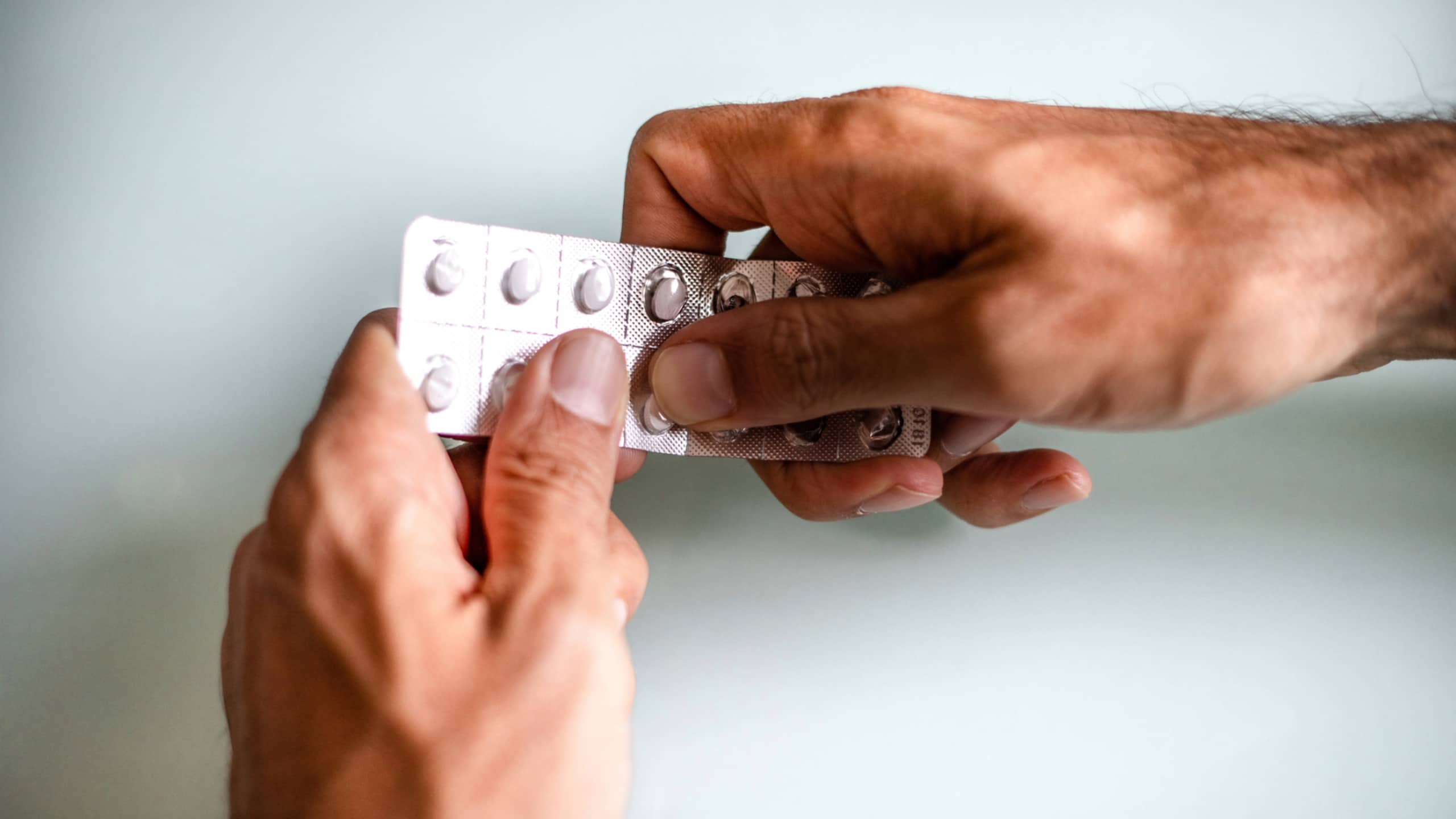
Tardive dyskinesia (TD) is an involuntary movement disorder that occurs as a side effect of medications that block dopamine receptors. TD symptoms can worsen when these medications are discontinued or dosages are lowered.
Dopamine is a neurotransmitter. Neurotransmitters are chemical messengers that the nervous system uses to communicate with different cells throughout the body. This includes communication between neurons (nerve cells), as well as communication between neurons and muscles, hormone-producing glands and organs, and blood vessels.
Dopamine attaches to cells via dopamine receptors. Receptors are proteins found on cells where a neurotransmitter can attach. Neurotransmitters and receptors are not universally compatible, so a dopamine molecule can only attach to a corresponding dopamine receptor.
Most of the body’s dopamine receptors are found in the central nervous system (the brain and spinal cord). Dopamine receptors are also located in the peripheral nervous system (neurons outside the brain and spinal cord), the kidneys, blood vessels, and other tissues and organs.
Dopamine signaling regulates many functions in the mind and body—thinking, memory, attention, impulse control, sleep, kidney function, blood pressure, hormone regulation, and movement.
There are five different types of dopamine receptors, numbered D1 through D5. These different dopamine receptors are tied to different functions, though there is overlap. For example, D1 and D2 play a role in movement and attention, while D3 and D4 are tied to cognition and attention, to name a few examples.
Medications that block dopamine receptors
Numerous medications work by blocking dopamine receptors. The dopamine-blocking medications most often associated with tardive dyskinesia are called neuroleptics, or antipsychotics.
Neuroleptics are used in the treatment of schizophrenia and bipolar disorder. Some are used in the treatment of agitation associated with Alzheimer’s disease.
It’s important to state that the causes of schizophrenia and bipolar disorder are not fully understood. Dysregulation of neurotransmitter activity, including dopamine signaling, plays a significant role in both conditions (but in different ways).
Blocking dopamine receptors and/or other neurotransmitter activity can help control symptoms of these conditions.
A note on first-, second-, and next-generation neuroleptics
Neuroleptics have been prescribed since the 1950s. The first generation of these drugs worked primarily by blocking dopamine receptors.
Newer neuroleptic drugs are called second generation, or next generation in the case of very recently available drugs. Second- and next-generation neuroleptics work through multiple mechanisms, blocking dopamine receptors and other types of neurotransmitter receptors.
Second- and next-generation neuroleptics are associated with fewer side effects, but side effects like TD remain a known issue, and careful monitoring for side effects is required when taking any neuroleptic medication.
Dopamine-blocking medications and other conditions
Blocking dopamine receptors can also be helpful in controlling symptoms of other conditions. These include gastroparesis (a disorder where the stomach cannot empty), seizure disorders, depression, and Parkinson’s disease. Dopamine-blocking medications used to treat these conditions are also associated with tardive dyskinesia.
Why do dopamine-blocking medications cause TD?
The exact causes of TD are complex and not fully understood. There are multiple theories that are still being investigated.
In very simple terms, when the brain and nervous system is exposed to dopamine-blocking drugs, it adapts. Dopamine receptors may become more sensitive, certain neurological connections can become stronger, dysregulation in other (non-dopamine) neurotransmitter signaling can occur.
This disrupts the nervous system’s ability to control movements, and results in the involuntary, uncontrolled, and repeated movements that are the characteristic symptoms of TD. There is also evidence of other contributing factors, including inflammation in the brain, a buildup of harmful substances in neurons, damage to neurons, and damage to genes.
Keep in mind that this is a simplified summary of a complex disease state that is not fully understood.
How can TD be treated?
Treatment for TD varies from person to person and depends on the medications a person is taking, underlying medication conditions, the severity of TD symptoms, and a person’s overall health and healthcare needs.
Treatment may involve tapering off the medication that is causing TD and potentially switching to another medication. Mentioned at the start of this article, new TD symptoms can appear or become worse when a dopamine-blocking medication is stopped or a dosage is lowered. Discontinuing or tapering off a medication should only be done under the careful guidance of a healthcare provider.
Stopping a neuroleptic medication or reducing dosage can also result in a relapse of symptoms for an underlying psychiatric disorder.
There are also medications that can help control TD symptoms. Before starting any medication, always talk to a healthcare provider about the potential risks and side effects.
Treatment should also include psychological and social support, as well as supportive therapies to address limitations in functioning, movement, nutrition, and difficulties with speech and swallowing. A healthcare provider will be your best source of information.
Sources: MedlinePlus. Tardive dyskinesia. May 4, ... + 13
- MedlinePlus. Tardive dyskinesia. May 4, 2026.
- Mohsin Raza and Jonathan A. Mars. Tardive Dyskinesia. StatPearls. January 31, 2026.
- Cleveland Clinic. Dopamine. March 23, 2022.
- Cleveland Clinic. Neurotransmitters. March 14, 2022.
- Anmol Bhatia, Jennifer R. Lenchner, and Abdolreza Saadabadi. Biochemistry, Dopamine Receptors. StatPearls. June 22, 2023.
- Cleveland Clinic. Dopamine Antagonists. May 9, 2023.
- Preeti Patel and Abdolreza Saadabadi. Neuroleptic Medications. StatPearls. February 21, 2024.
- National Institute of Mental Health. Bipolar Disorder. Accessed October 9, 2025.
- Mayo Clinic. Schizophrenia. October 16, 2024.
- Veeraraghavan Iyer, Ankit Jain, and Paroma Mitra. Bipolar Disorder. StatPearls. September 9, 2026.
- Manassa Hany and Abid Rizvi. Schizophrenia. StatPearls. February 23, 2024.
- Matcheri S. Keshavan. Antipsychotic Medications. Merck Manual Consumer Version. January 2026.
- Cleveland Clinic. Antipsychotic Medications. November 22, 2024.
- Cleveland Clinic. Tardive Dyskinesia. July 10, 2024.