
Atopic dermatitis affects people of all ages, and millions of children and teens live with the condition. If you are the parent of a child or teen who has atopic dermatitis, one of your first questions will be: What treatments are available?
Treating atopic dermatitis in children and teens is not that different than treating atopic dermatitis in adults, and will involve a combination of avoiding triggers, using good bathing habits, using an emollient to moisturize the skin, taking steps to prevent secondary infections, and addressing related conditions, such as allergic rhinitis, asthma, and/or food allergies.
There are also a number of prescription therapies that your child’s pediatrician may recommend to treat atopic dermatitis. These are typically used in cases where other treatments are not able to control symptoms. Because all of these treatments carry the risk of side effects, they can only be used under the guidance of a healthcare provider (HCP).
Topical corticosteroids
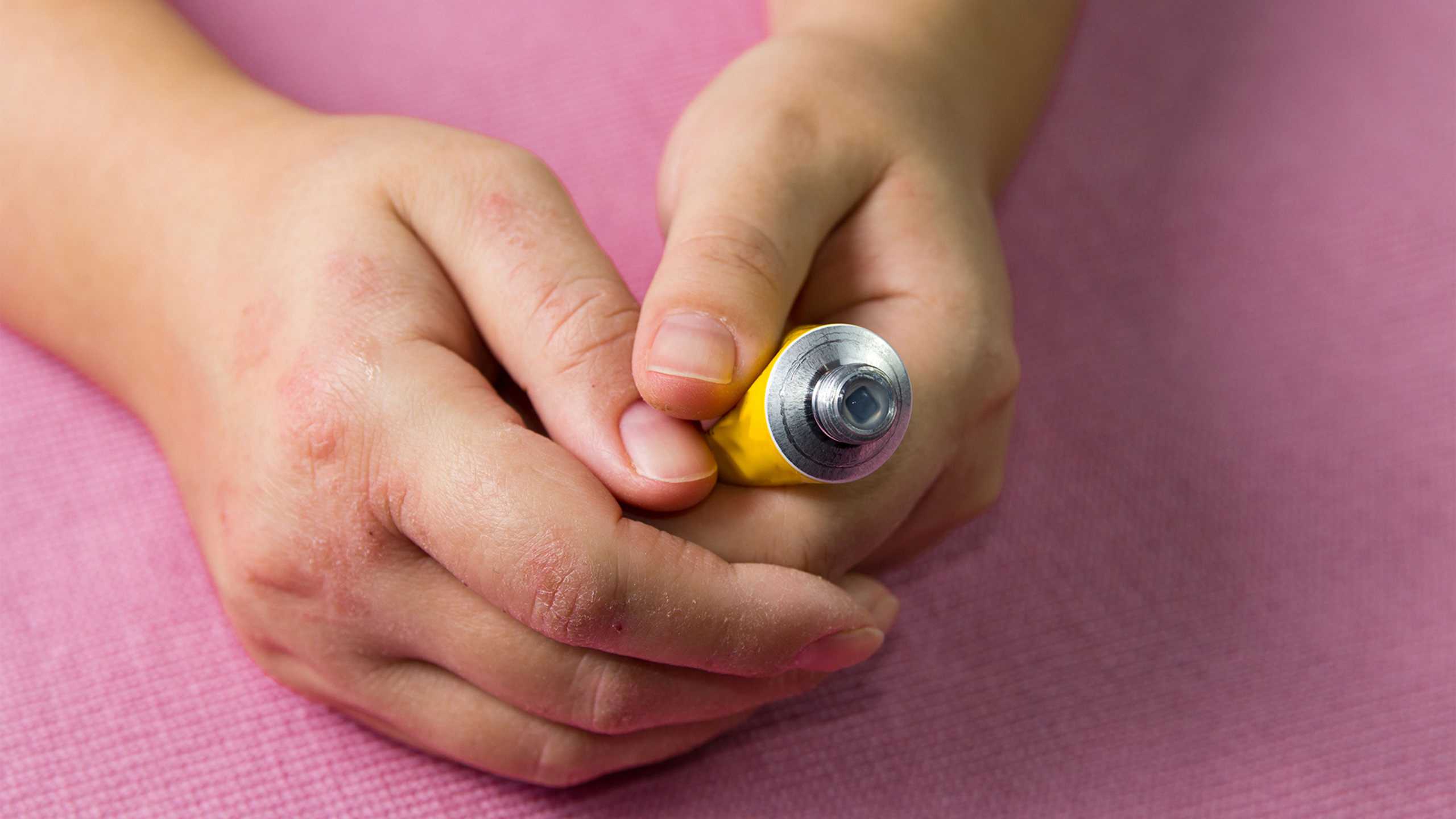
Topical corticosteroids are one of the most common treatments for atopic dermatitis and other inflammatory skin conditions. They are sometimes simply referred to as “steroids,” though they should not be confused with the steroids used to enhance athletic performance and build muscle. “Topical” refers to a medicine that is applied directly to the skin, such as creams, lotions, ointments and gels; there is also a type of corticosteroid that is applied as a tape that adheres to the skin. Topical steroids are available in a variety of strengths. Some are available over the counter, and some are available by prescription. The prescription varieties are higher-strength. All must be used with caution, and only under the guidance of a pediatrician.
Phototherapy
Phototherapy is considered a second-line treatment, meaning it is a treatment that is used when therapies like moisturizers, corticosteroids, and wet wraps are not successful. Phototherapy treats skin conditions through exposure to ultraviolet light (called UV light), a component of sunlight. The type of UV light recommended to treat pediatric atopic dermatitis is called narrowband ultraviolet B (UVB) light. Phototherapy helps relieve inflammation, improves the skin’s vitamin D production, and boosts its ability to fight bacteria. Phototherapy is NOT the same thing as using a tanning bed and must be done under the careful guidance of an HCP.
Immunomodulators
Immunomodulators control inflammation by modifying how the immune system works, by targeting specific chemicals and functions in the immune system. They are generally only used for severe cases of pediatric atopic dermatitis. Some are “off-label,” meaning that they are not indicated for atopic dermatitis, but may be prescribed by HCPs to treat atopic dermatitis when other treatments do not work. Some immunomodulators are taken as oral medications, others by injection, and there are also several topical immunomodulators (abbreviated as TIMs) that are applied to the skin.
Making treatment decisions
It is important to keep in mind that there is no single best therapy for atopic dermatitis—different approaches work for different people. Deciding on a treatment means working with your child’s pediatrician, and it is important to talk to your child’s pediatrician before making any changes to a treatment plan. Treatment decisions must take into account numerous factors, including the child’s age, medical history and overall health, the severity of symptoms, comorbidities, and how well the child tolerates different treatments. Your concerns and preferences as a parent will also be considered, as will your child’s concerns and preferences as a patient.
Sources: American Academy of Pediatrics. Treatmen... + 13
- American Academy of Pediatrics. Treatment of Atopic Dermatitis. March 3, 2026.
- National Eczema Association. Prescription Topicals. April 21, 2025.
- American Academy of Dermatology. Eczema Treatment: Corticosteroids Applied to the Skin. Accessed October 22, 2026.
- American Academy of Pediatrics. Corticosteroids for Atopic Dermatitis. June 28, 2021.
- RxList. Cordran Tape. August 23, 2022.
- National Eczema Association. Phototherapy. May 5, 2025.
- American Academy of Dermatology. Eczema Treatment: Phototherapy. Accessed October 22, 2026.
- American Academy of Dermatology. Atopic Dermatitis Clinical Guideline. Accessed October 22, 2026.
- American Academy of Dermatology. Pediatric Atopic Dermatitis Guideline. Accessed October 22, 2026.
- National Eczema Association. Eczema in Children. Accessed October 22, 2026.
- National Eczema Association. Prescription Oral Medications. April 21, 2025.
- American Academy of Allergy, Asthma & Immunology and American College of Allergy, AAAAI/ACAAI JTF Atopic Dermatitis Guideline Panel, et al. Atopic dermatitis (eczema) guidelines: 2023 American Academy of Allergy, Asthma and Immunology/American College of Allergy, Asthma and Immunology Joint Task Force on Practice Parameters GRADE- and Institute of Medicine-based recommendations. Ann Allergy Asthma Immunol. 2024 Mar;132(3):274-312.
- American Academy of Dermatology. Eczema Types: Atopic Dermatitis Diagnosis and Treatment. July 13, 2026.
- Children’s National Hospital. Pediatric Eczema (Atopic Dermatitis). Accessed October 22, 2026.