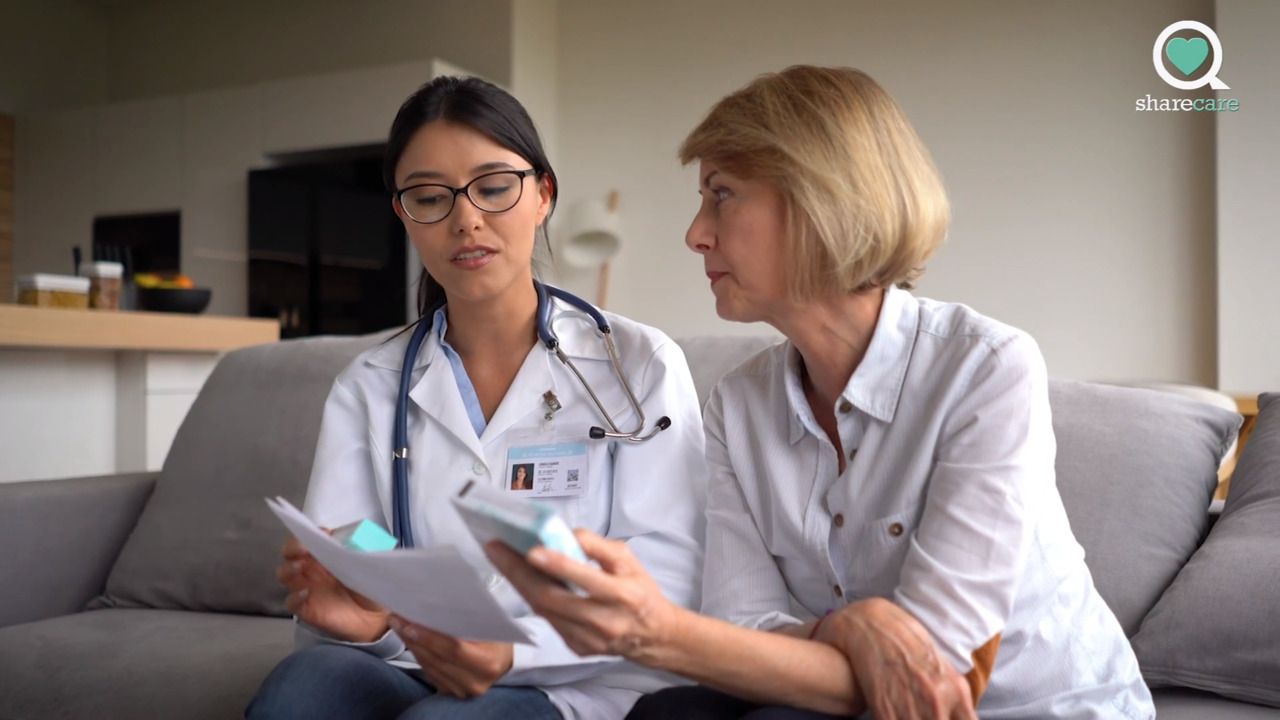
Telehealth refers to consulting with a healthcare provider remotely. For a number of years telehealth has been a helpful tool for people who live in areas where healthcare is not easily or readily accessible. Here, we look at what people with psoriasis can expect—and how they can prepare for—a telehealth appointment with a dermatologist.
Book your appointment
The first steps are to find out if your dermatologist offers telehealth appointments and if your insurance plan covers telehealth appointments with a dermatologist. If you have any concerns or questions about privacy or protection for your health information, this is a good time to ask.
Know what tools you will be using
When you book your appointment, find out what applications you will be using to communicate with your healthcare provider. A telehealth appointment may involve video conferencing, instant messaging, and phone calls. Video conferencing is helpful because it enables you and your dermatologist to talk face to face. Your dermatologist may also need you to share photos or written descriptions of symptoms through a patient portal, online medical record, or email. It is helpful to familiarize yourself with the applications you will be using before your appointment, and your provider’s office should be able to provide instructions and assistance to help you get started.
Have goals for your appointment
Before your appointment, write down what you want to discuss and any questions you have. If you have been keeping a journal, spend some time going over your entries. Do not forget to think about the ways psoriasis impacts your life and how psoriasis makes you feel—these are important factors in determining the severity of psoriasis. Prioritize what you want to discuss, putting the two or three topics that are the most important to you at the top of the list, and make these the primary focus of your appointment.
Be prepared to answer questions
Just like an in-office appointment, you should be prepared to answer questions about your symptoms, treatment, and overall health. Your dermatologist may need information about:
- Your current treatment, how you feel about your treatment, and if you are struggling to take your treatment as directed.
- Any other medications you take, including medications for other conditions as well as any dietary supplements.
- Any other health conditions you have and your medical history, such as previous infections, surgery, and known allergies.
Set up your space
It is recommended that you find a quiet space where you won’t be distracted or interrupted, where you can focus on your appointment. Make sure the space has a strong Wi-Fi signal or a wired internet connection. Because your dermatologist may need to look at a symptom, also make sure the space has good lighting, and test the camera on your computer, tablet, or phone ahead of time.
Arrive early
Healthcare providers typically ask you to arrive to their office early, and the same holds true for telehealth appointments. Some applications even have a virtual waiting room.
Use the wait to go over the list of what you want to discuss during the appointment and sort out any last-minute details. Make sure the device you’ll be using for the appointment is charged (and have a charging cable ready, as video conferencing apps can drain battery). Have a glass or bottle of water nearby—you may want a sip now and again, especially if you are talking a lot during the appointment. Have a pen and paper on hand to take notes. Headphones can be helpful.
After your appointment
Immediately after your appointment, write down what was discussed and what you need to follow-up on, such as filling a prescription or finding an answer to a question. Also make a note about how you feel the appointment went—were you satisfied with the appointment? Do you feel it could have gone better? Telehealth has pros and cons, and it may not be right for every person at every point in treatment. Having a note to refer back to may be helpful if you decide to book another telehealth appointment, or if you need to decide between telehealth and an in-office appointment.
Sources: HealthIT.gov. "Telemedicine and Teleheal... + 12
- HealthIT.gov. "Telemedicine and Telehealth."
- Heather M. Jones. "What to expect at your first telehealth appointment." SingleCare.com. April 16, 2020.
- Andrei Zimiles. "Four new statistics that prove that telemedicine isn’t just a pandemic fad." Medical Economics. July 8, 2020.
- Casey Ross. "Telehealth grew wildly popular amid Covid-19. Now visits are plunging, forcing providers to recalibrate." Statnews. September 1, 2020.
- American Academy of Dermatology Association. "What is telemedicine?"
- American Academy of Dermatology Association. "7 simple steps to prepare for your telemedicine appointment."
- American Telemedicine Association. "Practice Guidelines for Dermatology."
- Jennifer Larson. "What to Expect with a Telehealth Appointment for Psoriasis." HealthGrades. May 13, 2020.
- Mara Gordon. "Telehealth Tips: How To Make The Most Of Video Visits With Your Doctor." NPR. April 15, 2020.
- Danielle Ofri, M.D. "A Doctor’s Guide to a Good Appointment." The New York Times.
- MercerMedicine. "What To Expect When You Schedule a Virtual Appointment."
- Cecilie Bisgaard-Frantzen. "Is Telemedicine Right for You?" Berkley Wellness. June 15, 2015.
- MedicalNewsToday. "Telemedicine benefits: For patients and professionals."