

Each year, nearly 500,000 people are diagnosed with Lyme disease from a tick bite, according to the Centers for Disease Control and Prevention (CDC). Many more people are likely infected and go undiagnosed. And while Lyme disease accounts for the vast majority of tick-borne illnesses, these parasitic arachnids—yes, they have eight legs—can also transmit other types of disease, including spotted fever rickettsiosis, babesiosis, and anaplasmosis/ehrlichiosis.
Here’s what to know to protect yourself during the height of tick season—which, depending on where you live, can last all the way from March to mid-November.
Dress to protect
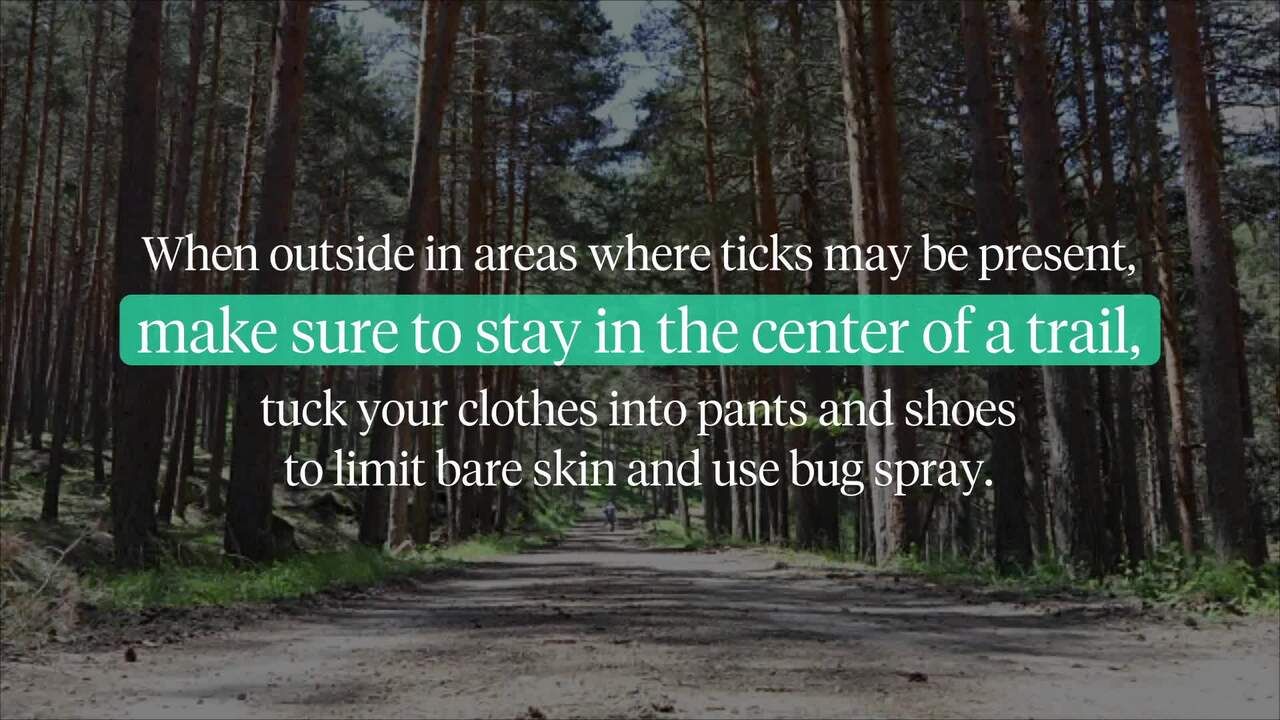
If you’re going to be hiking or spending time in potentially tick-infested areas like woods, wear long-sleeved shirts and long pants tucked into socks. Lighter colors won’t just keep you cooler but will make it easier to spot ticks, too. You can also buy clothing that’s been pre-treated with permethrin, a chemical that kills ticks, or treat clothing yourself with a product that contains 0.5 percent permethrin.
The protection provided by pre-treated clothing should last for up to 60 washings, whereas treating clothes yourself should last several washings.
Wear repellent
Look for a product that contains between 10 and 35 percent DEET, 7 or 15 percent picaridin or IR3535. For children over 2 months of age, the CDC and the American Academy of Pediatrics recommend using 10 to 30 percent DEET. Children under 2 months should not use DEET.
Follow the instructions on the label for reapplication: most products containing picaridin or IR3535 need to be reapplied every two hours. With DEET products, it depends on the concentration. If you or your child has sensitive skin, you may be better off with picaridin. It may be less likely than the others to trigger skin and eye irritation, according to the Environmental Working Group.
Rinse off after you’ve been outdoors
While it’s probably unrealistic to hop into the shower every time you come in from the yard, if you’ve been out for a while, or been out in heavily wooded areas, it’s a good idea to take a quick bath or shower. Research has suggested that bathing within two hours of yard time reduces the risk of developing Lyme disease by almost 60 percent. Since ticks can also land on your clothes, throw your outfit in a hot dryer for 10 minutes to kill any bugs that may have sneakily attached themselves.
Do a tick check
Ticks need to be attached to your skin for at least 36 hours before they can start transmitting Lyme disease. But that timeframe is shorter for other diseases such as spotted fever and anaplasmosis, so make sure you examine yourself and other loved ones at the end of any day spent outdoors in an area where you can pick up ticks.
Living in or around a city doesn’t necessarily mean you're safe. Ticks that can spread Lyme disease may be found in some city parks in endemic areas that are accessible to deer, particularly the Northeast.
Checking for ticks involves a full-body exam, including looking under the arms, in and around ears, inside the belly button, behind knees, between legs, and in hair. If you don’t have a partner to help you, use a hand-held or full-length mirror to check yourself.
Create a tick-free home zone
There are also a few things you can do to help keep ticks off your property:
- Invest in a fence. It won’t just keep pets and small children in the yard, but will keep animals that transmit ticks (like deer, raccoons, and rodents) out.
- Do some landscaping. Since ticks—and the mice that often host them—tend to live in wooded areas, create a 3-foot-wide barrier of wood chips to discourage either type of critter from crossing over into your lawn.
- Mow your lawn regularly. This improves sun exposure to grass which in turn makes it less hospitable for ticks.
- Treat your lawn. Applying an insecticide that contains bifenthrin or cyfluthrin may help kill ticks. Just keep in mind that this method isn’t foolproof—research hasn’t proven that it reduces rates of tick-related disease.
- Set pesticide-containing bait boxes. These can trap mice that may carry ticks.
Protect your pooch, too
All that romping outside leaves your canine susceptible to tick bites. While it makes sense to ask your veterinarian about vaccinating your dog against Lyme disease—especially if you live in an area with high rates like the Northeast, mid-Atlantic, or upper Midwest—dogs are still at risk for other tick-borne diseases and can also bring ticks into the house and cause you to get infected. You should also talk to your vet about using a preventive product that can kill or repel ticks, such as one made with pyrethroids.
A solid fence will keep animals that transmit ticks (like deer) out, while an electric fence can keep Rover from wandering into potentially tick-infested areas like that patch of woods at the edge of your lawn.
And just as it’s important to check yourself and family members for ticks, remember to check your dog for ticks daily (and your cat too, if they ever venture outside). If you spot a tick, remove it promptly.
Remove ticks immediately
If you do see a tick, there’s no need to panic, but you do need to act quickly, since infection can occur within 36 to 48 hours.
The best way to remove a tick is to use a set of fine-tipped tweezers to grasp it close to the skin, then pull upwards with steady, even pressure. Don’t jerk or twist the tick, which can cause mouth parts to remain lodged in the skin. And try to avoid crushing it, since doing so can cause potentially infected body fluids to leak out.
After you pull the tick off, clean the bite area and your hands with either soap and water or rubbing alcohol. You can get rid of the tick by placing it in a sealed plastic baggie or by flushing it down the toilet. Don’t try to suffocate the tick with nail polish or petroleum jelly, since the goal is to remove the tick as soon as possible.
The CDC doesn’t recommend sending the tick off for testing, since a positive result doesn’t necessarily mean you’re infected, and a negative result can lead to false assurance. In other words, you could have also unknowingly been bitten by a different tick that was infected.
In the meantime, keep an eye out for symptoms of tick disease such as a rash at the site of the bite, fever, and unexplained aches and pains like a headache or muscle aches. If you have any of these symptoms—or just want to make sure you’re doing the right thing after a tick bite—check with your physician or other healthcare provider.
Sources: Centers for Disease Control and Preventi... + 10
- Centers for Disease Control and Prevention. Preventing Lyme Disease. May 21, 2026.
- New York State Department of Health. Lyme Disease. July 2023.
- Environmental Working Group. EWG’s guide to bug repellents. May 30, 2024.
- HealthyChildren.org. Summer Safety Tips Staying Safe Outdoors. June 19, 2017.
- Animal Legal Defense Fund. Lyme Disease. Accessed June 29, 2026.
- American Veterinary Medical Association. Lyme Disease in Dogs. Accessed June 29, 2026.
- Centers for Disease Control and Prevention. Preventing Ticks on Pets. May 15, 2024.
- University of Rhode Island TickEncounter. TickSmart Prevention. Accessed June 29, 2026.
- Centers for Disease Control and Prevention. What to Do After a Tick Bite. June 9, 2026.
- Centers for Disease Control and Prevention. About Ticks and Tickborne Diseases. May 15, 2024.
- Infectious Diseases Society of America. AAN/ACR/IDSA 2020 Guidelines for the Prevention, Diagnosis and Treatment of Lyme Disease. November 30, 2020.