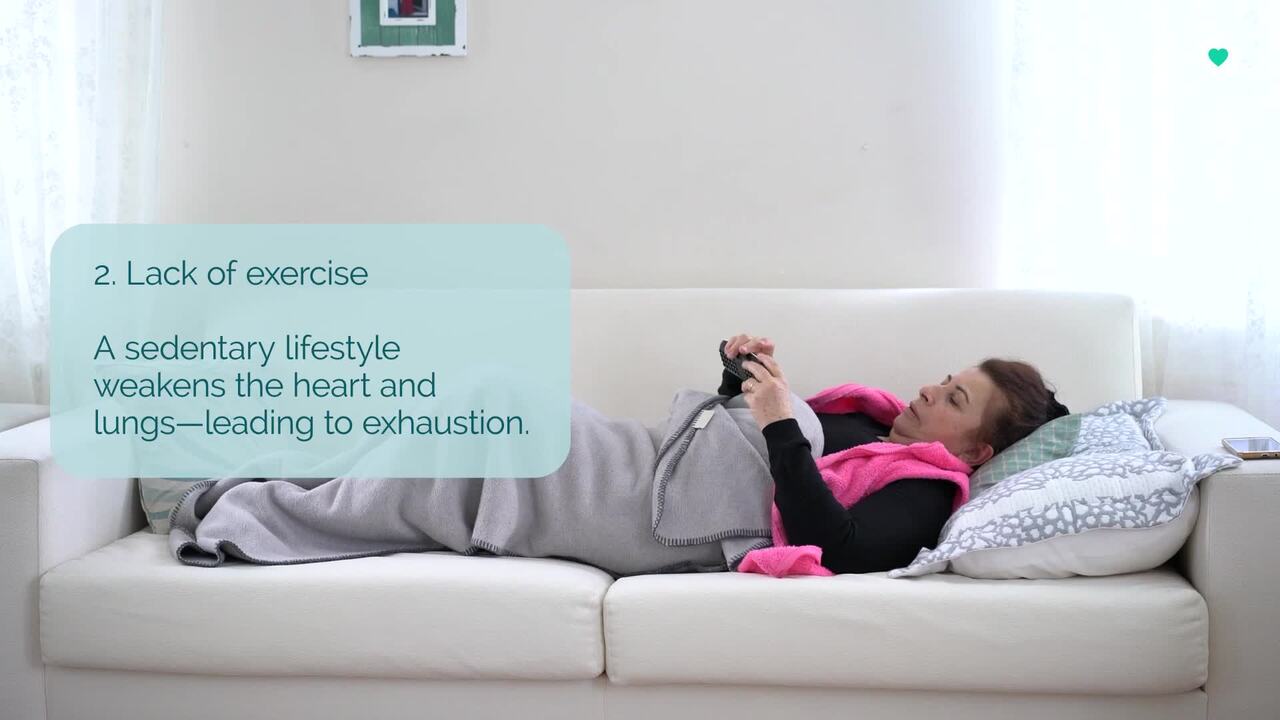


Everyone gets tired sometimes, whether it’s from a tough workout or a busy day running errands. But if even a little activity consistently exhausts you—and you feel even worse the day or two afterward—it could be a sign of myalgic encephalomyelitis/chronic fatigue syndrome (ME/CFS).
ME/CFS is a debilitating condition that causes severe fatigue lasting more than six months. “But it’s not just fatigue—it’s the inability for people to exert themselves,” explains Lela Mansoori, MD, an endocrinologist and internist in Denver, Colorado.
It’s also characterized by post-exertional malaise (PEM), which occurs when symptoms worsen after exertion and last for days or weeks at a time. Other symptoms may include pain, headaches, brain fog, and sleep problems.
While myalgic encephalomyelitis/chronic fatigue syndrome is the most commonly used term for the condition, healthcare providers (HCPs) may also refer to it as myalgic encephalomyelitis (ME), chronic fatigue syndrome (CFS), or systemic exertion intolerance disease (SEID).
ME/CFS may affect as many as 3.3 million people in the United States, according to the Centers for Disease Control and Prevention (CDC). However, the CDC estimates that up to 90 percent of cases are undiagnosed. Finding relief for ME/CFS starts with a diagnosis, but given the complexity of the condition, that is no easy task.
What causes ME/CFS?
The causes of ME/CFS remain a medical mystery, though several hypotheses have been proposed, says Dr. Mansoori. Some research suggests a link between ME/CFS and immune system issues, stress, genes, and environment, among other factors. Depression is often linked, but it more likely occurs alongside ME/CFS than causes it. Previous viral infections, such as COVID, have also been associated with the condition.
There are also many similarities between ME/CFS and fibromyalgia, another condition with no single known cause. Some researchers believe they are the same disease, just different expressions of the symptoms.
What does ME/CFS feel like?
Symptoms of ME/CFS are often both physical and psychological. “People may feel like they have to nap several times a day and they have problems staying asleep or waking up too early,” says Mansoori. “They may feel drained after just mild activity like sweeping the floor or going for a walk. Their thought processes feel slow and an overwhelming number have problems with memory.” She says that patients may also report flu-like symptoms, along with heaviness in the arms and legs.
“Also, because of these symptoms, patients feel that their social interactions decrease, which leads to increased isolation,” says Mansoori. She says a person may feel depressed not from the condition but because of the many limitations on regular activities.
In 2015, the National Academy of Medicine (formerly the Institute of Medicine) released a report outlining new diagnostic criteria. To receive a diagnosis of ME/CFS, a person must have the following symptoms:
- Being fatigued and unable to function for at least six months
- Post-exertional malaise (PEM)
- Unrefreshing sleep
And at least one of the following:
- Cognitive impairment, like trouble remembering or expressing thoughts
- Dizziness when sitting up or standing up quickly
“The symptom of fatigue is present in many illnesses,” says Mansoori. There is no single test for ME/CFS either, which means HCPs have to rule out many other health issues before settling on a diagnosis. Mansoori says she first checks for neurologic conditions like multiple sclerosis, types of cancers, autoimmune diseases like psoriatic arthritis or lupus, infectious diseases such as hepatitis or HIV, thyroid disorders, and adrenal disorders. The symptoms of long COVID also overlap with ME/CFS.
Treatment options for ME/CFS
While there is no cure for ME/CFS, some treatments can help manage symptoms linked to the condition. For example, pacing allows a person with ME/CFS to find their personal energy limits and manage their activity levels accordingly. It's important to work with your HCP as you explore what level of activity and rest work best for you.
Having a chronic, exhausting illness like ME/CFS can also take a toll on mental health. But evidence suggests that talk therapy, such as cognitive behavioral therapy (CBT), may have some benefits for coping with ME/CFS. It’s important to see a CBT therapist who specializes in the condition, Mansoori notes.
Some medications can help manage symptoms as well. Nonsteroidal anti-inflammatory drugs (NSAIDs) may be used for pain, for example, while antidepressants may aid sleep, pain, and fatigue.
What you can do about ME/CFS
If you have ME/CFS, there are things you can do to help yourself feel better. Start by talking to your HCP about what treatment strategies are available to you, as well as additional recommendations for simplifying day-to-day life.
You may also want to try the following:
- Keep a diary to help spot what triggers your fatigue. It can help you identify what might be worsening it, along with times of the day when your energy is usually highest and lowest. Use that information to plan your activities.
- Ensure that you understand the requirements of daily tasks and keep distractions to a minimum to try to ease brain fog.
- Avoid negative self-talk. It can reinforce the idea that you can’t cope with your condition. Instead, be proactive and learn what works for you to manage low energy and other symptoms.
- Maintain a regular bedtime routine and consistent wakeup and sleep times to reduce daytime fatigue.
Sources: Cleveland Clinic. Myalgic Encephalomyeli... + 11
- Cleveland Clinic. Myalgic Encephalomyelitis/Chronic Fatigue Syndrome (ME/CFS). April 16, 2026.
- MedlinePlus. Myalgic Encephalomyelitis/Chronic Fatigue Syndrome (ME/CFS). April 1, 2025.
- Ali SA, Kheirabadi D. Chronic Fatigue Syndrome. 2025 Dec 13. In: StatPearls [Internet]. Treasure Island (FL): StatPearls Publishing; 2026 Jan–.
- Centers for Disease Control and Prevention. ME/CFS Basics. May 10, 2024.
- Che X, Ranjan A, et al. Heightened innate immunity may trigger chronic inflammation, fatigue and post-exertional malaise in ME/CFS. NPJ Metab Health Dis. 2025 Sep 3;3(1):34.
- Centers for Disease Control and Prevention. Causes of ME/CFS. April 17, 2026.
- Abbi B, Natelson BH. Is chronic fatigue syndrome the same illness as fibromyalgia: evaluating the 'single syndrome' hypothesis. QJM. 2013 Jan;106(1):3-9.
- Centers for Disease Control and Prevention. IOM 2015 Diagnostic Criteria. May 10, 2024.
- Better Health Channel (AUS). Chronic Fatigue Syndrome (CFS). July 7, 2022.
- American ME and CFS Society. Overlapping Conditions. Accessed August 12, 2026.
- Graves BS, Patel M, et al. Chronic Fatigue Syndrome: Diagnosis, Treatment, and Future Direction. Cureus. 2024 Oct 1;16(10):e70616.
- Centers for Disease Control and Prevention. Managing ME/CFS. May 10, 2024.