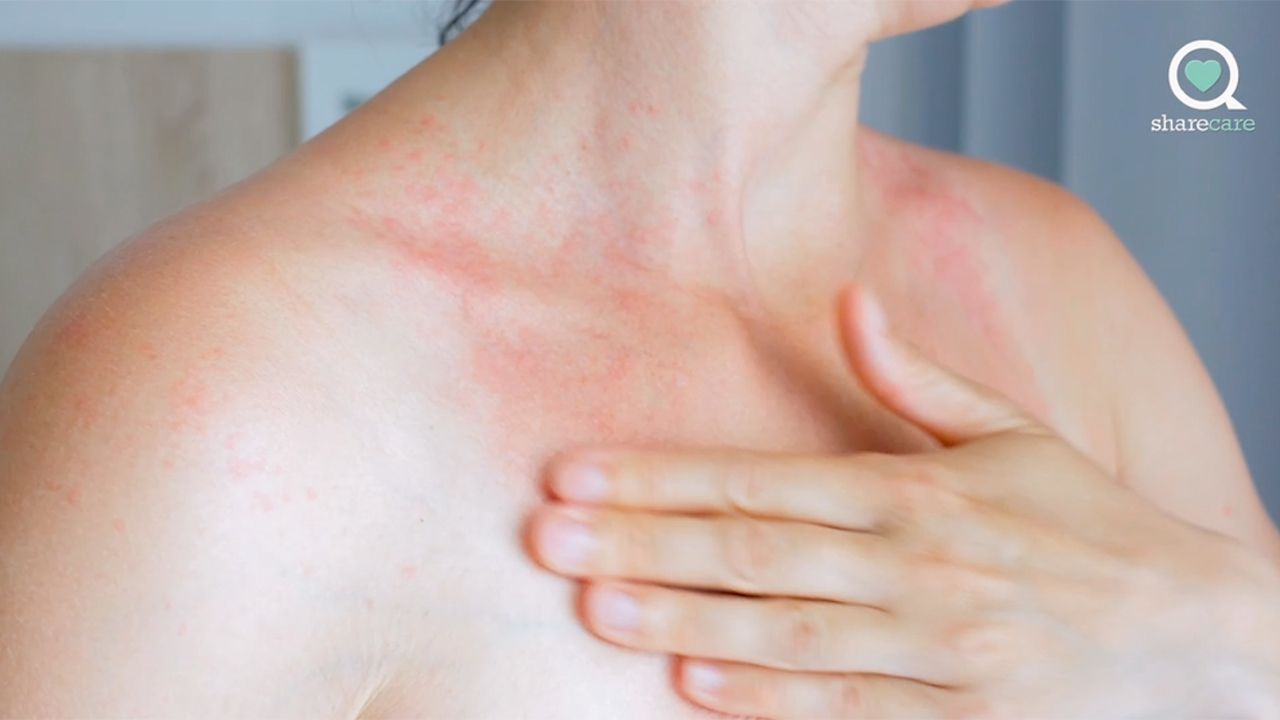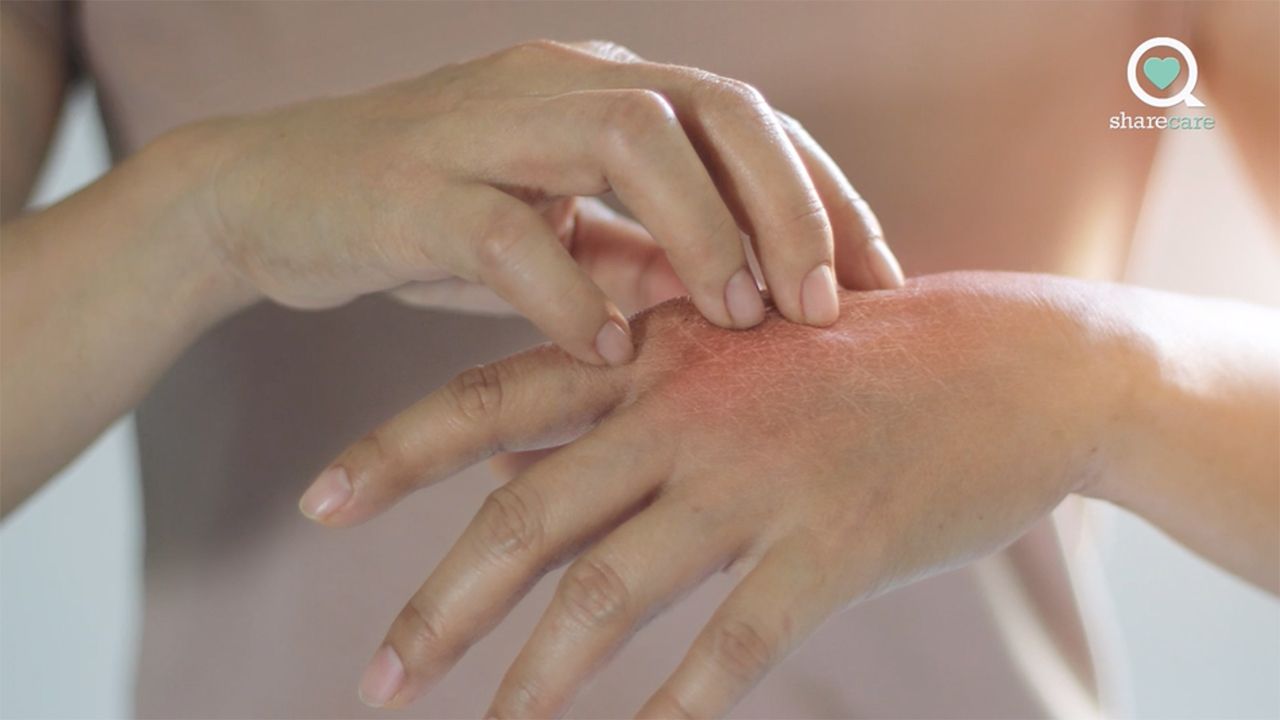


The language and terminology around chronic hives—also known by the clinical term chronic urticaria—can be confusing. Language has evolved as research has improved the healthcare community’s understanding of the condition. In some cases, different terms are used to describe the same subcategory of hives. Here, we provide a glossary of current terminology, outdated terminology, and a variety of definitions to help understand the literature around chronic urticaria.
- Urticaria. The clinical term for hives—red, raised, itchy welts that occur on the skin. It’s estimated that 20 percent of people experience hives at some point during their lifetime.
- Wheals. Another term for hives.
- Pruritus. This is the clinical term for itch.
- Angioedema. Another symptom that can occur alongside hives, which involves swelling below the surface of the skin and fatty tissue. Angioedema is sometimes described as hives that occur beneath the skin, and can be painful. Swelling in the face and extremities are a common symptom. Some people experience angioedema without hives.
- Acute urticaria. Hives that resolve in less than six weeks’ time are categorized as acute. The majority of cases of hives are acute. Infections, allergies, and insect stings are common triggers of acute hives.
- Chronic urticaria. Chronic means “lasting a long time.” Hives are categorized as chronic when they persist for a period of longer than six weeks. In some cases, hives can be a daily or near-daily occurrence for months or years. Only a small percentage of people experience chronic urticaria.
- Episodic chronic urticaria. This refers to hives that recur less than twice a week over a long period of time.
- Chronic inducible urticaria (CIndU). A subcategory of chronic urticaria, where hives are induced by environmental triggers such as cold, pressure, and physical exertion. About 20 to 30 percent of cases of chronic urticaria fall into this category. Inducible urticaria is sometimes listed on its own as a separate category of urticaria.
- Chronic physical urticaria. Another term for chronic inducible urticaria. Physical refers to environmental triggers other than allergens.
- Dermographism. A specific type of inducible urticaria, where scratching, rubbing, or stroking the skin triggers hives. This is also known as dermographia, autographism, and “skin writing.”
- Chronic spontaneous urticaria (CSU). Most cases of chronic urticaria fall into this category, where there is no identifiable trigger for the hives.
- Chronic idiopathic urticaria (CIU). This is another term for chronic spontaneous urticaria. Idiopathic means “having no known cause.”
- Autoimmune urticaria. Autoimmune diseases are disorders where the immune system attacks healthy cells. Some research suggests that chronic urticaria is associated with abnormal immune system activity. Hives can also be a symptom caused by some autoimmune disorders. Immunosuppressive drugs and biologic therapies—which modify immune activity—are sometimes prescribed for difficult-to-treat chronic urticaria.
- Off-label prescribing. Medications are approved to treat specific conditions. Sometimes a healthcare provider will prescribe a medication to treat a condition outside of what it is approved to treat. This is called “off-label prescribing.” There are a number of therapies that are prescribed off-label for chronic urticaria. These include treatments for conditions such as asthma, depression, gout, and malaria. These medications are prescribed because of their antihistamine and anti-inflammatory properties, and because there is research to support the idea that they may be effective in treating chronic urticaria. Any medication should always be taken under the guidance of a healthcare provider.
Sources: Yasmin Moolani, Charles Lynde, and Gordo... + 16
- Yasmin Moolani, Charles Lynde, and Gordon Sussman. “Advances in Understanding and Managing Chronic Urticaria.” F1000 Research, February 2016. Vol. 5.
- UpToDate. “Chronic spontaneous urticaria: Treatment of refractory symptoms.”
- Medical News Today. "What are hives (urticaria)?"
- UpToDate. “Patient education: Hives (urticaria) (Beyond the Basics).”
- Cleveland Clinic. "Itchy Skin (Pruritus)."
- Merck Manual Consumer Version. “Angioedema.”
- Merck Manual Consumer Version. “Hives.”
- Melek Aslan Kayiran and Necmettin Akdeniz. "Diagnosis and treatment of urticaria in primary care." Northern Clinics of Istanbul, Feb. 2019. Vol. 6.
- American Academy of Allergy, Asthma & Immunology. “Hives (Urticaria) and Angioedema Overview.”
- Kjetil Kristoffer Guldbakke, MD and Amor Khachemoune, MD, CWS. "Classification and Treatment of Urticaria: A Brief Review." Dermatology Nursing, 2005. Vol. 17, No. 5.
- Taek Ki Min and Sarbjit S. Saini. "Emerging Therapies in Chronic Spontaneous Urticaria." Allergy, Asthma & Immunology Research, July 2019. Vol. 11, No. 4.
- National Organization for Rare Diseases. “Urticaria, Physical.”
- Kiran Vasant Godse. "Chronic Urticaria and Treatment Options." Indian Journal of Dermatology. Oct-Dec 2009. Vol. 54, No. 4.
- Ilaria Puxeddu, Federico Pratesi, Domenico Ribatti and Paola Migliorini. "Mediators of Inflammation and Angiogenesis in Chronic Spontaneous Urticaria: Are They Potential Biomarkers of the Disease?" Mediators of Inflammation, Vol. 2017.
- U.S. Food & Drug Administration. "Understanding Unapproved Use of Approved Drugs 'Off Label.'"
- Agency for Healthcare Research and Quality. "Off-Label Drugs: What You Need to Know."
- Paul A Greenberger. "Chronic urticaria: new management options." World Allergy Organization Journal, 2014. Vol. 7, No. 1.