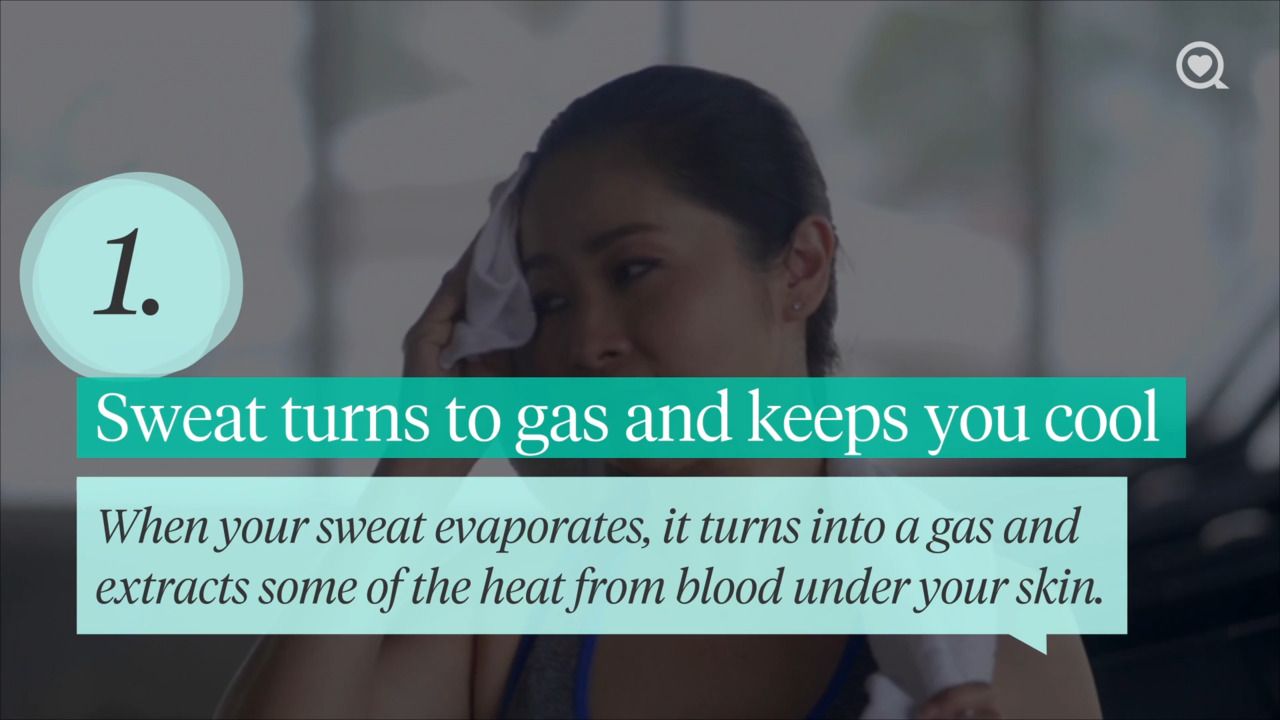


Sweating is a very necessary—and healthy—part of living, because it cools the body down and keeps us from overheating. But do you ever feel like you’re sweating more than everyone else around you?
It’s possible that you just run warm, says Ashley Guild, MD, an internist in Brentwood, Tennessee. “You may be prone to getting hot, and sweat is a normal response to excessive heat,” says Dr. Guild.
But there may be other reasons for excessive sweating, ranging from certain medications to health issues to what you eat for dinner.
Common reasons you may sweat more
Here are some common things that can ramp up perspiration.
Hyperhidrosis
Hyperhidrosis is a condition that causes excessive sweating or sweating when the body doesn’t need to cool down. It’s normal to sweat when you’re nervous or your body is overheated, but when you have hyperhidrosis, you sweat for no clear reason.
“If you have hyperhidrosis, the sweating usually happens in your hands, underarms or feet,” says Guild.
Medications
Many common drugs can cause you to sweat, so it’s important you check with your physician or other healthcare provider (HCP) about prescriptions that may have this side effect, says Guild.
Here are some well-known over-the-counter and prescription drugs that may lead you to perspire:
- Acetaminophen
- Aspirin
- Ibuprofen
- Hormone therapy
- Hypoglycemic agents
- Antidepressants
Happy hour
When you drink alcohol, your blood vessels dilate. That increases your skin temperature, causing you to sweat. This can happen as you're drinking your favorite glass of wine or that new must-have beer.
Alcohol withdrawal can cause you to sweat, too. If you drink pretty regularly but haven’t had any alcohol recently, you might sweat more. If you notice any nausea, shakiness, fatigue, or headaches when you sweat, see an HCP to determine whether you’re having alcohol withdrawal.
Spicy foods
People may notice sweating around their face or lips when they’re eating spicy foods or other foods they are sensitive to. This type of sweating is also known as gustatory sweating. It occurs when certain foods cause your brain to think your body temperature is higher, which in turn, triggers sweat. This nerve confusion can also cause you to sweat even when you just think about certain foods, too.
Menopause
One of the most common symptoms of perimenopause and menopause is excessive sweating. Hormonal changes in the body trigger hot flashes and night sweats.
Being overweight
People who are overweight may get warmer more quickly because they have more fat on their body, says Guild. “Fat is an insulator, so that causes them to be warmer and causes them to sweat easier,” she explains.
Emotions
If your hands, feet, or underarms sweat when you’re in front of a big group of people or when you’re making an important presentation at work, you may be an emotional sweater, says Guild. When you’re stressed or nervous, sweat glands in the face, palms and soles of your feet and armpits may be triggered.
Ways to manage and treat sweat
Many sweating causes can be managed at home or with medical treatment. Here’s what to expect when it comes to treatment options.
Wear an antiperspirant
Get clinical strength if you need it. Antiperspirant sits on the top layer of your skin. As you start to sweat, it’s absorbed into your sweat glands, which signals your body to cut down on sweat production.
Drink more water
Whether you’re hot-natured or not, drinking water cools the body down internally, says Guild.
Consider Botox injections
The U.S. Food and Drug Administration has approved Botox injections to treat sweating, says Guild. They’re meant specifically for reducing excessive underarm sweating but may also treat sweating of the hands and feet. The injections work for four to six months at a time, blocking body chemicals that cause you to sweat.
Ask about a prescription
If you have excessive body sweat, your HCP may prescribe medications like anticholinergics, which prevent the sweat glands from working. Beta blockers or benzodiazepines may help to decrease anxiety and reduce emotional sweat.
Think of surgery as a last resort
If all other treatments are unsuccessful, your HCP may recommend surgery such as sweat gland removal or sympathectomy, a procedure that interrupts the nerve signals that trigger your sweat glands.
If you feel like you’re sweating more than others, or you feel embarrassed or uncomfortable about your sweat, see your HCP for a physical exam, and if necessary, a sweat test.
Sources: American Academy of Dermatology Associat... + 6
- American Academy of Dermatology Association. Hyperhidrosis: Diagnosis and Treatment. July 16, 2024.
- Mayo Clinic. Night Sweats Causes. January 20, 2024.
- International Hyperhidrosis Society. Drugs/Medications Known to Cause Hyperhidrosis. 2022.
- International Hyperhidrosis Society. Gustatory Sweating (Frey’s Syndrome). Accessed August 17, 2026.
- Cleveland Clinic. Night Sweats. April 28, 2026.
- International Hyperhidrosis Society. Physiology of Normal Sweating. Accessed August 17, 2026.
- International Hyperhidrosis Society. Oral Medications. Accessed August 17, 2026.