

The transition from childhood to adulthood can be difficult in many different ways. But today’s adolescents face a set of mental health challenges that no other generation has experienced. In recent years, teens in the United States have become increasingly anxious, depressed, and suicidal.
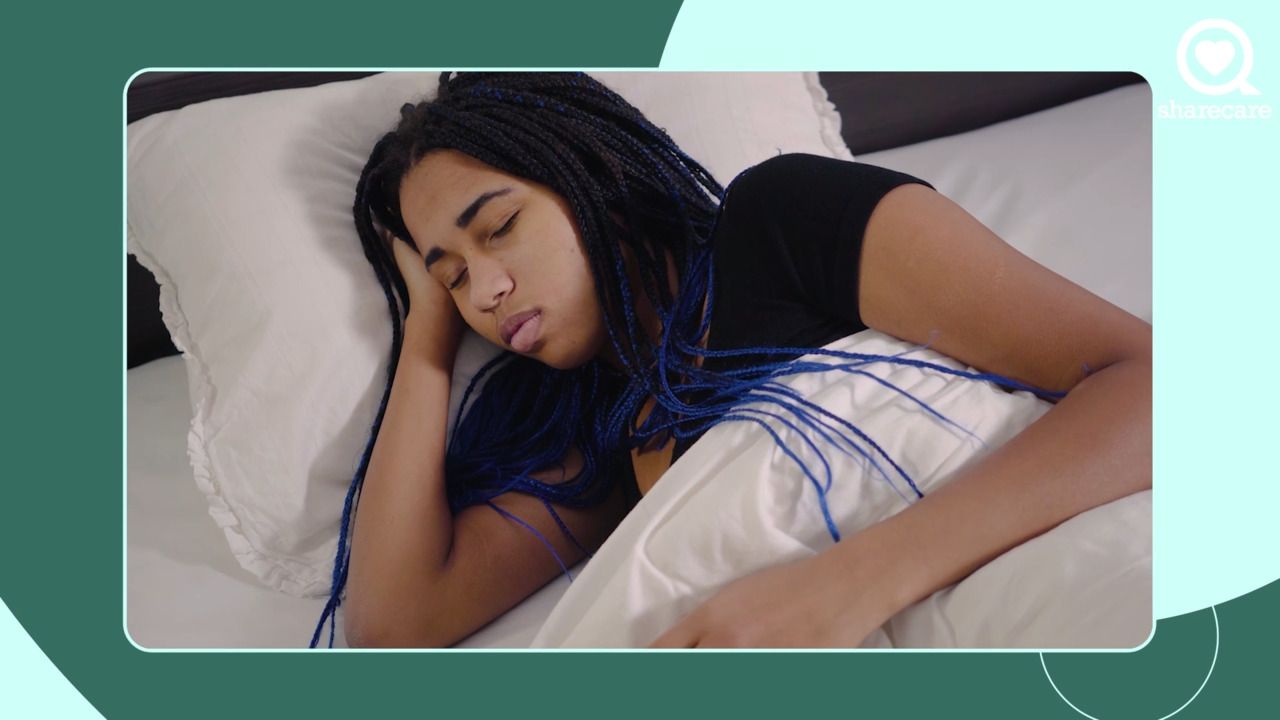
While parents and health experts scramble to find answers for what researchers are calling a teen mental health crisis, one of the clues may be right before our eyes: Teenagers are getting less sleep.
Sleep experts recommend that kids ages 13 to 18 get between 8 and 10 hours of sleep per night. But in 2023, just about 1 in 4 teens regularly slept 8 hours, according to the Centers for Disease Control and Prevention (CDC). Over time, lack of sleep increases the risk of mental health issues.
Learn why teens are missing out on so much sleep, how it affects mental health, and what you can do to help your teen consistently get a good night’s rest.
Factors that lead to less sleep
One main reason teens lose sleep is puberty, which causes a slew of changes to a growing body. One of those is a shift in production of melatonin, the hormone that regulates sleep. Delayed release of melatonin changes a teen’s internal body clock (also known as circadian rhythm), naturally encouraging them to awaken later—and stay up later—than children or adults.
The problem is, school start times remain largely the same—or, as kids enter high school, may even shift in the direction of earlier wakeup times.
In 1998, a landmark study of 10th graders whose school start time changed from 8:25 a.m. to 7:20 a.m. was published in the journal Sleep. Researchers found that the students grew significantly more tired with the shift. By 8:30 a.m., nearly half the students were drowsy enough to fall into REM sleep within 10 to 15 minutes. It’s a timeframe so short it’s often used as a possible indicator of narcolepsy.
Not only is valuable sleep time lost to early starts, but bleary-eyed teens are expected to process early morning lessons, take tests, and maintain busy schedules throughout the school day. Adding extracurricular activities, homework, and after-school jobs leaves even fewer hours in the day for rest and contributes to increased levels of stress.
Other compounding factors include the following:
- Technology use. More time spent in front of TVs, computers, and smartphones is associated with disrupted sleep routines and shorter sleep times.
- Neurodevelopmental issues. Teens with conditions like autism and attention-deficit/hyperactivity disorder (ADHD) are at a significantly higher risk for sleep problems.
- Caffeine. To keep pace with heavy homework loads—and to avoid missing out on social media threads after hours—many teens use caffeinated drinks to keep them awake. It may offer an immediate benefit of alertness, but when consumed too close to bedtime, it has the effect of interfering with restful sleep, compounding the problem of sleep deprivation.
As teens lose hours of sleep throughout the school week, they accrue “sleep debt.” To compensate for this, many teens sleep in on weekends. But researchers say this is not a sustainable solution. While catch-up sleep may feel helpful in the short term, varying your sleep and wake-up times can further disrupt your internal clock. This opens teens up to a range of negative effects, including mood and mental health issues.
Health effects of sleep deprivation
For teens, the consequences of long-term sleep loss are far-reaching. Studies suggest it influences neurocognitive functions, such as memory and attention, which affect the ability to learn and retain information. Sleep deprivation can also put teens in physical danger. They may fall asleep while driving and are more likely to engage in risk-taking behaviors, including alcohol and drug use, violent behavior, and unsafe sex.
Perhaps the most devastating effects of sleep deprivation, though, are those on mental health. Studies suggest sleep-deprived teens are significantly more likely to develop depression and anxiety than those who get the recommended 8 to 10 hours of sleep each night. Poor sleep also seems to be predictive of future mood disorders. Multiple studies have found that poor sleep and short sleep duration are linked to developing depression and anxiety later on in life.
It’s important to understand, however: Just as poor sleep may contribute to mood disorders, having a mood disorder can also lead to poor sleep. It’s a vicious cycle: You may not sleep well, which can worsen your mood, which further worsens your sleep.
What can be done?
While there is much more to be learned about the sleep-mental health connection, the good news is that there are potential solutions for teens.
Push school start times
Multiple studies have found that starting school at later hours can benefit teens. More sleep is linked to academic improvements, better attendance rates, and even fewer motor vehicle accidents. It’s also tied to improved mood, fewer feelings of sadness, and even less-frequent use of alcohol, cigarettes, and drugs.
Reduce homework load
Research suggests students are often tasked with too much homework. More time spent can be counterproductive as it makes students more likely to skimp on sleep, drop activities and hobbies, and spend less time with friends and family.
Maintain consistent bedtimes
Teens are more prone than others to disturbed sleep cycles, especially during the summer. Parents can help by setting lights-out times and establishing good sleep habits. If possible, try to keep a steady schedule all throughout the year.
Nix devices and caffeine
Teenagers should avoid late-night use of electronic devices, which has been linked to greater odds of inadequate sleep, lower sleep quality, and daytime drowsiness. Exposure to the blue light generated by electronic devices during night hours can disrupt circadian rhythms. Teens—and adults—should also stop consuming caffeine at least six hours before bedtime, or around mid-afternoon.
If sleep issues persist after trying at-home solutions, reach out to a healthcare provider (HCP) to see if there may be an underlying health issue at play, such as sleep apnea. If symptoms of depression or anxiety are ongoing, it’s important to consult with a mental health professional. If your teen experiences thoughts of self-harm or suicide, call, text, or chat 988 to reach the 988 Suicide & Crisis Lifeline.
Sources: Brody DJ, Hughes JP. Depression prevalen... + 25
- Brody DJ, Hughes JP. Depression prevalence in adolescents and adults: United States, August 2021–August 2023. 2025 Apr; (527)1–11.
- Centers for Disease Control and Prevention. Trends in Mental, Behavioral, and Developmental Disorders Among Children and Adolescents in the US, 2016–2021. December 12, 2024.
- Centers for Disease Control and Prevention. Students and Sleep. September 10, 2020.
- Centers for Disease Control and Prevention. Dietary, Physical Activity, and Sleep Behaviors Among High School Students — United States, 2013–2023. 2024.
- American Academy of Pediatrics. Sleeping for Success Healthy Sleep Habits for Children and Adolescents. 2023.
- Child Mind Institute. Why Teenagers Are So Sleep Deprived. March 5, 2025.
- Adolescent Sleep Working Group; Committee on Adolescence; Council on School Health. School start times for adolescents. Pediatrics. 2014 Sep;134(3):642-9.
- Carskadon MA, Wolfson AR, et al. Adolescent sleep patterns, circadian timing, and sleepiness at a transition to early school days. Sleep. 1998;21(8):871-881.
- Centers for Disease Control and Prevention. Associations Between Screen Time Use and Health Outcomes Among US Teenagers. July 10, 2205.
- He X, Pan B, et al. The association of screen time and the risk of sleep outcomes: a systematic review and meta-analysis. Front Psychiatry. 2025 Dec 17;16:1640263.
- Widome R, Berger AT, Lenk KM, et al. Correlates of short sleep duration among adolescents. J Adolesc. 2019;77:163-167.
- Attention Deficit Disorder Association. ADHD and Sleep: Problems and Solutions. Accessed April 1, 2026.
- Stanford Medicine. Among Teens, Sleep Deprivation an Epidemic. October 1, 2015.
- Short MA, Weber N. Sleep duration and risk-taking in adolescents: A systematic review and meta-analysis. Sleep Med Rev. 2018;41:185-196.
- Chai R, Bian WJ. Adolescent sleep and its disruption in depression and anxiety. Front Neurosci. 2024 Nov 7;18:1479420.
- Johri K, Pillai R, et al. Effects of sleep deprivation on the mental health of adolescents: a systematic review. Sleep Science Practice 9, 9 (2025).
- Orchard F, Gregory AM, et al. Self-reported sleep patterns and quality amongst adolescents: cross-sectional and prospective associations with anxiety and depression. J Child Psychol Psychiatry. 2020;61(10):1126-1137.
- Wang W, Du X, et al. The associations between sleep situations and mental health among Chinese adolescents: A longitudinal study. Sleep Med. 2021;82:71-77.
- Better Health Channel. Teenagers and Sleep. May 11, 2018.
- Nationwide Children’s Hospital. Sleep Tips for Adolescents. Accessed April 1, 2026.
- KidsHealth. Sleep Tips for Teens. June 2020.
- Yip T, Wang Y, et al. School Start Times, Sleep, and Youth Outcomes: A Meta-analysis. Pediatrics. 2022 Jun 1;149(6):e2021054068. Wahlstrom, K., et al. (2014). Examining the Impact of Later School Start Times on the Health and Academic Performance of High School Students: A Multi-Site Study. Center for Applied Research and Educational Improvement. St Paul, MN: University of Minnesota.
- Wanxin W. et al. The associations between sleep situations and mental health among Chinese adolescents: A longitudinal study, Sleep Medicine, Volume 82, 2021, Pages 71-77.
- Wahlstrom KL, Berger AT, Widome R. Relationships between school start time, sleep duration, and adolescent behaviors. Sleep Health. 2017;3(3):216-221.
- Lo JC, Lee SM, Lee XK, et al. Sustained benefits of delaying school start time on adolescent sleep and well-being. Sleep. 2018;41(6):zsy052.
- Stanford University. Stanford research shows pitfalls of homework. March 10, 2014.