









1 of 9
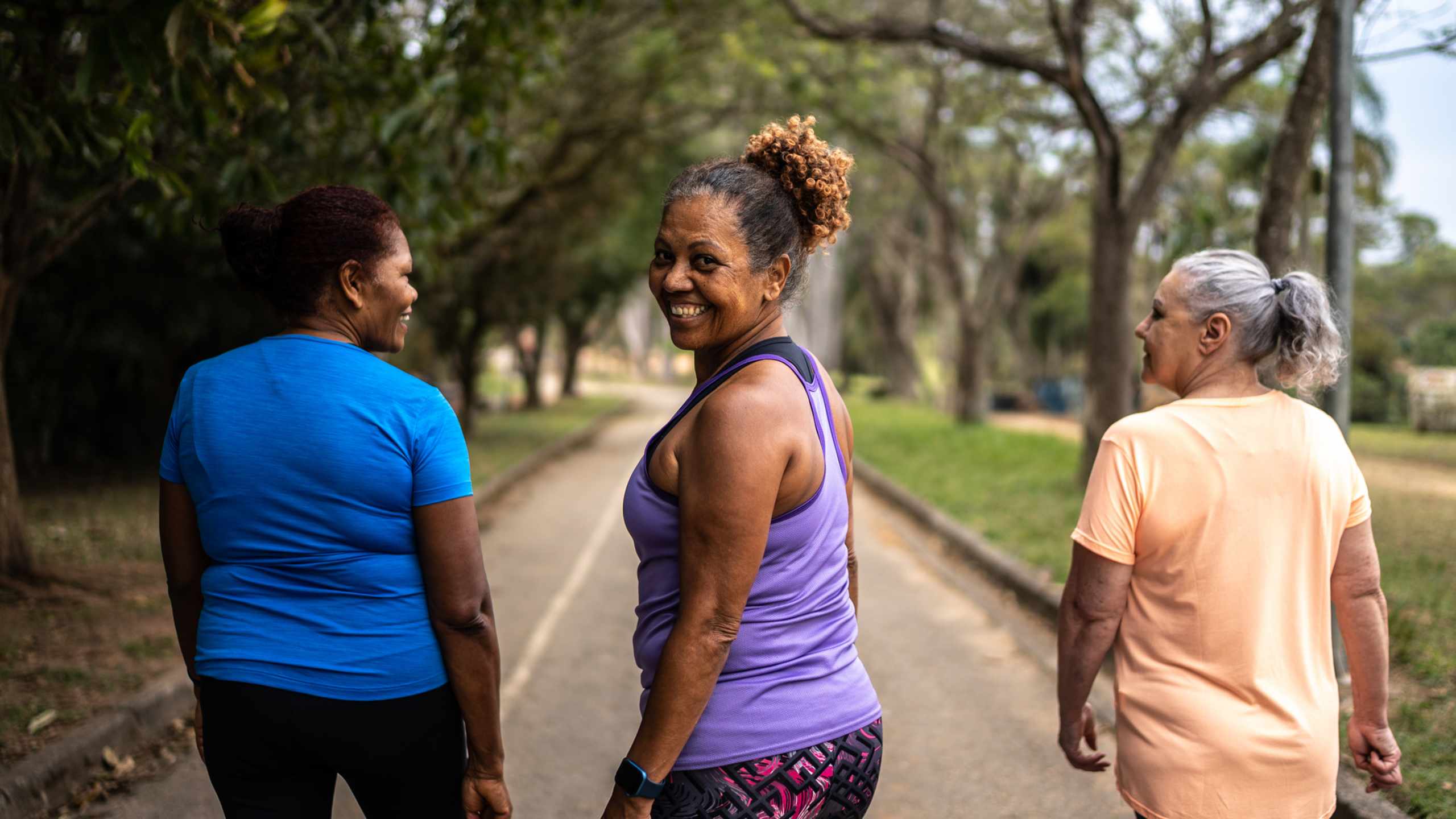
For many people, a good pair of walking shoes and some extra steps each day may go a long way, improving their mental and physical health. Experts recommend that most adults get at least 150 minutes of moderate-intensity aerobic activity, like brisk walking, each week. That’s about 30 minutes per day, spread over five days. Many people should also aim to do muscle-building exercises at least twice per week.
If you don’t have the time or fitness level needed for longer workouts, you can break up your activity into short bouts of exercise. Any exercise is better than none, experts advise. Even 5- or 10-minute walks can add up over time.
If mobility is an issue for you, do as much you can to avoid being inactive. If you must adapt to a disability, work with your healthcare provider (HCP) or a trained exercise specialist to learn what is safe and appropriate for you.
Every minute of movement counts towards your weekly fitness goals and will help reduce your risk for chronic health issues like heart disease and diabetes. Learn more about the significant benefits of a simple walking routine.
Sources: Abildso CG, Daily SM, Umstattd Meyer MR,... + 14
- Abildso CG, Daily SM, Umstattd Meyer MR, Perry CK, Eyler A. Prevalence of Meeting Aerobic, Muscle-Strengthening, and Combined Physical Activity Guidelines During Leisure Time Among Adults, by Rural-Urban Classification and Region — United States, 2020. MMWR Morb Mortal Wkly Rep 2023;72:85–89
- U.S. Department of Health and Human Services. Physical Activity Guidelines for Americans 2nd Edition.; 2018.
- Centers for Disease Control and Prevention. FastStats - Exercise or Physical Activity. Page last reviewed June 11, 2021.
- Su L, Fu J, Sun S, et al. Effects of HIIT and MICT on cardiovascular risk factors in adults with overweight and/or obesity: A meta-analysis. PLoS One. 2019;14(1):e0210644. Published 2019 Jan 28.
- Colberg SR, Sigal RJ, Yardley JE, et al. Physical Activity/Exercise and Diabetes: A Position Statement of the American Diabetes Association. Diabetes Care. 2016;39(11):2065-2079.
- National Institute of Diabetes and Digestive and Kidney Diseases. Preventing Diabetes Problems | NIDDK. Accessed August 17, 2022.
- Mayo Clinic. Type 2 Diabetes - Symptoms and Causes. Published January 20, 2021.
- Garduno AC, LaCroix AZ, LaMonte MJ, et al. Associations of Daily Steps and Step Intensity With Incident Diabetes in a Prospective Cohort Study of Older Women: The OPACH Study. Diabetes Care. 2022;45(2):339-347.
- Barone Gibbs B, Hivert MF, Jerome GJ, et al. Physical Activity as a Critical Component of First-Line Treatment for Elevated Blood Pressure or Cholesterol: Who, What, and How?: A Scientific Statement From the American Heart Association. Hypertension. 2021;78(2):e26-e37.
- Williams PT, Thompson PD. Walking versus running for hypertension, cholesterol, and diabetes mellitus risk reduction. Arteriosclerosis, Thrombosis, and Vascular Biology. 2013;33(5):1085-1091.
- Mayo Clinic Staff. Exercise and stress: Get moving to manage stress. Page last reviewed on August 3, 2022.
- Kang SJ, Kim BH, Lee H, Wang J. The Beneficial Effects of Cognitive Walking Program on Improving Cognitive Function and Physical Fitness in Older Adults. Healthcare (Basel). 2021;9(4):419. Published 2021 Apr 5.
- Quan M, Xun P, Chen C, et al. Walking Pace and the Risk of Cognitive Decline and Dementia in Elderly Populations: A Meta-analysis of Prospective Cohort Studies. J Gerontol A Biol Sci Med Sci. 2017;72(2):266-270.
- Harvard Health. 8 secrets to a good night’s sleep. Page last reviewed September 30, 2021.
- Dolezal BA, Neufeld EV, Boland DM, Martin JL, Cooper CB. Interrelationship between Sleep and Exercise: A Systematic Review [published correction appears in Adv Prev Med. 2017;2017:5979510]. Adv Prev Med. 2017;2017:1364387.