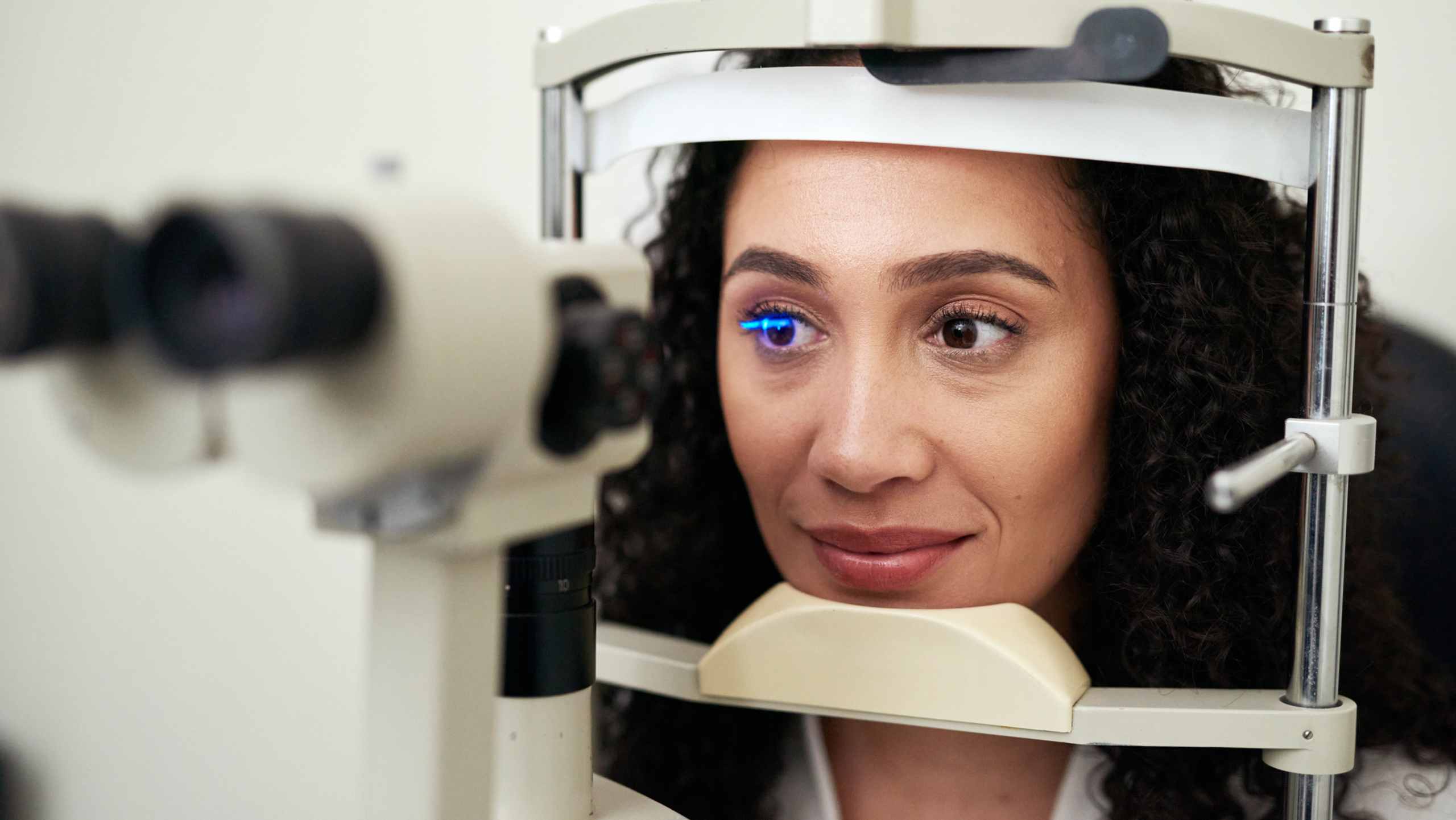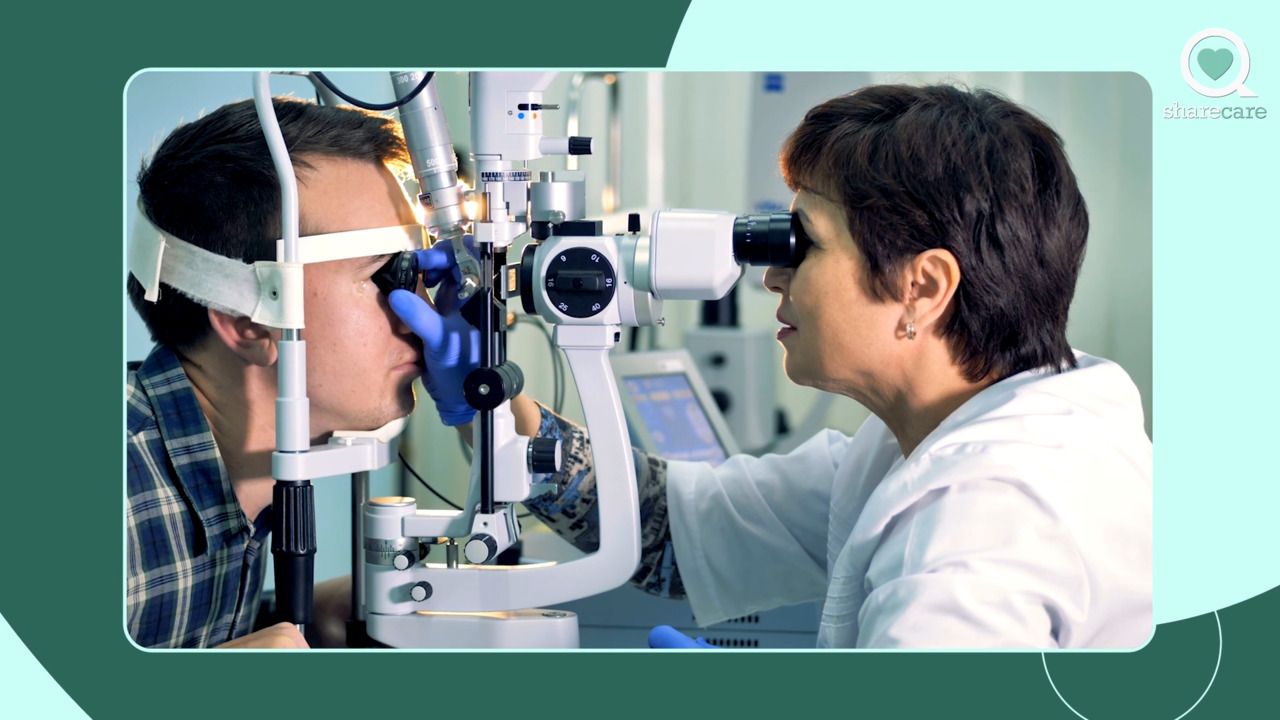


Sometime around age 40, many people notice that it is getting more difficult for their eyes to focus on nearby objects. For many, the first sign is holding reading materials further away from their eyes than they did in the past. This is because of a condition known as presbyopia, a type of age-related vision loss, and it happens to everyone to some degree.
Why does presbyopia occur?
As you age, the lenses in your eyes age with you, becoming stiff and less flexible. This rigidity causes changes in eyesight similar to farsightedness, a condition that is caused by a change in the shape of the eye, resulting in a refractive error, or a change in the way the eye bends light. While presbyopia is an age-related change, farsightedness can occur at any age, and the result in either case is similar. Near objects (such as the printed words in a book or on a phone) start to blur when viewed up close.
Presbyopia is a gradual loss of focus, meaning it gets worse over time. It will usually require correction, which can be achieved with reading glasses, bifocal or trifocal glasses, contact lenses, prescription eye drops, or for some, surgery.
How is presbyopia treated?
If you don't already need eyeglasses or contact lenses to correct your eyes for nearsightedness, farsightedness, astigmatism, or other refractive errors, reading glasses may be your best solution for correcting presbyopia. The lenses in reading glasses bend light rays before they enter your eye, to compensate for what your own lenses can no longer do.
Many people with presbyopia can simply purchase reading glasses without a prescription in a drugstore, department store, or vision center that also sells prescription eyewear. These glasses are sold in magnifications ranging from +1.00 to +4.00, typically in increments of +0.25. Start with lower powers, and then work your way up, trying different magnifications until you have a pair of glasses that allows you to read comfortably; if you choose reading glasses that are too strong, you may end up with eyestrain and headaches.
Even though reading glasses can be acquired over the counter, your eyes still need regular checkups—which means you need to make an appointment with an eye doctor. It’s recommended that people have eye exams more frequently after the age of 40, and you should have your eyes checked any time there is a change in your vision.
If you already wear corrective lenses for other refractive disorders, bifocals or trifocals will be necessary to correct presbyopia at the same time. Bifocals improve near and far vision, while trifocals improve near, intermediate, and far vision.
Additional treatment options
In addition to corrective lenses, prescription eye drops are available and have been approved by the United States Food & Drug Administration (FDA) to treat presbyopia. Often called “miotic drops,” they work by causing the pupil to contract, which helps to sharpen vision. Speak with an eye care professional about whether drops might be an option for you.
A number of surgical options can treat presbyopia, as well. These include procedures to reshape the cornea and lens implants.
Remember, not every treatment is right for every person. If you are experiencing symptoms of presbyopia, speak with your healthcare provider about what treatment option is right for you.
Sources: National Eye Institute. Presbyopia. Dece... + 6
- National Eye Institute. Presbyopia. December 4, 2024.
- American Academy of Ophthalmology. What Is Presbyopia. May 21, 2026.
- Mayo Clinic. Presbyopia. November 20, 2021.
- Papadopoulos PA, Papadopoulos AP. Current management of presbyopia. Middle East Afr J Ophthalmol. 2014 Jan-Mar;21(1):10-7.
- Katz JA, Karpecki PM, et al. Presbyopia – A Review of Current Treatment Options and Emerging Therapies. Clin Ophthalmol. 2021 May 24;15:2167-2178.
- Cleveland Clinic. Are Drugstore Cheaters as Good as Prescription Reading Glasses. Febryary 7, 2022.
- American Academy of Ophthalmology. Could Eyedrops Replace Glasses for Presbyopia. October 28, 2025.