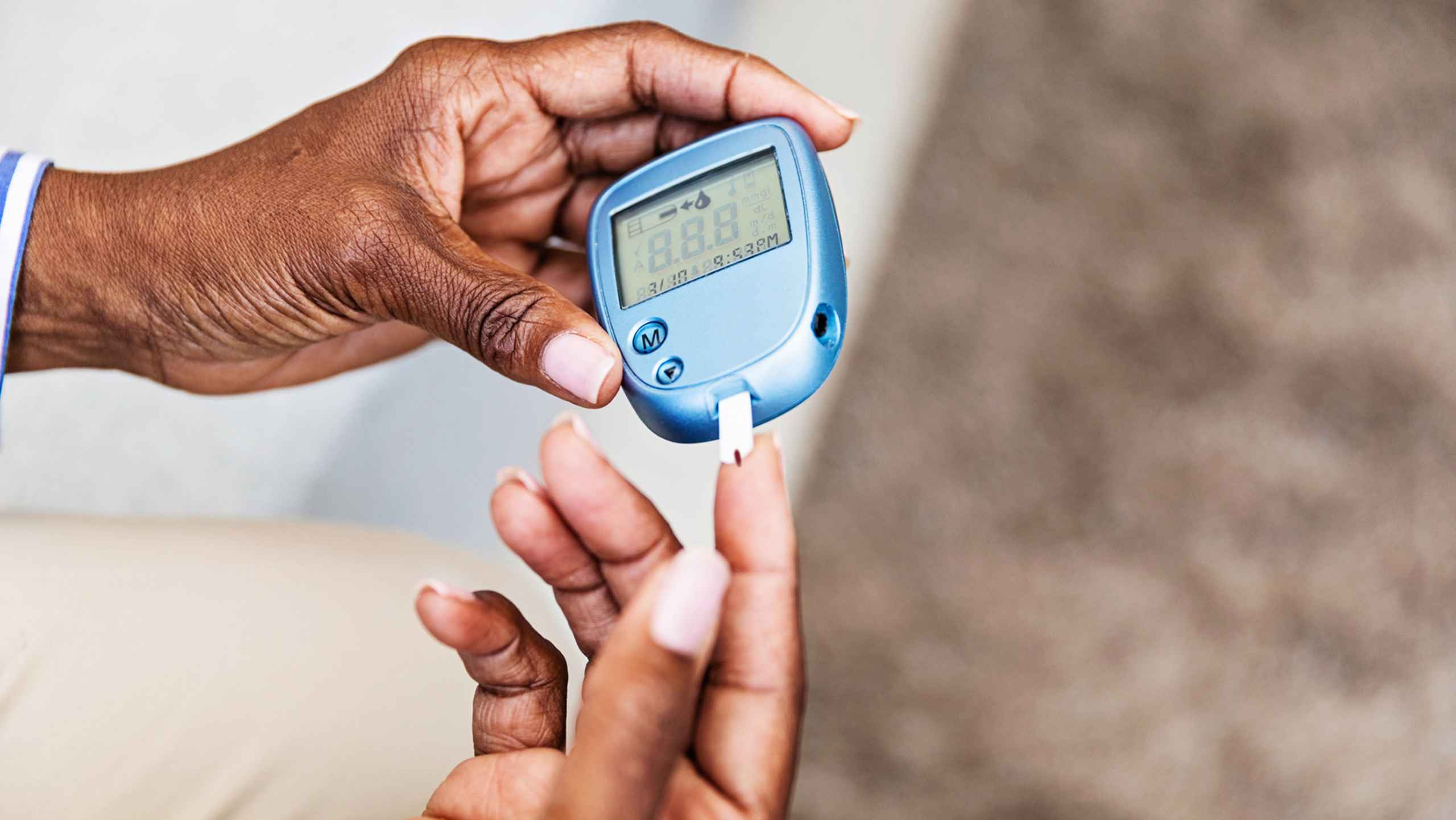
If you have diabetes, keeping blood sugar levels within the recommended range may be challenging, since diabetes management can involve making different food choices, getting more activity and staying on top of medication schedules.
Along with these strategies, it’s helpful to know your numbers, like cholesterol, blood pressure and blood sugar levels.
If you’re insulin-dependent, you’ll likely do blood sugar checks daily. But there’s a test called the A1C that can be an important part of your lifestyle changes and health markers to ensure that you’re managing your diabetes.
Type 2 diabetes and A1C
Monitoring your blood sugar throughout the day can assist you in making small tweaks to how you eat, exercise and adjust insulin (if you take it) for that day. But you also need to know how you’re doing in general over the course of a few months. That’s where the A1C comes in.
The blood test measures your average blood sugar level—also called blood glucose—over the past three months. Other names for the test are the hemoglobin A1C, HbA1c or glycohemoglobin test. It doesn’t require fasting and can be done at any time of day, making it convenient to do at regular healthcare provider appointments.
The results come from how glucose attaches to hemoglobin, the protein in red blood cells that transports oxygen. These cells typically live for about three months before being replaced by new red blood cells. So, the test can give you an idea of what your glucose, or blood sugar, has been within that timeframe.
The higher the amount of glucose reported—which is given as a percentage—the more likely it is that your diabetes needs better management controls.
- Below 5.7 percent is considered normal
- 5.7 to 6.4 percent indicates prediabetes
- 6.5 percent and higher is associated with diabetes
The test is used to diagnose diabetes as well as gauge how well someone is managing the condition.
Getting the A1C test
The A1C test is used to monitor blood glucose levels in people with type 1 or type 2 diabetes, but not for those who have gestational diabetes—the form that occurs during pregnancy.
How often you get the A1C usually depends on whether you’re meeting treatment goals already or if you’re trying to adjust yourself toward blood sugar goals. Those who have stable blood sugar levels usually get the test twice a year. But if it’s taking time to reach blood glucose stability, your healthcare provider may suggest getting the test more often, such as every three months.
There are situations where the test is not recommended, according to the American Diabetes Association. The A1C can give skewed results in people with certain conditions that affect their red blood cells. Age, ethnicity and pregnancy can also affect results, the association notes.
Benefits of better diabetes management
If it’s an appropriate option for you, getting a regular A1C test can help you manage your type 2 diabetes in a way that keeps your blood sugar as close to normal as possible.
The National Institutes of Health (NIH) notes that when you manage blood sugar well, you’re likely to have more energy, heal better from injuries and illnesses and have fewer bladder or skin infections.
The NIH also reports that you’ll have less chance of having serious health issues caused by diabetes, such as stroke, heart attacks, eye problems, nerve damage and kidney failure.
Knowing your numbers can help you develop both short- and long-term goals for type 2 diabetes management, keeping blood glucose levels steady and lowering your health risks as a result.
Sources: Centers for Disease Control and Preventi... + 2
- Centers for Disease Control and Prevention. All About Your A1C. Page last reviewed August 10, 2021.
- American Diabetes Association. Understanding A1C. Page accessed December 14, 2021.
- National Institute of Diabetes and Digestive and Kidney Diseases. Know Your Blood Sugar Numbers: Use Them to Manage Your Diabetes. Last reviewed March 2016.