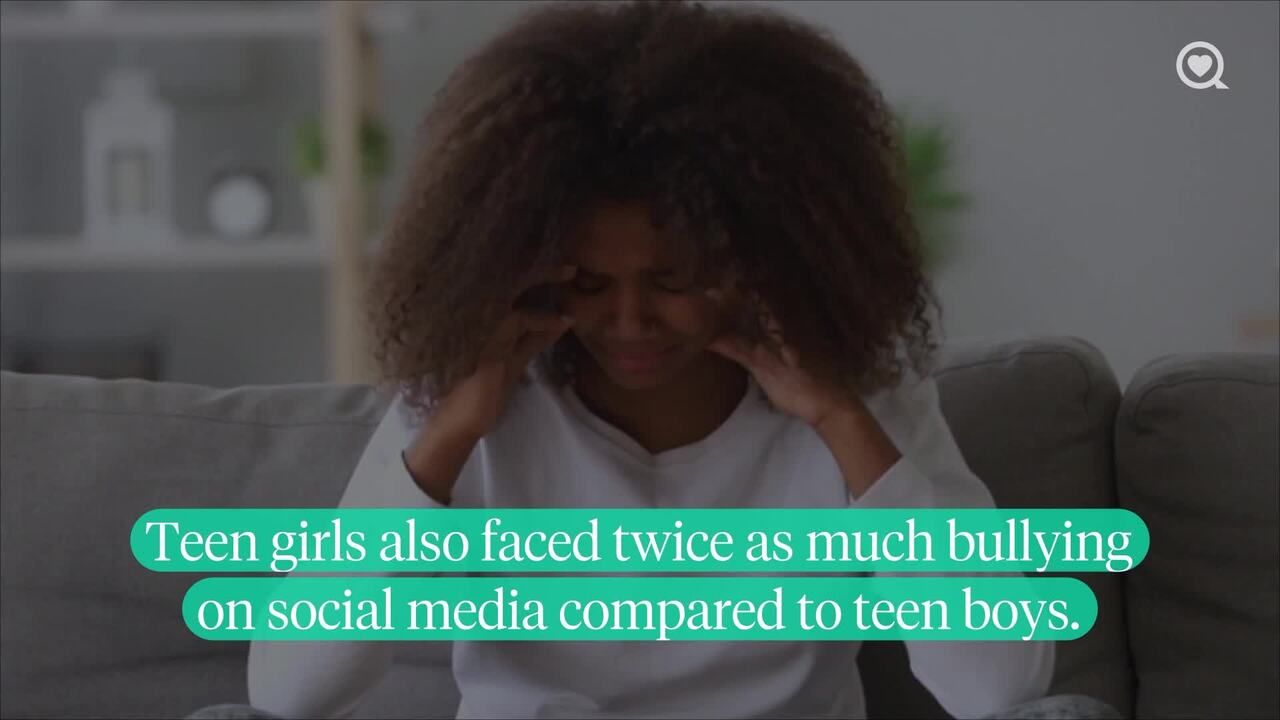


It’s a tragedy that occurs far too often: a bullied child dying by suicide. In fact, there’s even a term for it: bullycide. It occurs when a child who is being bullied sees no way out—except to take their own life.
Bullying occurs when a child attempts to assert power over another child in an aggressive and unwanted way. It can be real or perceived, which means that a child perceives that a behavior was bullying, even if it wasn’t intended that way. There are different kinds of bullying, including physical, verbal, social, and cyberbullying, or bullying that occurs online.
“There are many different digital formats nowadays—like Instagram and Snapchat—where everyone is able to express their emotions. Unfortunately, these emotions can spiral out of control to things like suicide,” says psychologist Christopher Rossilli, Psy.D., in Saint Johns, Florida.
But what are some of the signs to look out for? And how can you talk to your child about what they’re going through? Here are warning signs parents and caregivers can watch for, plus ways to help or protect kids.
Why children often don’t report being bullied
Kids often keep bullying to themselves. In fact, only about 2 in 5 children who are bullied tell a trusted adult, according to a 2022 National Center for Education Statistics report.
There are many reasons children remain quiet, but here are a few of the most common:
- They feel helpless.
- They want to address the issue on their own, so they have some control again.
- They are afraid of being a tattletale.
- They feel embarrassed that they were bullied.
- They might feel like no one will care that they were bullied—or understand what they’ve been through.
Since many children won’t voluntarily communicate that they’re being bullied, it’s vital to watch out for signs and address the issues right away, by talking through what happened and discussing the issues with personnel at school.
Signs a child is being bullied
Children and teens who are bullied may be confused and fearful. They may be in physical or emotional pain, or experiencing constant embarrassment. Though not all kids who are being bullied show noticeable signs, many demonstrate physical or behavioral changes which may include the following:
- Destroyed belongings like clothing, books, electronics, or jewelry
- Injuries like cuts, scrapes, or bruises
- Routine headaches or stomach aches—or faking illness
- Changes in eating habits, such as binging or skipping meals
- Changes in sleep habits or nightmares
- Mood swings
- Drop in grades or fear of school in general
- Purposely avoiding certain places or events
- Isolation or sudden loss of friends
- Low self-esteem
- Self-destructive behaviors like running away from home, self-harm, or discussing suicide
Signs a child may be considering suicide
Bullied kids want to escape the abuse they are experiencing. Not every child who is bullied has suicidal thoughts, but it is important to recognize the signs so you can seek help right away. These include:
- Talking, writing, drawing, texting, or posting online about suicide, wanting to die, or wanting to disappear, or about feeling trapped, hopeless, or burdensome
- Withdrawing from family, friends, and social surroundings
- Giving away personal items
- Reaching out to others to say goodbye
- Using drugs or alcohol more, especially if the use is escalating
- Doing risky, life-threatening things
- Actively searching for ways to die by suicide, such as stockpiling pills or looking online for suicide methods
- Having significant mood changes, such as becoming serene and upbeat after a bout of depression
- Self-harming
If your child experiences thoughts of self-harm or suicide, reach out to a healthcare provider right away or call, text, or chat 988 to reach the 988 Suicide & Crisis Lifeline. If you’re with a child who is actively considering suicide, do not leave them alone. Call 911 right away or go to the nearest emergency room.
What you can do as a parent or caregiver
While you can’t be with your child every second of every day, there are steps you can take to help prevent bullycide.
Be involved
Support your child. Dr. Rossilli says the best way to protect children from bullying or bullycide is to simply talk to them. Learn about their friends, what’s going on at school, and the types of activities they engage in. Knowing who they’re talking to and spending time with—whether that be online or in person—can help you figure out when something is wrong.
“Life becomes so busy and sometimes we don't know what our kids are doing and we don't know who they're chatting with.” The most important thing is to be present, he adds.
When you talk to them about regular things, like their day at school, take note of how they look physically, but also how they seem to be doing emotionally. Ask yourself, “How is their self-esteem? How are they feeling about themselves?”
If your child starts being bullied, it’s going to be hard on them—and hard on you. But the key to resolving bullying issues before they escalate is establishing a good, communicative relationship with your child from the beginning, says Rossilli. Doing so will help them feel comfortable enough to come to you when they are being bullied. He puts it this way: “How would you know if your child was feeling good today? Would they even tell you? If they’re not going to tell you how good they’re feeling, would they tell you how bad they’re feeling?”
Be proactive
If your child is being bullied, first assure them that it’s never okay. Then, have them keep a journal of all the times bullying incidents occur, or have occurred. Talk to teachers or counselors about any bullying that’s happening at school. Most schools have an anti-bullying policy on their website or in the school handbook; this can help you plan exactly what steps to take. If you’re having trouble talking to the school administrators, contact your state’s Department of Education to report the issue.
Be vigilant online
“Kids are not built or equipped to deal with the stress that adults can, and because the information online is coming at them so quickly, it can be a lot to take in,” says Rossilli. This pressure and abuse can lead to serious consequences if not addressed.
If your child is being cyberbullied, assure them that responding to the bully is not a good solution—doing so may only fuel the fire. Many times, children don’t report cyberbullying because they fear their computer and phone privileges will be revoked. Also reassure them that it won’t happen, either.
In the meantime, take screenshots and save texts of any bullying behavior. If the cyberbully goes to the same school as your child, report it to a counselor, teacher, or the principal. If your child or any other child is at risk, call the police.
To help prevent cyberbullying, the American Academy of Pediatrics recommends that for children over age 6, parents set specific limits on the time the kids spend using online media, along with the types of media they’re allowed to use. Learn how to employ online filters, as well. Set the security levels to “high” so that you can monitor the sites they’re frequenting.
Resources for bullied children
When it comes to bullying, there are many resources for you and your child. Try these for support:
It's also wise to speak with your child’s pediatrician, a family physician, or a mental health professional, especially if your child develops symptoms of depression or anxiety. And it can’t be overstated—if your child is in danger, get help immediately. Reach out to 988 or seek emergency care.
Sources: StopBullying.gov. What Is Bullying. Octo... + 10
- StopBullying.gov. What Is Bullying. October 7, 2024.
- National Center for Education Statistics. Student Reports of Bullying: Results From the 2022 School Crime Supplement to the National Crime Victimization Survey. May 2024.
- PACER Center. Bullying Statistics. February 28, 2025.
- StopBullying.gov. The Warning Signs of Bullying. November 10, 2021.
- Better Health Channel. Bullying. August 21, 2014.
- StopBullying.gov. Long-Term Effects of Bullying. December 10, 2025.
- Bullycide. What Is Bullycide. Accessed August 4, 2026.
- Nationwide Children’s Hospital. Suicidal Behaviors. August 27, 2025.
- Kaiser Permanente. Warning Signs of Suicide in Children and Teens. April 1, 2026.
- Better Health Channel. Youth Suicide – the Warning Signs. June 26, 2026.
- StopBullying.gov. What You Can Do. February 3, 2025.