

Unprecedented demand for weight-loss drugs, like Wegovy, Rybelsus, Ozempic, Mounjaro and Zepbound, shows no sign of slowing down. These blockbuster drugs belong to a class of medications known as glucagon-like peptide-1 (GLP-1) receptor agonists, or GLP-1s.
Since 2019, GLP-1 prescriptions have surged from one million to more than 8 million in 2024. Spending on these drugs also jumped from $1 billion in 2019 to nearly $9 billion in 2024, according to a KFF analysis of State Drug Utilization Data. A 2025 RAND report also shows that nearly 12 percent of Americans have used a GLP-1 for weight loss, including about 20 percent of women ages 50 to 64. JPMorgan Research predicts the market for the drug will grow to more than $100 billion by 2030 with some 30 million users—about 9 percent of the U.S. population.
What is driving this surge in demand?
In the U.S., more than 42 percent of adults—and about 20 percent of children—are obese, according to the National Institutes of Health. Obesity puts these people at higher risk for a long list of chronic health issues including heart disease, high blood pressure, stroke, type 2 diabetes, osteoarthritis, sleep apnea, and certain types of cancer.
But there is no simple solution for the obesity epidemic, which dates back to the 1980s. Diet and exercise are just two factors involved in a complex public health issue. For example, social determinants of health—where people live and work as well as their access to healthy foods, healthcare, recreational spaces, education, and support systems—play a role. Lifestyle factors, like sleep loss, time spent sitting, mental health conditions, mobility issues, and genetics as well as exposure to certain chemicals in the environment that may disrupt hormones or metabolic processes—including Bisphenol A (BPA), phthalates in plastics, PFOA in non-stick cookware, pesticides, and some food additives—also contribute to myriad challenges people face in their ability to maintain a healthy weight.
GLP-1s are offering new hope for millions. Studies show these drugs are highly effective in helping people lose weight. In fact, research shows obese people can lose an average of 15 to 20 percent of their body weight after one year on a GLP-1.
How GLP-1s work—and how they help people lose weight
Eating causes the gut to release a hormone called glucagon-like peptide 1 (GLP1), which triggers the release of insulin to help regulate blood sugar levels.
This so-called incretin effect is diminished in people with type 2 diabetes, which may contribute to reduced insulin production, insulin resistance, and high blood sugar. GLP-1 agonists mimic (GLP1), which helps explain why GLP-1s were originally developed to help manage type 2 diabetes.
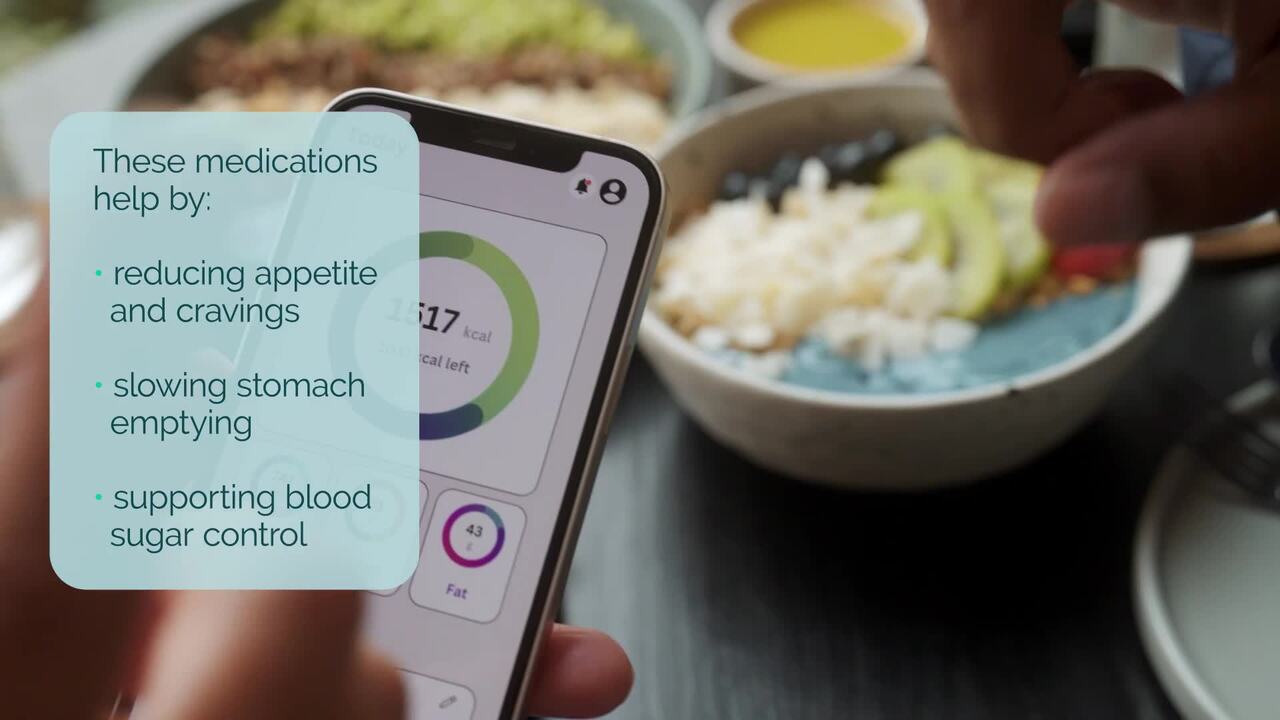
GLP1 binds to receptors along the GI tract—in the stomach, small intestine, colon, and pancreas—slowing digestion, promoting a feeling of fullness, and controlling appetite. These effects make GLP-1s effective weight loss tools when used in addition to lifestyle adjustments, such as regular exercise, adequate sleep, changes in behavior or thinking patterns, and following a healthy eating plan.
But ongoing research has shown that GLP-1s have effects beyond the digestive system. There are also GLP-1 receptors in the heart, kidneys, lungs—and the brain.
GLP-1s effectively blunt the dopamine-driven reward system in the brain, quieting cravings and other “food noise” that prompt people to overeat. In addition to regulating blood sugar and assisting weight loss, GLP-1s may also help:
- Lower blood pressure
- Improve cholesterol and fatty liver disease
- Reducing the risk of heart and kidney disease
- Delaying the progression of diabetes-related nerve damage
- Increase fertility in women and men
- Manage the metabolic issues associated with polyendocrine metabolic ovarian syndrome (PMOS), a condition previously known as polycystic ovary syndrome (PCOS)
- Improve obstructive sleep apnea
- Ease osteoarthritis (OA) symptoms
- Treat addiction, curbing cravings for alcohol, nicotine, opioids and other substances
More research is needed but there is also evidence that GLP-1 medications may also have protective effects on the brain, potentially reducing the risk for Alzheimer’s disease. By treating obesity, GLP-1s could also indirectly reduce the risk for several forms of cancer.
GLP1-s approved by the U.S. Food and Drug Administration (FDA)
Semaglutide (once weekly injection or once daily pill):
- Ozempic: This drug is approved to lower blood sugar levels in adults with type 2 diabetes. It is also approved to reduce the risk of heart attack, stroke, or death in adults with type 2 diabetes and known heart disease.
- Wegovy: This drug is approved for weight loss. It is intended to help adults and children aged 12 years and older with obesity (BMI) of 30 or higher) or some overweight adults (BMI of 27 or higher) who also have weight-related condition, such as high blood pressure, high cholesterol, or type 2 diabetes. In March 2024, the U.S. Food and Drug Administration (FDA) expanded Wegovy’s approved uses to include the prevention of cardiovascular death, heart attack, and stroke in adult patients with heart disease who are also overweight or obese. And in December 2025, the FDA approved oral Wegovy for weight loss as well as the prevention of life-threatening heart events. The once-daily pill available in early 2026 was shown to be safe and effective. A 64-week trial of 307 adults. Found those taking the pill while also reducing their caloric intake and exercising regularly achieved an average 17 percent weight loss compared to 2.7 percent among those who did not take the medicine.
Oral semaglutide (once daily tablet):
- Rybelsus: This drug is approved to lower blood sugar levels in adults with type 2 diabetes.
Liraglutide: (once daily injection)
- Victoza: This drug is approved for people with type 2 diabetes.
- Saxenda: This drug is specifically designed for weight loss in people with obesity (BMI) of 30 or higher) or some overweight adults (BMI of 27 or higher) who also have weight-related condition, such as high blood pressure, high cholesterol, or type 2 diabetes.
Dulaglutide (once weekly injection)
- Trulicity: This drug is approved for people with type 2 diabetes.
Exenatide extended release (once weekly injection)
- Bydureon BCise: This drug is used together with diet and exercise to improve blood sugar control in people with type 2 diabetes mellitus.
Exenatide (twice daily injection)
- Byetta: This drug is approved for people with type 2 diabetes.
Tirzepatide (once weekly injection)
This is a dual GIP/GLP-1 receptor agonist. It activates GLP-1 receptors—as well as another hormone involved in blood sugar control called glucose-dependent insulinotropic polypeptide (GIP). FDA-approved options include:
- Mounjaro: This drug is approved to treat adults with type 2 diabetes.
- Zepbound: This drug is approved for chronic weight management in adults who are overweight (BMI of 27 or greater) or obese (BMI of 30 or greater) with at least one weight-related condition, such as high blood pressure, type 2 diabetes, high cholesterol, or obstructive sleep apnea (OSA).
Orforglipron (once daily pill)
- Foundayo: This drug was approved by the FDA in April 2026 for adults with obesity, or overweight with weight-related medical problems. It is currently the only GLP-1 pill for weight loss that can be taken any time of day without food or water restrictions.
Is a GLP-1 right for you?
GLP-1s have been studied and are designed for weight loss in people with a BMI of 27 to 29.9 and at least one weight-related condition or those with a BMI of 30 or higher. The safety of using the drugs for more cosmetic weight loss—say shedding 10 to 15 pounds—isn’t clear.
GLP-1s are also not a quick fix. Taking these drugs doesn’t absolve people from having to follow a healthier diet, be more active, and adopt healthier habits as well as other adjustments to support long-term weight management. In the absence of these lifestyle changes, people who stop taking these drugs often regain the weight they lost.
Another potential downside: cost. GLP-1s can be expensive with a price tag ranging from $149 per month (with savings offers) to as much as $1,500 per month. Even if you qualify for their use, the drugs are not covered by Medicare for obesity. But Medicare and most private insurers cover them for the treatment of type 2 diabetes. In March 2024, Medicare also announced it will cover Wegovy as a weight loss solution for Medicare Part D enrollees when it is prescribed to prevent heart attacks and strokes in obese patients.
Meanwhile, bariatric surgery, including gastric bypass and sleeve gastrectomy, can result in weight loss of 20 to 30 percent, which can lead to improvement in related health issues like type 2 diabetes. Surgical options may cost up to $23,000 but may be more cost-effective in the long-term than treatment with a GLP-1.
All medications also come with the possibility of certain side effects. The most commonly reported side effects of GLP-1s include nausea, diarrhea, dehydration, and headaches. Some people may develop an allergic reaction or hypoglycemia, or very low blood sugar. In rare cases, these drugs may be tied to an increased risk of pancreatitis (inflammation of the pancreas), bowel obstruction (a blockage in the bowel), and gastroparesis (slowed or stopped movement of food from the stomach to small intestine).
Some people should not take a GLP-1 medication. These drugs are not recommended for anyone who:
- Is pregnant or breastfeeding
- Has a history of pancreatitis (inflammation of the pancreas)
- Has s history of thyroid cancer or multiple endocrine neoplasia syndrome type 2 (MEN2), a rare genetic condition linked to thyroid cancer in animal studies
It’s important to talk to your healthcare provider (HCP) about what is safe and appropriate for you as well as your willingness to commit to certain lifestyle changes. This will enable you to weigh all the possible risks and benefits associated with weight-loss drugs and consider all treatment options that may be available.
Be aware of “fake” GLP-1s being sold online
Illegally marketed versions of GLP-1s, including counterfeit Ozempic, are being sold online. The FDA has issued warning letters to stop the distribution of these illegally marketed products, which may contain the wrong ingredients, harmful ingredients, or the incorrect amount of ingredients.
Some products sold as ‘semaglutide’ and compounded versions of the drugs (with combined, mixed, or altered ingredients) are not regulated by the FDA and consumers cannot be sure about what they are getting. Some may contain the salt forms, such as semaglutide sodium and semaglutide acetate. These are different active ingredients than what is used in the approved drugs, and they have not been shown to be safe or effective.
Sources: U.S. Food and Drus Administration. FDA A... + 16
- U.S. Food and Drus Administration. FDA Approves First Medication for Obstructive Sleep Apnea. Dec 20, 2024.
- Cleveland Clinic. ‘Ozempic Babies’: How GLP-1 Agonists Affect Fertility. Mar 10, 2025.
- Olukorode JO, Orimoloye DA, Nwachukwu NO, Onwuzo CN, Oloyede PO, Fayemi T, Odunaike OS, Ayobami-Ojo PS, Divine N, Alo DJ, Alex CU. Recent Advances and Therapeutic Benefits of Glucagon-Like Peptide-1 (GLP-1) Agonists in the Management of Type 2 Diabetes and Associated Metabolic Disorders. Cureus. 2024 Oct 21;16(10):e72080. doi: 10.7759/cureus.72080. PMID: 39574978; PMCID: PMC11579408.
- U.S. Food and Drug Administration. FDA Approves First Treatment to Reduce Risk of Serious Heart Problems Specifically in Adults with Obesity or Overweight. Mar 8, 2024.
- U.S. Food and Drug Administration. FDA Approves New Medication for Chronic Weight Management. Nov 8, 2023.
- Trilliant Health. 2023 Trends Shaping the Health Economy. Oct 25, 2023.
- JP Morgan. The increase in appetite for obesity drugs. Nov 29, 2023
- U.S. National Institutes of Health. Obesity and Nutrition. Nov 16, 2023.
- John P.H. Wilding, D.M., Rachel L. Batterham, M.B., B.S., Ph.D., Salvatore Calanna, Ph.D. et al. Once-Weekly Semaglutide in Adults with Overweight or Obesity. N Engl J Med 2021; 384:989-1002.
- U.S. Food and Drug Administration. Medications Containing Semaglutide Marketed for Type 2 Diabetes or Weight Loss. Jan 10, 2024.
- Andersen, A., Lund, A., Knop, F.K. et al. Glucagon-like peptide 1 in health and disease. Nat Rev Endocrinol 14, 390–403 (2018).
- Cleveland Clinic. GLP-1 Agonists. Jul 3, 2023.
- Latif W, Lambrinos KJ, Rodriguez R. Compare and Contrast the Glucagon-Like Peptide-1 Receptor Agonists (GLP1RAs) [Updated 2023 Mar 27]. In: StatPearls [Internet]. Treasure Island (FL): StatPearls Publishing; 2023 Jan.
- U.S. Food and Drug Administration. FDA Approves Novel, Dual-Targeted Treatment for Type 2 Diabetes. May 13, 2022.
- Harvard Medical School. Understanding new weight-loss drugs. Nov 1, 2023.
- UT Southwestern Medical Center. Beyond weight loss: GLP-1 RAs reduce heart attack, stroke risk for Type 2 diabetes patients. Apr 17, 2023.
- Sodhi M, Rezaeianzadeh R, Kezouh A, Etminan M. Risk of Gastrointestinal Adverse Events Associated With Glucagon-Like Peptide-1 Receptor Agonists for Weight Loss. JAMA. 2023;330(18):1795–1797.