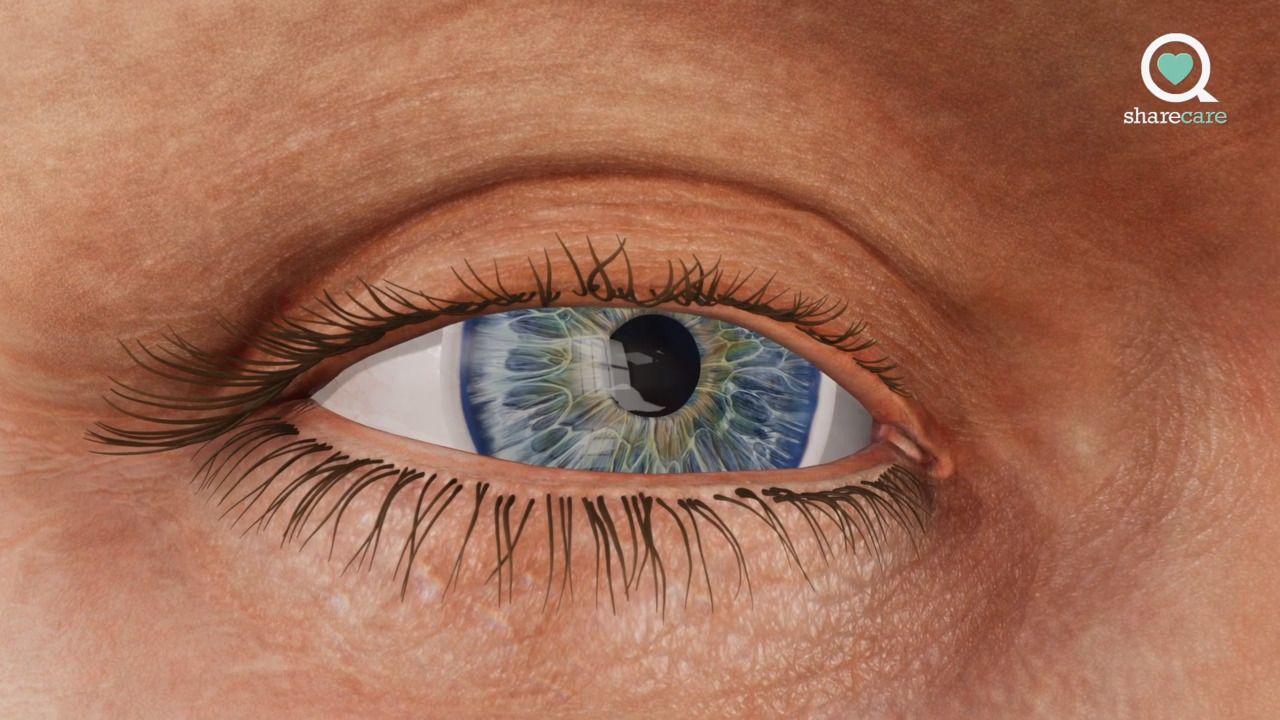
Age-related macular degeneration (AMD) is a condition that affects a part of the eye called the macula. It is called “age-related” because it is most common in older adults. AMD is the most common cause of blindness in adults over the age of 60 (however, it can occur at younger ages).
AMD is called “macular degeneration” because it involves the death of cells in the macula. The macula is the central part of the retina, a layer of light-sensitive cells located in the back of the eye. These cells, called photoreceptor cells, convert light that enters the eye into nerve signals that can travel from the optic nerve to the brain.
The macula is a dense collection of photoreceptor cells. It is the part of the eye that enables central vision—the ability to clearly see objects and details directly in front of the eyes. Central vision is essential to activities like reading, driving, recognizing faces, and performing any kind of task that requires attention to visual details.
By damaging the retina and macula, AMD causes a loss of central vision, limiting a person’s ability to perform any task that requires central vision.
The stages of AMD
Age-related macular degeneration typically develops over the course of many years. It is a progressive condition, meaning it gets worse with time. It can be categorized into different stages or groups depending on how far it has advanced.
In order to understand the early and intermediate stages of AMD, it helps to understand two terms, drusen and pigment changes:
- Drusen: These are deposits of fats, proteins, and cellular debris that form in the retina. They can be seen in certain eye exams, where they appear as yellow nodes. It is not known exactly how or why drusen form. While they are found in the eyes of people with AMD, not all drusen are a risk factor for AMD.
- Pigment changes: This refers to changes in the retinal pigment epithelium (RPE), a layer of cells that forms a barrier between the retina and the blood vessels in the eye. This layer controls the transport of water, nutrients, and cellular waste in and out of the retina.
The size and number of drusen and pigment changes are key factors when considering the group or stage of AMD.
Sub-clinical stage
At this stage, drusen may be undetectable, or there may be small drusen that are few in number. However, there may be evidence of cholesterol deposits and the loss of some photoreceptor cells. There is no vision loss, but a person may notice some changes in how their eyes adjust when moving from brightly lit to low-light environments.
Early-stage AMD
At this stage, there are medium-sized drusen and/or a greater number of smaller drusen. There are no pigment changes or vision loss, but difficulty adjusting to low-light environments may be more noticeable.
Intermediate stage AMD
At this stage there are large drusen and/or pigment changes. Some people will not have symptoms at this stage. Others may notice difficulty seeing in low light environments, some blurring in areas of central vision, or colors appearing less vibrant.
Advanced stage
At this stage there is significant loss of photoreceptor cells and changes to the structure and function of the retina and macula. There are two main types of advanced AMD, which are not exclusive—some people develop both types:
- Wet AMD (also known as neovascular AMD), which involves the formation of abnormal blood vessels around the retina. These blood vessels leak blood and fluid into the retina and macula, which can cause significant and rapid vision loss.
- Geographic atrophy. Any type of AMD that does not involve the formation of abnormal blood vessels is referred to as dry AMD. Geographic atrophy is the advanced form of dry AMD. It occurs when clusters of photoreceptor cells have deteriorated, creating dead areas across the retina and macula. These dead areas increase in size over time.
There is no cure for AMD. In the early and intermediate stages, a healthcare provider may recommend lifestyle changes and/or prescribe specific dietary supplements to help slow the progression. There are therapies available that can help manage wet AMD and geographic atrophy.
Sources: Surabhi Ruia and Evan J. Kaufman. Macula... + 12
- Surabhi Ruia and Evan J. Kaufman. Macular Degeneration. StatPearls. July 31, 2023.
- Centers for Disease Control and Prevention. Prevalence Estimate for Age-Related Macular Degeneration (AMD).
- MedlinePlus. Age-related macular degeneration.
- MedlinePlus. Retina.
- Cleveland Clinic. Photoreceptors (Rods and Cones).
- InformedHealth.org. Overview: Age-related macular degeneration (AMD).
- Mayo Clinic. Drusen.
- Adam M. VanDenLangenberg and Michael P. Carson. Drusen Bodies. StatPearls. May 1, 2023.
- Bisant A. Labib. Crusin’ for Drusen. Review of Optometry. July 15, 2019.
- Science Direct. Retinal Pigment Epithelium.
- American Macular Degeneration Foundation. Types and Stages of Macular Degeneration.
- Joshua Dunaief. What is Geographic Atrophy? BrightFocus Foundation. March 7, 2023.
- National Eye Institute. Treatments for Wet AMD (Advanced Neovascular AMD).