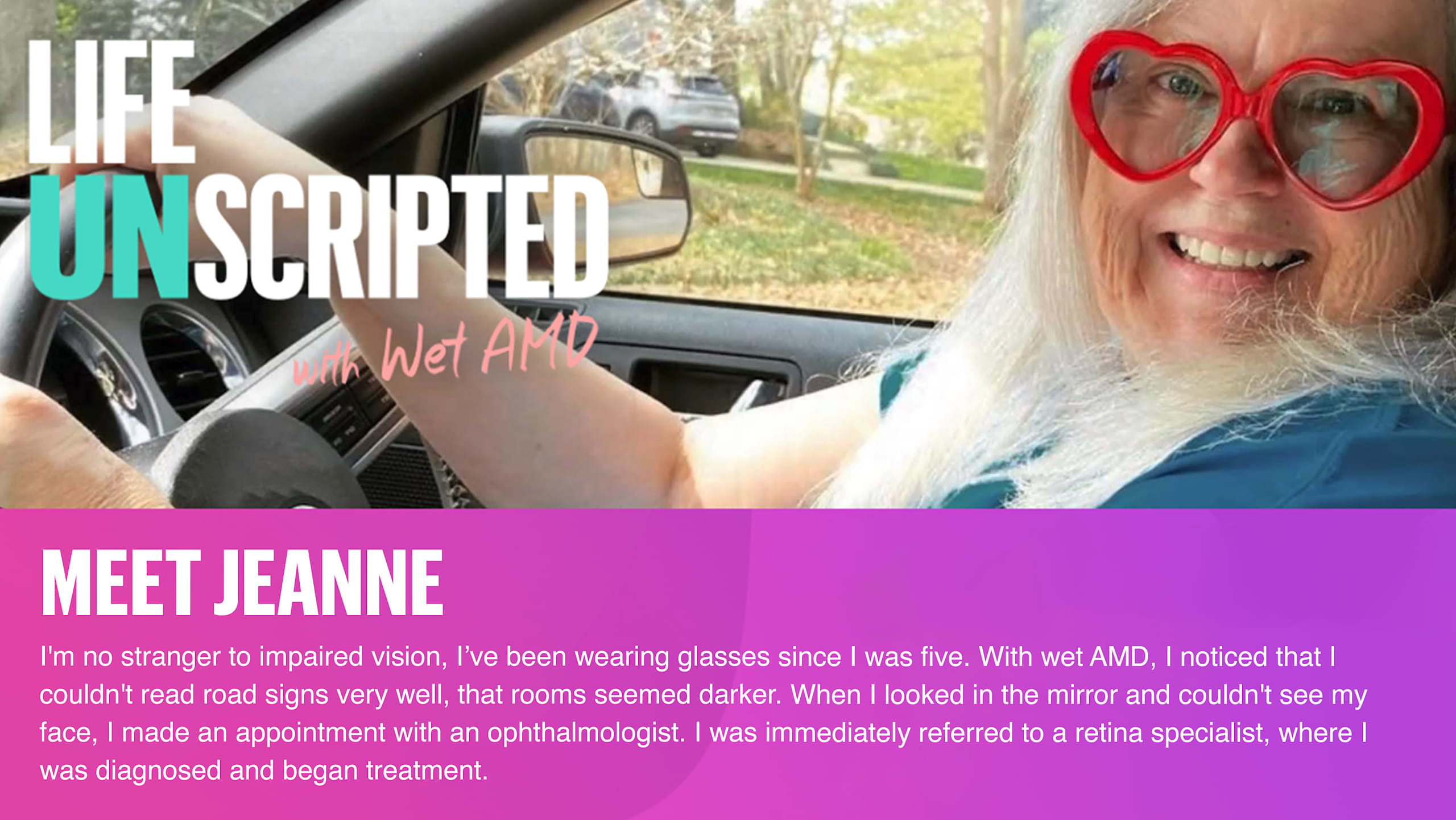
Maintaining independence and loss of independence are among the top concerns for people living with wet age-related macular degeneration (AMD).
Wet AMD is an advanced form of age-related macular degeneration that affects central vision, a person’s ability to clearly see what is directly in front of them. Symptoms of wet AMD include blurry and distorted central vision. People with wet AMD may have blind spots and vision loss can progress quickly.
Independence refers to a person’s ability to do things on their own without assistance from others. Driving, working, using devices, shopping, preparing food, and household chores are a few examples of everyday activities that can become difficult when a person has experienced vision loss.
Making changes to the home
There are several changes that can be made to the home environment to make everyday tasks more accessible and safer—and help a person living with wet AMD maintain more independence. Here are some ideas on where to begin:
- Add more ambient lighting. Wet AMD can make it more difficult to see in low light environments, and brightening a living space can be helpful. This can include adding more lamps, brighter lightbulbs, or making changes to allow more natural light. Night lights and lights set to timers can also be helpful for the times of day when there is less natural light available.
- Add task lighting. Also consider the places around the home where lighting could help with specific tasks, such as an adjustable lamp at a desk or under-cabinet lighting in a kitchen.
- Declutter and remove tripping hazards. Impaired vision can make it more difficult to navigate any space. Minimize the risk of falls and injuries by decluttering the living space. For example, removing throw rugs that are easy to trip over. Also consider clutter and tripping hazards in outdoor spaces (such as low branches or areas with uneven footing).
- Use high contrast. People with wet AMD may find that colors appear duller or muted. High contrast objects can help. High contrast means a lighter color paired with a darker color. For example, a floor mat or rug (one that isn’t a tripping hazard) that stands out from the color of the floor around it. Or a coaster that is lighter than the table it gets placed on.
- Create labels. High contrast can also be used to label objects that you’ll want to locate easily. Use large lettering, high contrast, and different shapes. Labels also don’t have to be visual cues. For example, wrapping a rubber band around a bottle of olive oil to help distinguish it from a bottle of vinegar.
- Add safety measures. Low vision or impaired vision can put a person at greater risk for falls. Consider installing handrails and grab bars on showers and tubs. Anti-slip floor mats are another strategy to prevent falls.
Wet AMD affects different people in different ways. You may need to try different strategies to find the ones that work best for you.
Work with a healthcare provider
You should discuss any challenges or difficulties you are having with your healthcare provider. Working with a healthcare provider is the most important step a person with wet AMD can take to protect their vision. Left untreated, wet AMD will progress, and vision loss will become worse.
While there is no cure for wet AMD, there are treatments that can help slow its progression. Injections of anti-VEGF medications are the most commonly used treatment, though other therapies are sometimes used, and additional therapies are under development.
A healthcare provider can also provide guidance on lifestyle changes that may be helpful when managing wet AMD, such as nutrition, wearing sunglasses that provide adequate protection, and staying active.
A treatment plan for wet AMD may also include vision rehabilitation. This involves working with a low vision specialist, who will help you find ways to work with impaired vision and adaptations to help you do more on your own, like the strategies described above.
Sources: Sylvia Stinson-Perez. Living with Vision... + 9
- Sylvia Stinson-Perez. Living with Vision Loss: Practical Tips for Safety and Independence. National Council on Aging. May 14, 2021.
- Sonia Mehta. Age-Related Macular Degeneration (AMD or ARMD). Merck Manual Consumer Version. April 2022.
- Johns Hopkins Medicine. Age-Related Macular Degeneration (AMD).
- Welp A, Woodbury RB, McCoy MA, et al. Making Eye Health a Population Health Imperative: Vision for Tomorrow. National Library of Medicine Bookshelf. September 15, 2016.
- Katrina Stratton. Simple and Effective Strategies for Coping with Vision Loss. Chicago Health. September 16, 2021.
- Heidi Godman. Is your vision impaired? Tips to cope. Harvard Health Publishing. July 26, 2021.
- Better Health Channel. Vision loss - safety around the home.
- Samuel D. Hobbs and Kristine Pierce. Wet Age-Related Macular Degeneration (Wet AMD). StatPearls. November 7, 2022.
- National Eye Institute. Treatments for Wet AMD (Advanced Neovascular AMD).
- Brad H. Feldman, Vinay A. Shah, et al. Age-Related Macular Degeneration. American Academy of Ophthalmology EyeWiki. February 13, 2024.