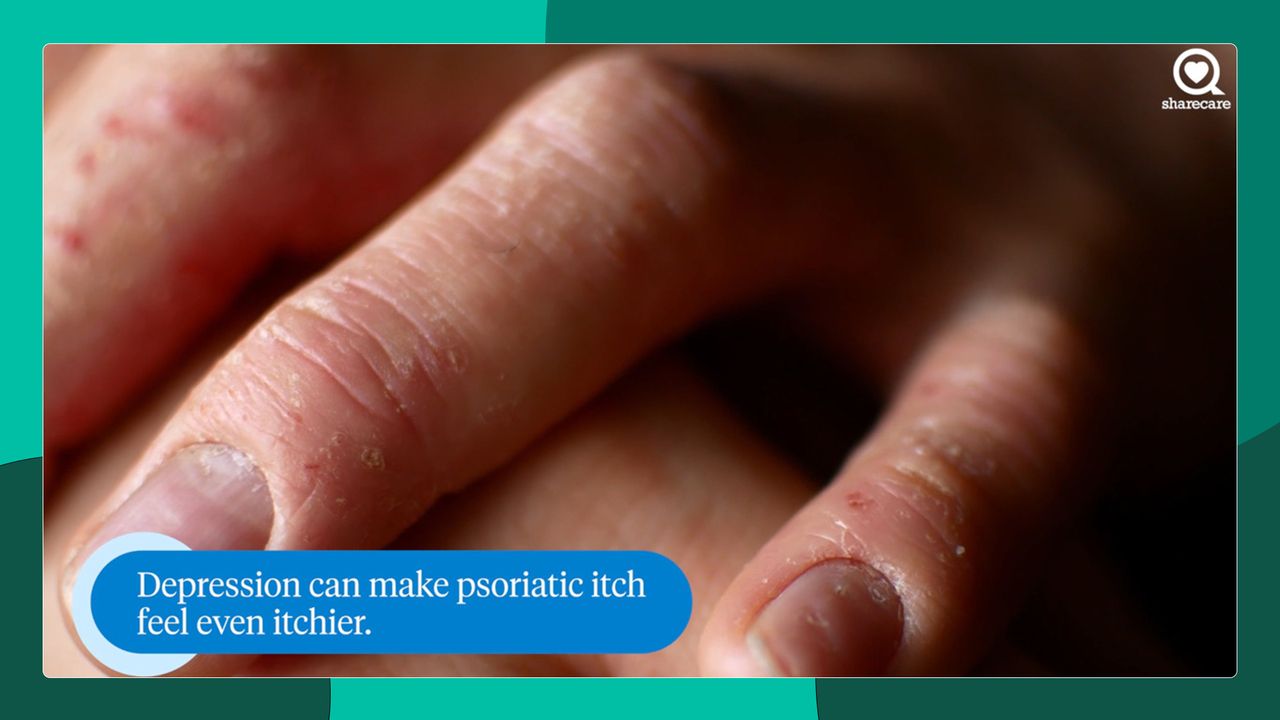
Psoriasis is a chronic inflammatory skin condition. There are several different types of psoriasis, which cause skin lesions that are different in appearance and are more common on different parts of the body.
The most common type of psoriasis is plaque psoriasis. Plaque psoriasis causes lesions called plaques—patches of thickened skin that are red and covered in silvery scales. Plaques most commonly appear on the elbows, knees, hands, feet, the back, and the scalp. Between 80 and 90 percent of people who have psoriasis have plaque psoriasis.
While psoriasis is more common on certain areas of the body, it is important to remember that psoriasis can affect virtually any area of the body, including the face.
Facial psoriasis is not uncommon
It’s estimated that up to 20 percent of people with plaque psoriasis—one out of five—experience psoriasis lesions on the face. This is more common among patients who have a family history of psoriatic disease, who have been managing the condition for a long time, and who have severe psoriasis.
Facial psoriasis is considered severe psoriasis
There are two main factors that determine psoriasis severity—the amount of the body’s surface that is affected by psoriasis and the impact that psoriasis has on a person’s quality of life. Because of this second factor, facial psoriasis is considered a severe form of psoriasis. Research shows that people with facial psoriasis experience significant distress, stigma, and other negative feelings.
Any part of the face can be affected
The forehead, ears, and cheeks are common locations for facial psoriasis lesions, but lesions can occur on any part of the face. Lesions around the lips and the eyelids are less common, but lesions do occur in these places.
Facial psoriasis can overlap with seborrheic dermatitis
Seborrheic dermatitis is a skin condition that affects the scalp, face, and chest—areas of skin that are more oily than other areas. Areas of affected skin can be red, covered in white or yellowish scales, and have a greasy appearance. Skin can also flake off.
Seborrheic dermatitis can overlap with psoriasis, which is sometimes referred to as sebopsoriasis. People with sebopsoriasis experience a combination of psoriasis symptoms and seborrheic dermatitis symptoms. Accurate diagnosis is important, and effective treatment may require a combination of therapies for both conditions.
Facial psoriasis may require a different approach to treatment
The skin on the face is more sensitive than the skin on other parts of the body, which can make treating facial psoriasis particularly challenging—corticosteroids, other topical treatments, and UV light must be used sparingly to avoid side effects and damage to the skin. Because facial psoriasis qualifies as severe, patients may be treated with biologic therapies. Biologic therapies are medications that modify the way the immune system works and reduce the inflammatory processes that cause psoriasis.
The most important thing anyone experiencing facial psoriasis—or any type of psoriasis—can do is work with a healthcare provider to find a safe and effective approach to treatment.
Sources: UpToDate. "Patient education: Psoriasis ... + 13
- UpToDate. "Patient education: Psoriasis (Beyond the Basics)."
- National Psoriasis Foundation. "Inflammation to blame for psoriatic disease."
- National Psoriasis Foundation. "About Psoriasis."
- National Psoriasis Foundation. "Plaque Psoriasis."
- Klaudia Dopytalska, Piotr Sobolewski, et al. "Psoriasis in special localizations." Reumatologia, 2018. Vol. 56, No. 6.
- Talel Badri, Parimalam Kumar, Amanda M. Oakley. "Plaque Psoriasis." NCBI StatPearls. Updated Dec. 2019.
- MedlinePlus. "Seborrheic dermatitis."
- Mayo Clinic. "Seborrheic dermatitis."
- DermNet NZ. "Sebopsoriasis."
- Plaquepsoriasis.com. "What is Sebopsoriasis?"
- Cleveland Clinic. "Seborrheic Dermatitis."
- National Psoriasis Foundation. "Psoriasis on the Face."
- National Psoriasis Foundation. "Moderate to Severe Psoriasis and Psoriatic Arthritis: Biologic Drugs."
- MedicalNewsToday. "What to know about psoriasis on the face."