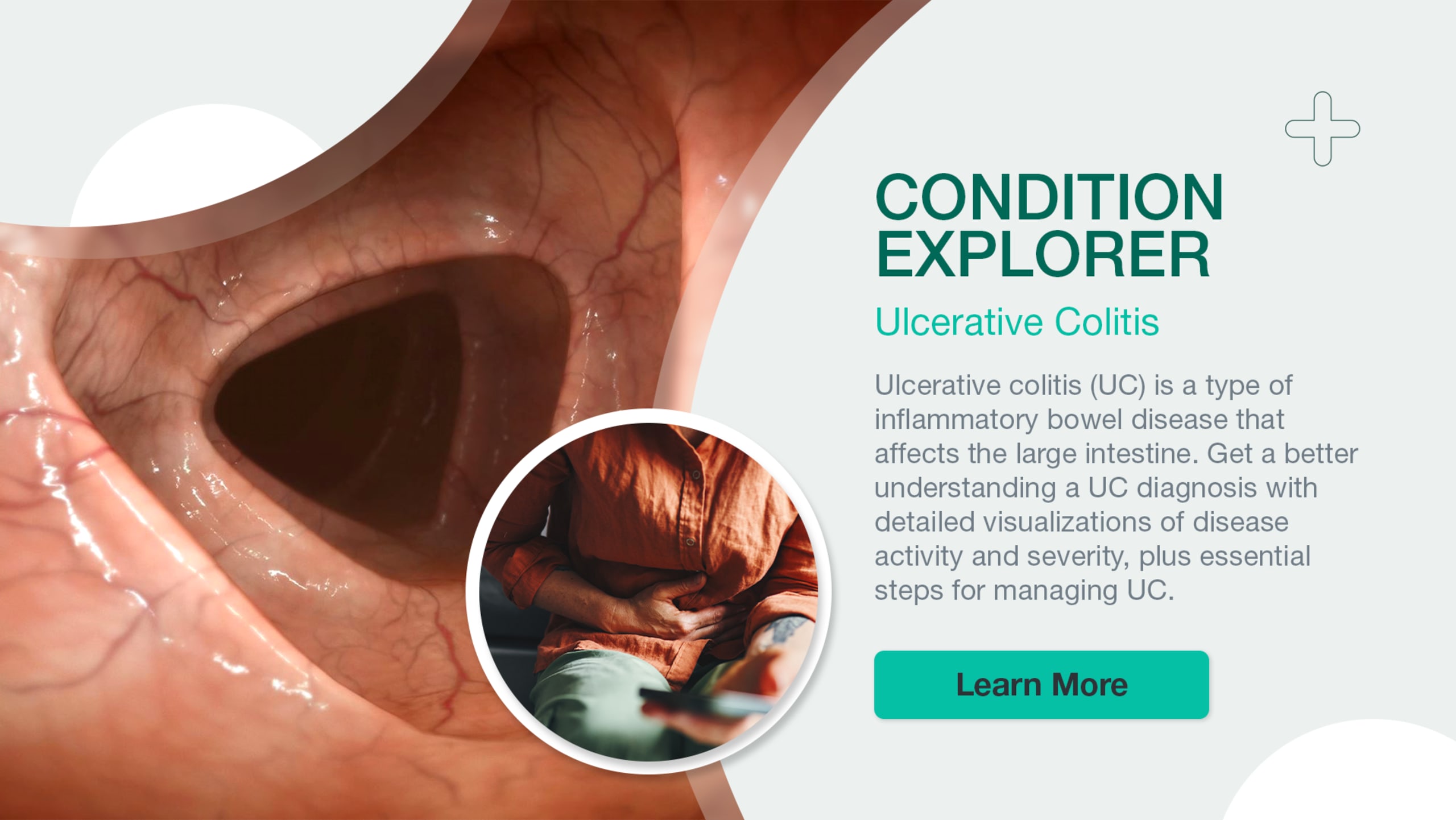


Ulcerative colitis (UC) is one of the two main forms of inflammatory bowel disease (IBD). The other is Crohn’s disease. While they are both characterized by inflammation and ulcers (sores) in the digestive tract, Crohn’s and UC are different conditions that require different treatments.
With UC, inflammation occurs in the lower part of the GI tract, called the large intestine. It typically begins in the rectum, the lowest part of the large intestine, but can extend upward into the colon, and sometimes spreads through the entire colon. This inflammation affects the innermost layers of these organs.
For comparison, Crohn’s disease can affect any part of the digestive tract, occurs in patches separated by healthy tissue (whereas UC causes continuous inflammation), and can extend into deeper layers of tissues beyond the innermost layers of these organs.
If you have any form of IBD, it is important to seek treatment from a healthcare provider who has experience diagnosing and treating IBD. An accurate diagnosis is essential to getting the right treatment.
Treatment is also one of the best ways to prevent complications like the ones that are discussed below.
The potential complications of UC
Ulcerative colitis can cause a number of complications. Some of these complications are a direct result of injury and damage that UC causes to the digestive tract. Other complications result from the way UC interferes with how the body digests food and absorbs nutrients. Though it is not common, some complications can be life threatening.
Potential complications of UC include:
- Toxic megacolon. This occurs when severe inflammation causes the colon to become enlarged and stop working. Sometimes the colon can rupture. While this complication is rare, it is serious and life-threatening.
- Perforations. Inflammation and ulcers can weaken the walls of the colon. This can cause perforations (holes) in the walls of the colon. This can lead to a life-threatening infection as the contents of the colon leak into the abdomen. Perforations can occur on their own or together with toxic megacolon.
- Colorectal cancer. People with UC are at an increased risk of colorectal cancer. This is thought to be the result of inflammation that causes a high turnover of cells in the colon. People with UC should talk to their healthcare providers about screenings and reducing the risk of colorectal cancer.
- Being underweight. UC can affect a person’s ability to eat enough as well as the body’s ability to digest food and absorb nutrients. This can lead to unintentional weight loss, being underweight, and loss of muscle mass.
- Malnutrition and nutrient deficiencies. In addition to being underweight or losing muscle mass, a person may become malnourished and/or develop nutrient deficiencies because of the way UC impacts appetite, digestion, and bowel habits.
- Osteoporosis. This is a loss of bone tissue that causes bones to become weakened and more susceptible to fractures. In people who have UC, this can result from chronic inflammation, glucocorticoid medications, and malabsorption of calcium and vitamin D.
- Anemia. People with UC are at risk for several types of anemia, including iron deficiency anemia, B12 anemia, and folic acid anemia. This can be a result of inflammation, bleeding, and medications.
The most important thing you can do to prevent complications is work with your healthcare providers and adhere to treatment. There are medications that can help control inflammation and put the disease into remission for many people. Surgery is also a treatment option if UC cannot be controlled with medications. Additionally, regular blood work and physical exams can help identify complications.
Sources: Mayo Clinic. Ulcerative colitis. June 6,... + 10
- Mayo Clinic. Ulcerative colitis. June 6, 2026.
- Christopher McDowell, Umer Farooq, and Muhammad Haseeb. Inflammatory Bowel Disease. StatPearls. August 4, 2023.
- Whitney D. Lynch and Ronald Hsu. Ulcerative Colitis. StatPearls. June 5, 2023.
- Mayo Clinic. Ulcerative colitis vs. Crohn's disease. March 19, 2026.
- Crohn's & Colitis Foundation. Fact Sheet: News from the IBD Help Center. January 2015.
- MedlinePlus. Toxic megacolon. October 20, 2025.
- Crohn's & Colitis Foundation. The Risk of Colorectal Cancer in Crohn’s Disease and Ulcerative Colitis Patients. Accessed June 16, 2026.
- InflammatoryBowelDiseases.net. Loss of Appetite and Weight Loss. February 2024.
- Crohn's & Colitis Foundation. Malnutrition and IBD. Accessed June 16, 2026.
- Crohn's Colitis Canada. Complications and Extraintestinal Manifestations. Accessed June 16, 2026.
- Johns Hopkins Medicine. Ulcerative Colitis Treatment. Accessed June 16, 2026.