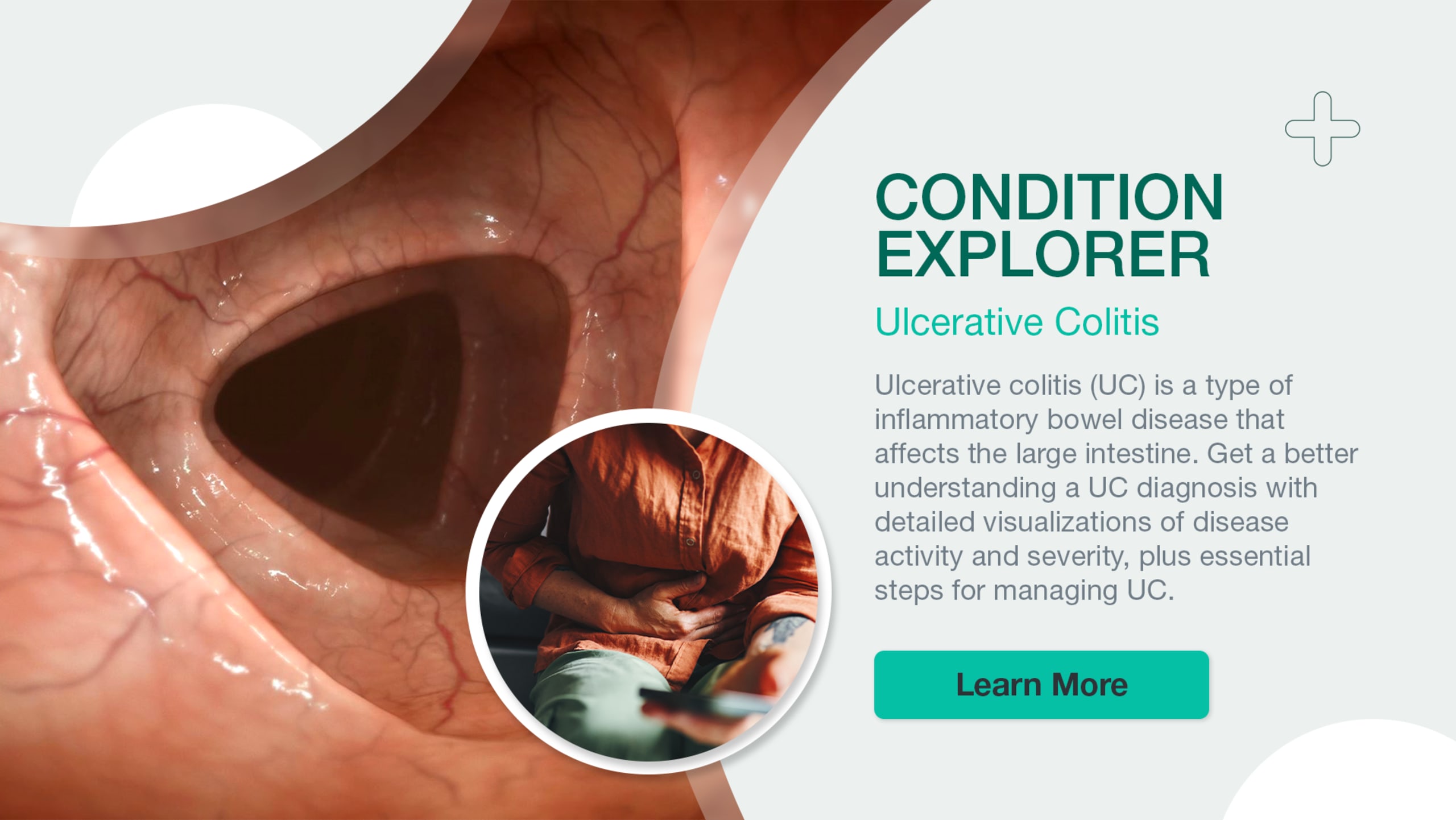
Ulcerative colitis (UC) is one of the two types of inflammatory bowel disease (IBD), a group of disorders that cause recurring episodes of painful and damaging inflammation in the gastrointestinal tract. UC inflammation affects the large intestine, beginning in the rectum and potentially spreading upward into the colon. In some cases, inflammation affects the entire colon.
Treatment for UC most often includes medications to ease symptoms and control inflammation, with the goal of achieving remission. Surgery may be needed to treat severe UC that does not respond to other treatment approaches. A treatment plan will also include lifestyle interventions, like identifying and avoiding triggers and making changes to diet and nutrition.
While the inflammation of UC occurs in the large intestine, the impact of the disease extends far beyond. UC can affect virtually any aspect of a person’s life, including education, work, relationships, personal goals, finances, and physical health. Additionally, it often affects the quality of life of caregivers.
If you or a loved one is living with UC, mental health should be a priority in treatment.
The relationship between UC and mental health
There is an association between IBD and disorders like depression and anxiety, though the relationship between these conditions is not fully understood. There is evidence of a complex relationship between IBD and mental health involving the gut-brain axis, the biochemical and neurological pathway where the digestive system communicates with the central nervous system.
UC causes some amount of systemic inflammation, as inflammatory substances move throughout the body outside of the large intestine. Systemic inflammation can affect the brain, contributing to low moods, anxiety, fatigue, and brain fog.
Apart from these biological mechanisms, there is a long list of other factors that can contribute to mental health disorders or psychological distress: painful and uncomfortable symptoms, unpredictability of flare-ups, concerns about disease progression, sleep disturbances, malnutrition, anemia, medication side effects, financial distress, and the general frustration that often accompanies being diagnosed with a chronic health condition that requires lifelong treatment.
Making mental health a part of treatment
It can help to think of yourself as a member of your healthcare team. As the person experiencing UC and the challenges of living with UC, you are in a unique position to provide information to your healthcare team. If you aren’t already, consider keeping a symptom journal, which can help you recognize patterns in symptoms and identify triggers. A symptom journal is also a place to record notes on the psychological and emotional impact of UC.
Due to the risk of depression, anxiety, and overall negative impact on quality of life, people living with UC or another form of IBD are strongly encouraged to consult with a mental health professional. There are several types of healthcare professionals who can provide counseling: psychologists, master’s-level professionals (licensed counselors, therapists, and clinicians), and clinical social workers.
For mental health conditions that require treatment with a medication, you will need to work with a healthcare provider who is licensed to prescribe medications, such as a psychiatrist or a psychiatric/mental health nurse practitioner. Primary care providers can also prescribe these medications when needed.
At the very least, moods and emotional health should be a part of conversations with the healthcare providers who are treating UC. While they do not specialize in mental health, gastroenterologists and primary care providers can perform mental health screenings and can connect you with resources to help you manage this aspect of living with UC.
Also, consider participating in a support group and/or online community for people living with IBD. It can help to connect with others who share similar experiences.
Sources: Aaron E. Walfish and Rafael Antonio Chin... + 13
- Aaron E. Walfish and Rafael Antonio Ching Companioni. Ulcerative Colitis. Merck Manual Professional Version. April 2026.
- Whitney D. Lynch and Ronald Hsu. Ulcerative Colitis. StatPearls. June 5, 2023.
- Crohn's & Colitis Foundation. Ulcerative Colitis Treatment Options. Accessed June 16, 2026.
- Maria-Andriani Mitropoulou, Evangelos C. Fradelos, et al. Quality of Life in Patients With Inflammatory Bowel Disease: Importance of Psychological Symptoms. Cureus, 2022. Vol. 14, No. 8.
- Cleveland Clinic. The Gut-Brain Connection. September 20, 2023.
- Gautam Kumar, Satyam Yadav, et al. The gut-brain connection in inflammatory bowel disease: Mechanisms, mental health, and therapeutic horizons. Gastroenterology & Endoscopy, 2026. Vol. 4, No. 2.
- Antonio M. Caballero-Mateos, Eduard Brunet-Mas, and Beatriz Gros. Systemic Consequences of Inflammatory Bowel Disease Beyond Immune-Mediated Manifestations. Journal of Clinical Medicine, 2025. Vol. 14, No. 22.
- Mehrnaz Asgharnezhad, Saman Maroufizadeh, et al. Sleep quality and associated factors in patients with inflammatory bowel disease: a cross-sectional study. Sleep and Breathing, 2025. Vol. 29, No. 6.
- John Hopkins Medicine. Malnutrition. Accessed June 16, 2026.
- Kara Gavin. Could low iron make mental health symptoms worse? University of Michigan Michigan Medicine. May 26, 2023.
- Safina Ali, Salomi Paul, et al. Glucocorticoids-Induced Neuropsychiatric Disorders in Patients With Inflammatory Bowel Disease: A Systematic Review. Cureus, 2022. Vol. 14, No. 9.
- Cleveland Clinic. Ulcerative Colitis. November 5, 2023.
- National Alliance on Mental Illness. Types of Mental Health Professionals. April 2020.
- National Institute of Mental Health. Tips for Talking With a Health Care Provider About Your Mental Health. Accessed June 16, 2026.