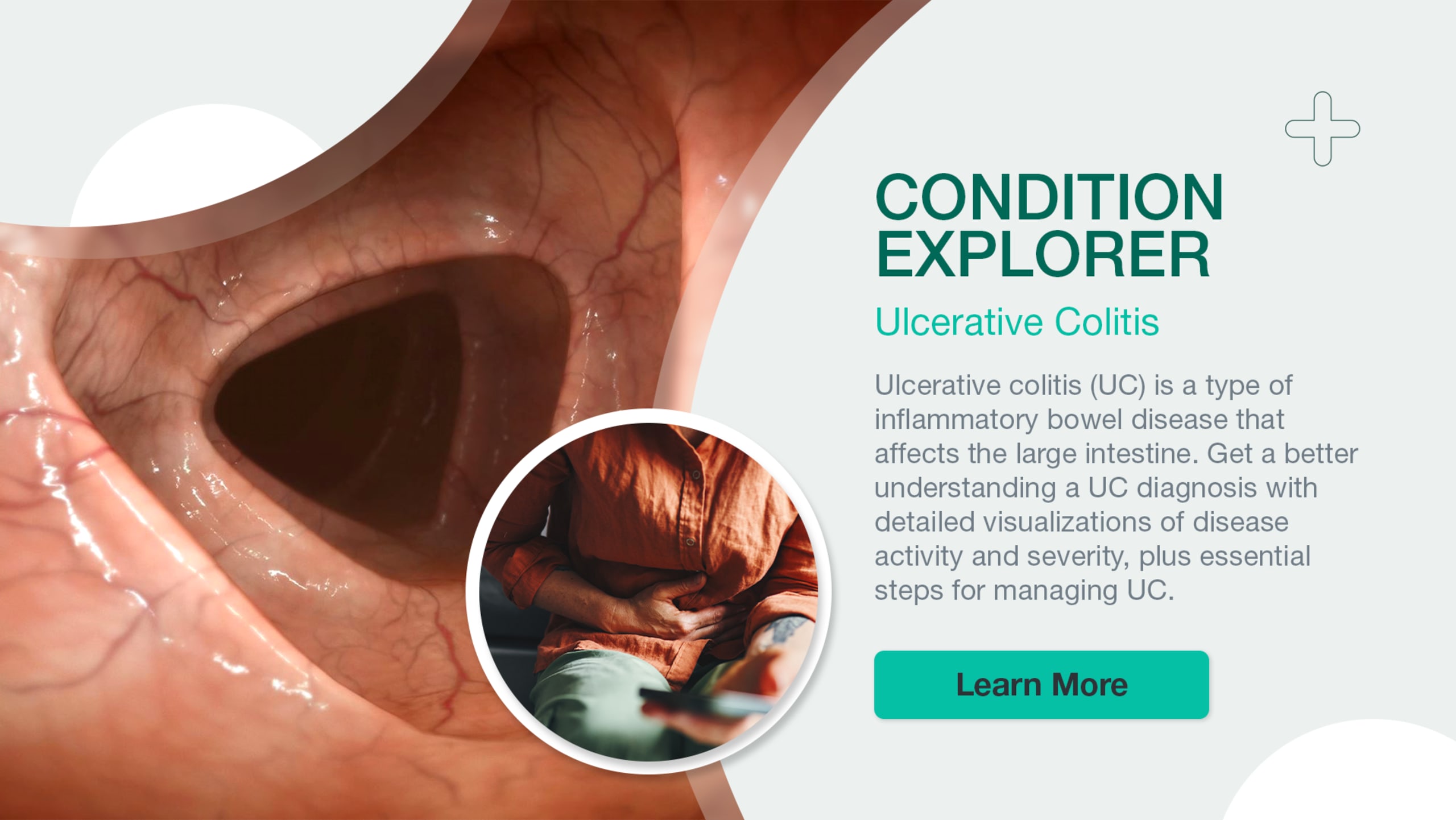


Ulcerative colitis is one of the two main types of inflammatory bowel disease, a group of conditions that cause inflammation, damage, and bleeding inside the gastrointestinal tract.
Common symptoms include diarrhea, blood and/or mucus in the stool, abdominal pain/cramping, and an urgent need to have a bowel movement. Inflammation and symptoms occur in flares, becoming worse at times and subsiding at other times. The severity of symptoms and frequency of flares vary from person to person.
With inflammation being the main feature of UC, it helps to understand what inflammation is and how it affects the body.
Why the body needs inflammation
Inflammation is one of the body’s major defenses against illness and injury. In very simple terms, inflammation is a flood of substances that the body sends to an area where there are infected or damaged cells. These substances include things like immune proteins and white blood cells, which break down and clear away any cells that are sick, damaged, or abnormal, and start the healing process.
If you’ve ever had the area or skin around a cut become red and puffy or had congested sinuses when you have a cold, that was inflammation at work. As the cut is healed or the cold resolves, inflammatory substances will drain away and signs of inflammation will subside.
UC causes a different kind of inflammation
When a person has UC, the inflammatory process has become dysregulated and is no longer functioning normally. UC and other forms of IBD belong to a group of conditions called “immune-mediated inflammatory disorders.”
Unlike the carefully regulated inflammation that helps the body clear away infected or damaged cells, inflammation related to UC damages healthy tissues. Specifically, it causes inflammation in the lower portion of the gastrointestinal tract, called the large intestine.
UC inflammation typically begins in the rectum, the last section of the large intestine where stool is stored. Inflammation may be limited to the rectum or spread upward into the colon. Damage caused by this inflammation creates bleeding ulcers and disrupts the functioning of the gastrointestinal (GI) tract.
The exact causes of UC are unknown, and it is not known why some people develop this condition and others do not.
Controlling inflammation is a main focus of treatment
UC can sometimes be cured with surgery to remove the colon and rectum, but this treatment option is usually only considered after other therapies have not worked. Medications are the main approach to treating UC.
A treatment plan will often include an anti-inflammatory medication that is applied directly to the rectum in the form of an enema, foam, or dissolving tablet (called a suppository), paired with a systemic therapy. Systemic therapies are taken as pills or injections, and these help control inflammation throughout all parts of the body (which is needed to reach inflammation that extends into the colon).
When prescribed any medication or making treatment decisions, it’s important to understand the potential side effects. For example, medications that act on the immune system can increase the risk of serious infections.
The other main type of IBD
The other main type of IBD is called Crohn’s disease. Crohn’s disease and UC differ in several distinct ways:
- UC is confined to the large intestine (the cecum, the colon, the rectum). Crohn’s disease can affect the colon (and frequently does) but it can affect any section of the GI tract.
- UC causes continuous inflammation, originating in the rectum. Crohn’s disease causes patches of inflammation separated by healthy, unaffected tissue.
- UC inflammation affects the innermost layers of tissue, called the mucosa and submucosa. Crohn’s disease inflammation can extend into and damage layers of tissue outside of these innermost layers.
Symptoms of these two main types of IBD can be difficult to tell apart, but these are different conditions that require different approaches to treatment. There is no substitute for working with a healthcare provider with experience in treating IBD, who can provide an accurate diagnosis and guide you through treatment.
Sources: Aaron E. Walfish. Overview of Inflammato... + 18
- Aaron E. Walfish. Overview of Inflammatory Bowel Disease (IBD). Merck Manual Consumer Version. March 2026.
- Aaron E. Walfish. Ulcerative Colitis. Merck Manual Consumer Version. March 2026.
- Crohn's & Colitis Foundation. Signs and Symptoms of Ulcerative Colitis. Accessed June 8, 2026.
- NCI Dictionary of Cancer Terms. Inflammation. Accessed June 9, 2026.
- In brief: What is an inflammation? InformedHealth.org. April 11, 2025.
- Elizabeth C. Bender, Halah S. Tareq, and Laura J. Suggs. Inflammation: a matter of immune cell life and death. npj biomedical innovations. March 4, 2025.
- CDC Inflammatory bowel disease (IBD). What Causes IBD. June 21, 2024.
- Sally Hannoodee and Dian N. Nasuruddin. Acute Inflammatory Response. StatPearls. June 8, 2024.
- Cleveland Clinic. Large Intestine & Colon. September 19, 2024.
- Laura L. Azzouz and Sandeep Sharma. Physiology, Large Intestine. StatPearls. July 31, 2023.
- Crohn's & Colitis Foundation. Types of Ulcerative Colitis. Accessed June 8, 2026.
- Mayo Clinic. Ulcerative Colitis. June 6, 2026.
- Whitney D. Lynch and Ronald Hsu. Ulcerative Colitis. StatPearls. June 5, 2023.
- MedlinePlus. Ulcerative colitis. January 13, 2026.
- Cleveland Clinic. Budesonide Rectal foam. Accessed June 8, 2026.
- NCI Dictionary of Cancer Terms. Systemic therapy. Accessed June 8, 2026.
- Crohn's & Colitis Foundation. Medication Options for Ulcerative Colitis. Accessed June 8, 2026.
- NHS. Ulcerative colitis: Treatment. Accessed June 8, 2026.
- Mayo Clinic. Ulcerative colitis vs. Crohn's disease. March 19, 2026.