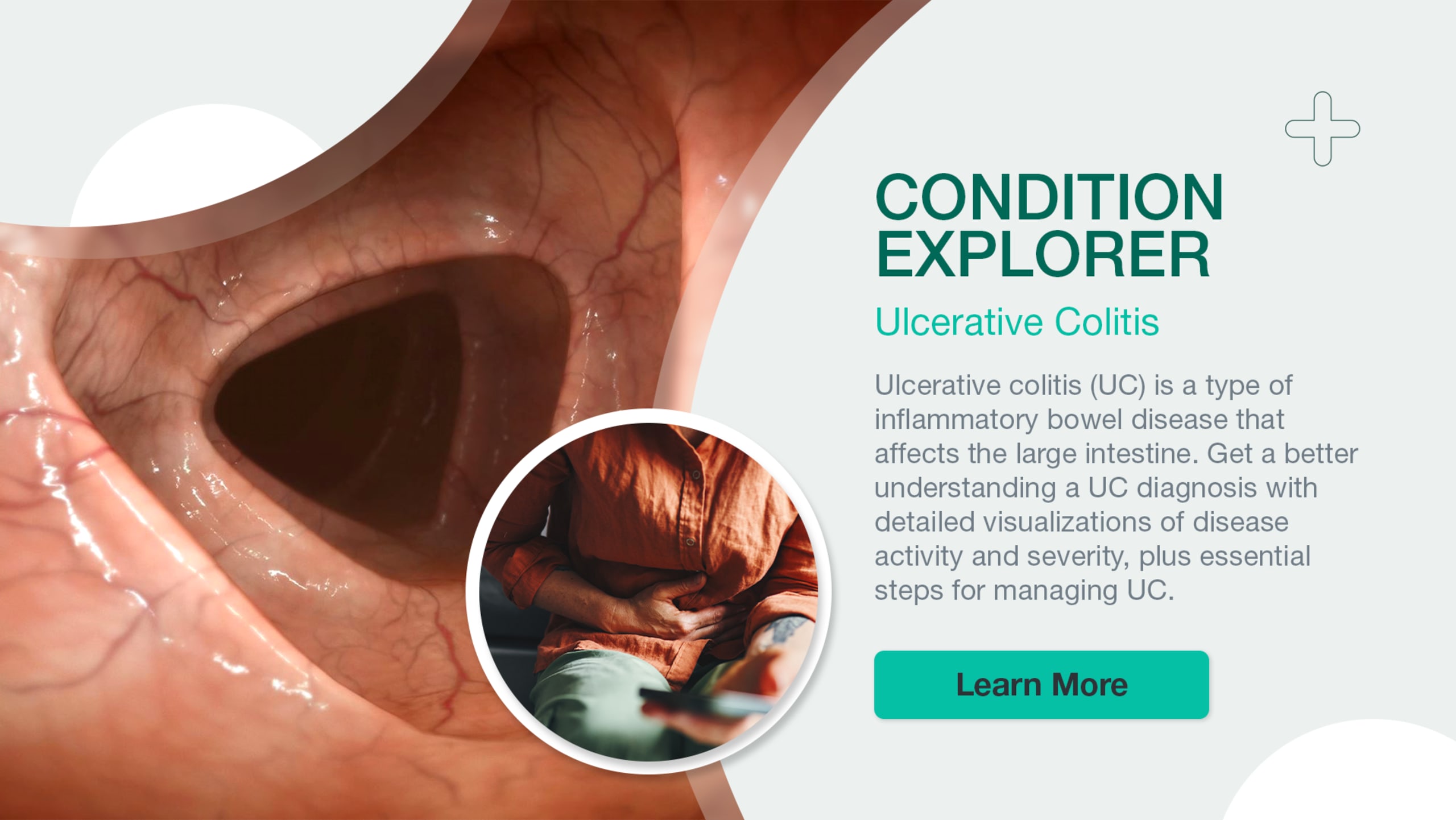
Ulcerative colitis is one of the two main types of inflammatory bowel disease (IBD), a group of immune-mediated inflammatory disorders that affect the gastrointestinal tract. The other main type is called Crohn’s disease. These disorders are caused by abnormal or dysregulated activity in the immune system, which results in painful episodes of inflammation and bleeding in the gastrointestinal tract.
Rectal inflammation is the defining characteristic of UC
Ulcerative colitis occurs in the large intestine. The large intestine refers to the lower portion of the digestive tract and includes several parts with different structures and functions:
- The cecum, the entry point that connects to the small intestine. It can be considered the first part of the colon.
- The colon, a large tube that is shaped like an upside-down U. It absorbs water and nutrients during the last stages of digestion. It can be divided into the ascending colon (right side of the body), transverse colon (running from right to left), descending colon (left side of the body), and the sigmoid colon (the final section before the rectum).
- The rectum, the lowest part of the large intestine. About 6 inches in length, it is where stool is collected and stored before it is passed from the body during a bowel movement.
UC begins in the rectum and spreads upward
UC will affect a continuous section of the large intestine. It can be categorized based on how far inflammation spreads:
- Ulcerative proctitis, where inflammation is confined to the rectum.
- Left-sided colitis, which extends from the rectum up the left side of the colon. This includes proctosigmoiditis, which affects the lower part of the colon just above the rectum, called the sigmoid colon. Inflammation can also spread all the way up the left side of the colon.
- Extensive or widespread colitis, which extends beyond the left side and typically affects the entire colon and the cecum. This is also referred to as pancolitis.
UC inflammation affects the innermost layers of tissue
The inflammation that occurs with UC affects the innermost layers of the rectum and/or colon, called the mucosa and submucosa.
- The mucosa, also called the mucus membrane, is the innermost layer. It is made up of mucus-producing cells and thin layers of connective tissues and muscles.
- The submucosa surrounds the mucosa. It is made up of connective tissue, and contains mucus-producing glands, lymph vessels, blood vessels, and nerves.
During a UC flare, the immune system floods these layers of tissue with inflammatory substances and immune cells. The mucosa and submucosa become inflamed and damaged. Damage results in ulcers, open sores on the inner lining of the rectum and colon.
Stress, certain foods, and non-steroidal anti-inflammatory drugs (NSAIDs) are potential triggers for UC flares.
Rectal inflammation directly causes many UC symptoms
The clinical term for rectal inflammation is proctitis, and it causes many of the symptoms associated with UC:
- Rectal pain
- Diarrhea and/or increased frequency of bowel movements
- Pain during bowel movements
- Blood and/or mucus in the stool
- Pain on the left side of the abdomen
- Cramping or tenderness in the abdomen
- Feeling of fullness in the rectum
- Urgent need to have a bowel movement
A person with UC can also experience loss of appetite, weight loss, nausea, fatigue, fever, and anemia. UC can cause delayed growth in children.
Addressing rectal inflammation is a focus of treating UC
Treatment for UC will depend on the severity of symptoms, the extent of inflammation, the frequency of flares, and many factors about the person being treated, including their medical history and overall health. Because all forms of UC involve rectal inflammation, addressing rectal inflammation will be an important part of a treatment plan.
The main therapies used to treat UC are anti-inflammatory medications. This involves medications that are applied directly to the rectum, often used in combination with systemic therapies (taken as oral medications or injections) that act on inflammation throughout the body.
Medical nutritional therapy may also be a part of treatment. UC affects how the body digests foods, and a registered dietitian can help you identify and address nutritional needs that are not being met. They can also help you identify and avoid trigger foods.
Surgery to remove the colon and/or rectum may be recommended in some cases and offers a potential cure. This may be done in severe cases where medications have not been able to control inflammation.
For questions about UC diagnosis, symptoms, or treatment, a healthcare provider will be your best source of information.
Sources: CDC Inflammatory bowel disease (IBD). In... + 15
- CDC Inflammatory bowel disease (IBD). Inflammatory Bowel Disease (IBD) Basics. June 21, 2024.
- CDC Inflammatory bowel disease (IBD). What Causes IBD. June 21, 2024.
- MedlinePlus. Inflammatory bowel disease – series—Indications. January 24, 2025.
- National Cancer Institute. Cecum. Accessed June 8, 2026.
- Todd M. Hoagland and Vinay K. Kapoor. Colon Anatomy. Medscape. March 7, 2025.
- Cleveland Clinic. Large Intestine & Colon. September 19, 2024.
- Laura L. Azzouz and Sandeep Sharma. Physiology, Large Intestine. StatPearls. July 31, 2023.
- Crohn's & Colitis Foundation. Types of Ulcerative Colitis. Accessed June 8, 2026.
- Mayo Clinic. Ulcerative Colitis. June 6, 2026.
- Canadian Cancer Society. The colon and rectum. Accessed June 8, 2026.
- Whitney D. Lynch and Ronald Hsu. Ulcerative Colitis. StatPearls. June 5, 2023.
- In brief: What is an inflammation? InformedHealth.org. April 11, 2025.
- Mayo Clinic. Proctitis. September 20, 2025.
- Crohn's & Colitis Foundation. Signs and Symptoms of Ulcerative Colitis. Accessed June 8, 2026.
- Crohn's & Colitis Foundation. Medication Options for Ulcerative Colitis. Accessed June 8, 2026.
- Stanford Medicine Health Care. Ulcerative Colitis Treatment. Accessed June 8, 2026.