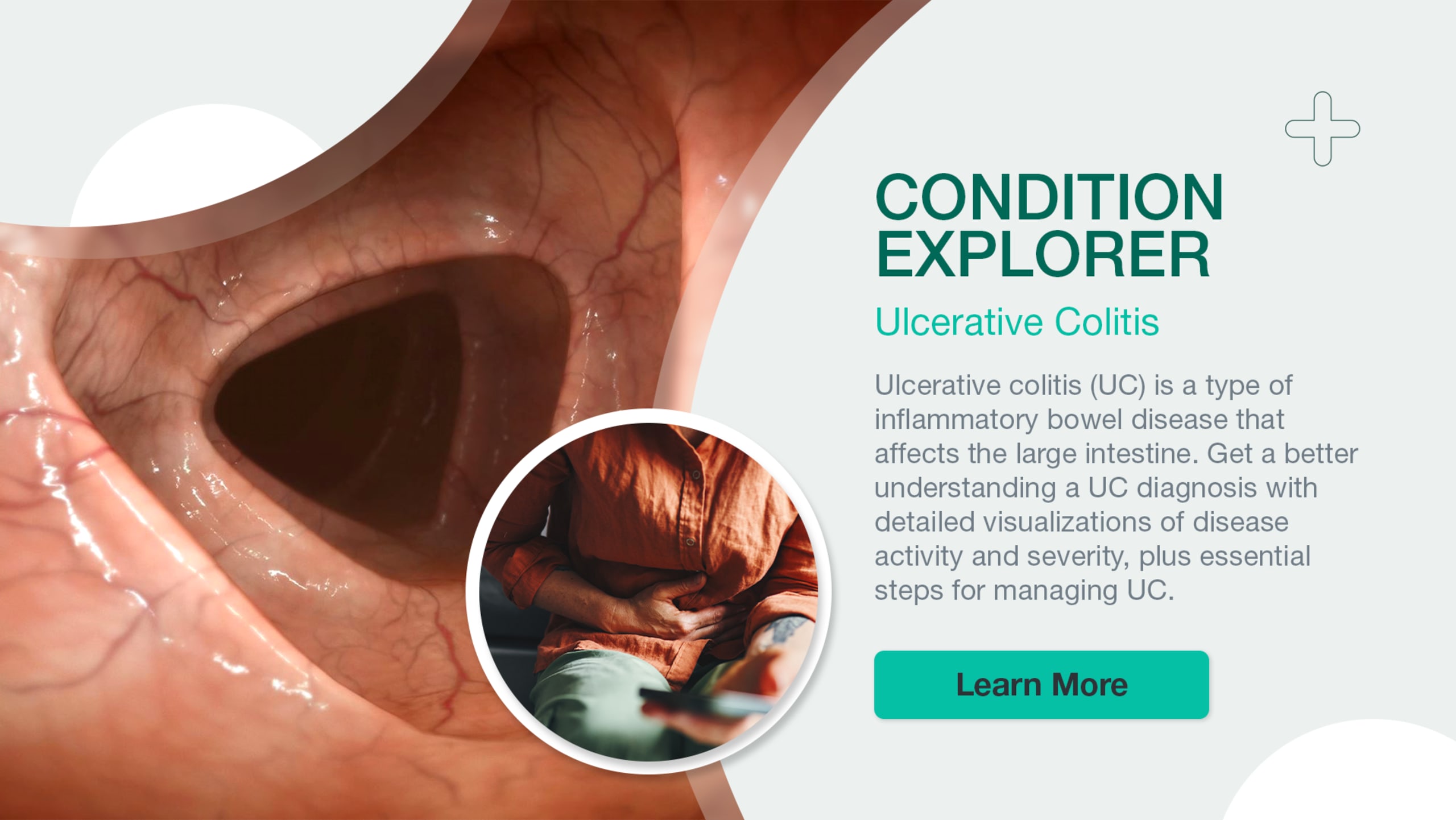


Ulcerative colitis (UC) is a chronic condition that causes recurring inflammation in the inner lining of the large intestine. It is one of the two main types of inflammatory bowel disease (IBD), a group of disorders that also includes Crohn’s disease.
These conditions are sometimes described as autoimmune disorders, conditions where the body’s immune system attacks healthy cells and tissues. They are more accurately described as “immune-mediated inflammatory disorders,” conditions where the body’s immune system is not functioning normally, causing chronic, recurring, or long-lasting inflammation that damages healthy tissue.
People with UC typically experience periods of remission and relapse. During remission, inflammation decreases and symptoms improve or go away. During relapse, inflammation increases and symptoms worsen. Relapses are also called flare-ups.
During a flare-up, a person can experience diarrhea, blood and/or mucus in the stool, abdominal pain/cramping, and an urgent need to have a bowel movement.
Here is a look at what’s happening in the body during a flare-up and why reducing flare-ups is an important focus of treatment.
What’s happening during a flare-up?
UC inflammation occurs in the lower portion of the gastrointestinal (GI) tract, called the large intestine. The main part of the large intestine is the colon, which is a long tube-shaped organ arranged in an upside-down U. The rectum is located just after the colon and is where stool is stored in the body before it exits during a bowel movement. The rectum is where UC inflammation typically begins, though it can spread upward to affect part or all of the colon.
UC inflammation affects the innermost layers of tissue in the colon and rectum, called the mucosa and submucosa. These layers keep digesting food and stool contained in the GI tract and shield the rest of the body from bacteria that needs to be contained within the GI tract. A flare-up occurs when defects in this layer allow bacteria through.
This triggers a strong reaction by the immune system, which floods the mucosa and submucosa with inflammatory proteins and immune cells. This response is considered abnormal in proportion to what the immune system has encountered, creating inflammation that can cause significant damage to healthy tissue, which allows more bacteria through, leading to a repeating cycle of inflammation.
Keep in mind that this is a simple explanation of a complex biological process related to a condition with causes that are not fully understood.
What should you do if you experience a flare-up?
If you think you're experiencing a flare-up, contact your healthcare provider. A flare may mean you need to adjust treatment, and any treatment adjustments must be done under the guidance of a healthcare provider. There are also some basic steps you can take to manage symptoms:
- Track your symptoms. Include notes on the symptoms you’re experiencing, when symptoms began, the severity, and the frequency of bowel movements. Also note any potential triggers, such as stress, recent foods you’ve consumed, or missed medications. This information helps your provider make informed treatment decisions.
- Stay hydrated. Diarrhea and frequent bowel movements can cause fluid and electrolyte loss. Stay hydrated by drinking water and beverages that contain electrolytes. Sports drinks can be a good option, but pay attention to sugar content, as too much sugar can aggravate diarrhea.
- Avoid foods that can worsen symptoms. This includes high-fiber foods, insoluble fiber, heavily seasoned/spicy foods, dairy, fatty foods, red meat, alcohol, caffeine, carbonated beverages, and sweetened beverages.
- Eat easily digestible foods. White rice, oatmeal, bananas, applesauce, lean proteins, eggs, and cooked, skinless vegetables can be good options.
- Continue to take medications as prescribed. Your provider may prescribe additional medications to be used during a flare-up. Have clear instructions on how to take every medication you are prescribed. Do not stop or change your medications unless directed to by your provider.
- Rest. A flare is stressful on the body, and it’s common to feel fatigued. Get plenty of rest.
When is a flare-up an emergency?
Talk to your healthcare provider about when to seek emergency treatment. Signs that a flare-up requires emergency medical care include:
- Severe abdominal pain
- Swelling in the abdomen
- Severe and persistent diarrhea
- Severe rectal bleeding
- High fever
- Rapid heart rate
- Rapid breathing
- Confusion or other changes in mental state
- Severe dehydration, such as dark urine, producing little to no urine, shriveled skin, and dizziness/lightheadedness
These symptoms can indicate serious complications, such as severe intestinal inflammation, perforation, severe bleeding, dehydration, or a life-threatening condition called toxic megacolon, which requires urgent treatment.
Sources: MedlinePlus. Ulcerative colitis. January... + 20
- MedlinePlus. Ulcerative colitis. January 13, 2026.
- CDC Inflammatory bowel disease (IBD). Inflammatory Bowel Disease (IBD) Basics. June 21, 2024.
- CDC Inflammatory bowel disease (IBD). What Causes IBD. June 21, 2024.
- Whitney D. Lynch and Ronald Hsu. Ulcerative Colitis. StatPearls. June 5, 2023.
- Aaron E. Walfish. Ulcerative Colitis. Merck Manual Consumer Version. March 2026.
- Crohn's & Colitis Foundation. Signs and Symptoms of Ulcerative Colitis. Accessed June 16, 2026.
- Todd M Hoagland. Colon Anatomy. Medscape. March 7, 2025.
- Cleveland Clinic. Large Intestine & Colon. September 19, 2024.
- Laura L. Azzouz and Sandeep Sharma. Physiology, Large Intestine. Statpearls. July 31, 2023.
- Crohn's & Colitis Foundation. Types of Ulcerative Colitis. Accessed June 16, 2026.
- Mayo Clinic. Ulcerative colitis. June 6, 2026.
- Siyuan Bu, Xiaozhen Cheng, et al. Ulcerative Colitis: Advances in Pathogenesis, Biomarkers, and Therapeutic Strategies. Pharmacogenomics and Personalized Medicine. September 5, 2025.
- Ryu Okumura and Kiyoshi Takeda. The role of the mucosal barrier system in maintaining gut symbiosis to prevent intestinal inflammation. Seminars in Immunopathology, 2024. Vol. 47, No. 1.
- Cleveland Clinic. Managing Ulcerative Colitis Flare-Ups. Accessed June 16, 2026.
- Crohn's & Colitis Foundation. Managing Flares and IBD Symptoms. Accessed June 16, 2026.
- UPMC Health Beat. Ulcerative Colitis Flare-Ups: Diet and How to Manage Them. February 11, 2025.
- Crohn's & Colitis Foundation. Medication Options for Ulcerative Colitis. Accessed June 16, 2026.
- Mayo Clinic. Tips for recovering after an ulcerative colitis flare-up. April 2, 2026.
- Johns Hopkins Medicine. Toxic Megacolon. Accessed June 16, 2026.
- MedlinePlus. Dehydration. July 1, 2025.
- Cleveland Clinic. Ulcerative Colitis. November 5, 2023.